Vietnamese goods dominate local stores, gain Tet shoppers' trust for quality
As the 2026 Lunar New Year approaches, Vietnam’s domestic goods are firmly taking center stage, backed by ample supply, stable prices and growing consumer trust, reflecting years of sustained efforts to strengthen local production and retail systems.
THE HANOI TIMES — Markets across Hanoi and the country are moving into peak season as the whole nation is preparing for Tet (Lunar New Year) 2026 that falls in the middle of February.
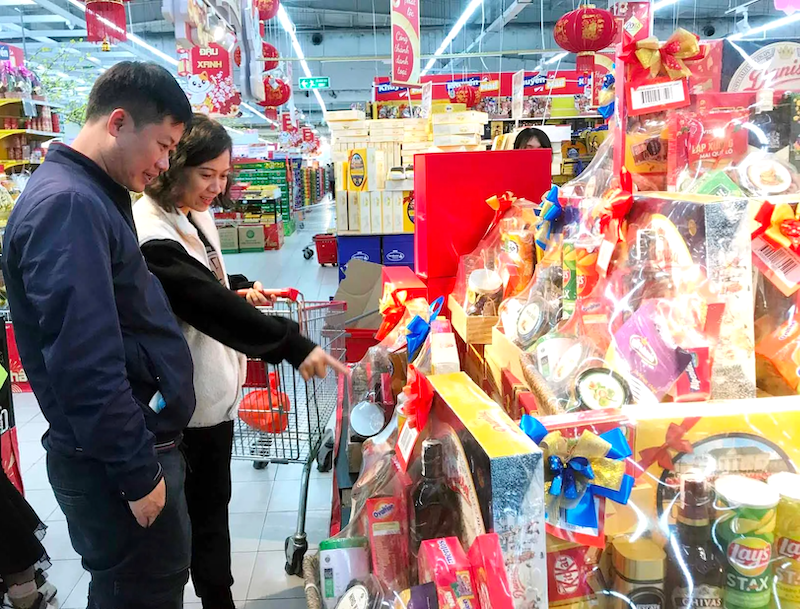
Local residents shop at a Go! Thang Long supermarket ahead of the 2026 Lunar New Year. Photos: Hoai Nam/The Hanoi Times
To meet rising domestic demand, local stores, shops and supermarkets are filled with Vietnamese-made products that have gained consumer trust through improved quality, clear origins and competitive pricing.
From early morning to late evening, festive shopping scenes are unfolding across supermarkets, convenience stores and local shops. Strong consumer demand combines with abundant supply, creating a lively retail atmosphere rarely seen outside the Tet period.
One of the most striking changes this year is the overwhelming presence of Vietnamese goods in modern retail systems. Domestic products now dominate shelves in both quantity and visibility, occupying prime display areas at major supermarket chains such as WinMart, BRG Mart and Co.opmart.
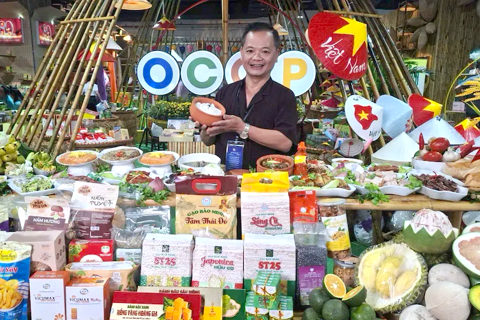
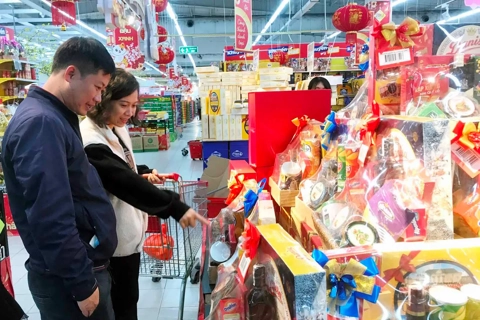
From Tet gift baskets and confectionery to fresh agricultural produce and processed foods, Vietnamese brands stand out with festive packaging, modern designs and clear product information tailored to holiday shoppers.
Retailers say domestic suppliers now prepare for Tet months in advance, with packaging, promotions and product lines designed specifically for the season.
Beyond sheer volume, local products continue to strengthen their position through better quality and broader choices.
Many consumers note that Vietnamese goods now appear more refined and competitive than in previous years, narrowing the gap with imported alternatives.
Luong Loan, a homemaker in Ngoc Ha Ward, said she was surprised by the scale of domestic products this Tet.
“Vietnamese goods are everywhere this year and the packaging looks much better than before. It’s easier to choose local products now,” she said.
The change highlights how the campaign “Vietnamese people prioritize using Vietnamese goods” has gradually shaped consumer behavior over time."
The movement has moved beyond slogans and awareness-raising, as domestic enterprises invest heavily in upgrading production standards, improving traceability and making supply chains more transparent.
These efforts resonate strongly with consumers, especially as food safety and product origin have become top concerns. For many shoppers, choosing Vietnamese goods has turned into a habit rather than a conscious decision driven by patriotism.
The Toan, a resident of Hai Ba Trung Ward, said confidence now comes naturally. “Vietnamese products are very good these days. The packaging clearly shows addresses and origins, so I feel safe when buying,” he said.
Behind the scenes, strict quality control plays a decisive role in ensuring Vietnamese products earn their place on supermarket shelves, particularly during Tet when demand surges. Retailers say they cannot compromise standards, even under pressure to stock large volumes.
Nguyen Thuy Duong, Deputy General Director of BRG Retail, said suppliers must pass multiple inspection rounds before their products reach stores.
Teams review documentation related to food safety, product origin and supply capacity, while on-site inspections verify production conditions, she said, adding quality checks do not stop once products enter the distribution system.
“Logistics and sales teams recheck labeling and packaging upon receipt, while internal control units conduct random inspections at stores and supplier facilities,” Duong said.
“This multi-layered process helps protect consumer rights and maintain trust during the peak holiday season.”
Pricing concerns still linger
Price stability remains one of the biggest concerns for consumers during Tet, a period traditionally associated with seasonal price increases.
This year, however, essential goods have largely remained stable thanks to close coordination between retailers and authorities under market stabilization programs.
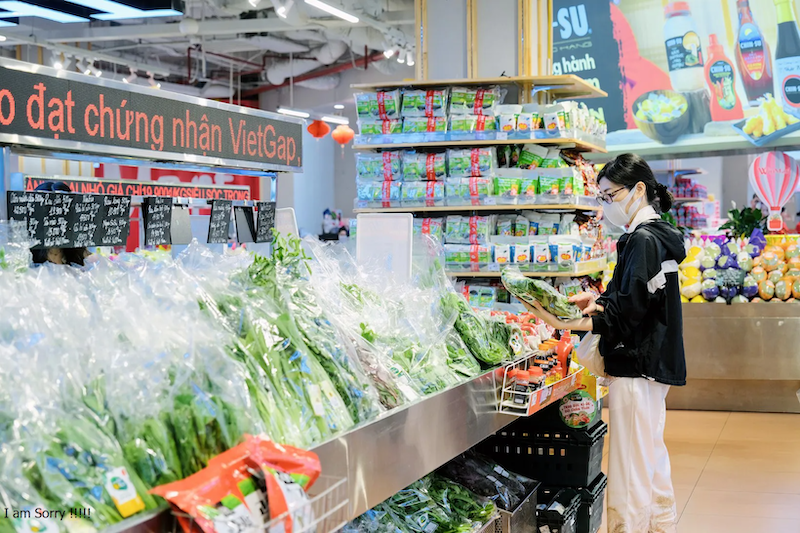
A consumer chooses domestic products at a WinMart supermarket during the Tet shopping season.
Hanoi has implemented a stockpiling plan worth some VND40 trillion (about $1.5 billion), slightly higher than last year. The plan aims to ensure sufficient supply and prevent price shocks throughout the holiday season.
According to the Hanoi Department of Industry and Trade, the capital can supply more than 107,600 tons of poultry and pork, 741 million poultry eggs, nearly 151,000 tons of rice and 186,000 tons of vegetables, meeting most local demand.
Products that Hanoi must source from other provinces include brackish- and saltwater seafood, processed foods, beef, rice and some vegetables. Authorities say coordination with other localities remains smooth, helping ensure steady supply.
During Tet 2026, Hanoi expects consumption of about 301,000 tons of rice, 96,000 tons of poultry and meat, 401 million poultry eggs, 334,500 tons of vegetables, 16,700 tons of processed foods and 167,000 tons of seafood.
Ngoc Lan, a 31-year-old resident of Tay Mo Ward, said shopping felt less stressful this year. “The supermarkets are well stocked and prices are reasonable. I don’t see any noticeable increases compared to before.”
Alongside stable prices, retailers are actively stimulating demand through extensive promotions. Deep discounts, buy-one-get-one-free offers and price cuts of 10%-50% apply across a wide range of products, from household items to daily essentials.
Nguyen Thi Nhung, Head of the Customer Service Cashier Department at WinMart Smart City, said cooperation with suppliers has intensified ahead of Tet.
“Customers are shopping much more as Tet approaches. We work closely with suppliers to deliver meaningful promotions, especially for essential goods, cosmetics and household products,” she said.
As Vietnamese goods firmly dominate shelves during this peak season, the trend points to a broader transformation in domestic consumption.
Stronger local production, stricter quality standards and more responsive retail strategies are meeting Tet demand while building a solid foundation for sustainable consumption in the years ahead.