Waking Huong Son: Hanoi’s test case for sustainable heritage tourism
The Huong Son Tourism Complex draws national attention each spring, but fades from view the rest of the year, an imbalance city planners now seek to correct.
THE HANOI TIMES — Quietly unfolding beyond the spring pilgrimage crowds, Huong Son is reimagining itself.
By opening hiking and trekking routes through largely untouched limestone landscapes and pairing them with seasonal flower-viewing experiences, the area is emerging as a compelling model for sustainable rural tourism on the outskirts of Hanoi.
The shift could help Huong Son move beyond its brief festival peak and invite visitors year-round.
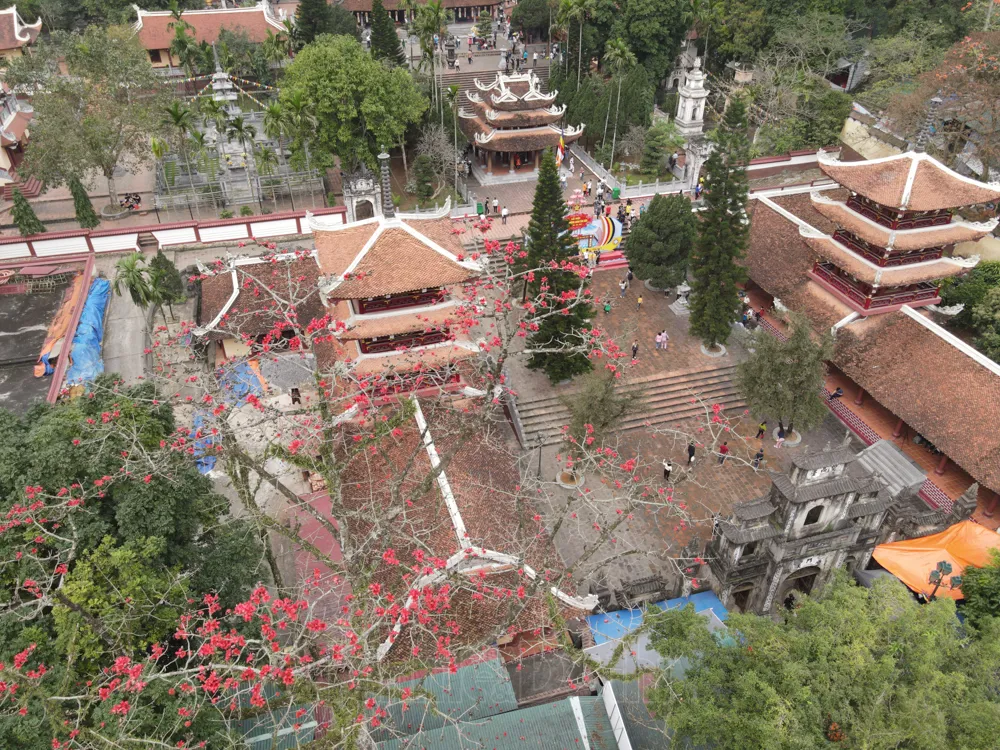
Spring light drifts across the Huong Pagoda complex, where mist, mountains and temples define the cultural landscape of Huong Son Commune. Photo: Lai Tan/ The Hanoi Times
Beyond the festival season
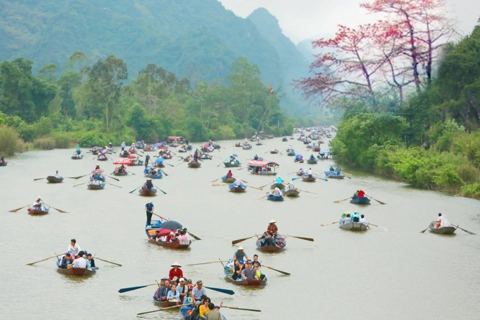
At 6 AM on the sixth day of the Lunar New Year, the Yen Stream begins to stir. Hundreds of hand-rowed iron boats, each carrying about a dozen passengers, slip quietly across the water, ferrying pilgrims toward the Huong Son Tourism Complex on Hanoi’s southwestern edge.
Morning mist clings to pale reeds like scattered pearls. Limestone peaks rise in the distance, and ancient pagodas appear gradually through low clouds, their outlines softened by centuries of faith and weather.
For generations, this scene has defined the Huong Pagoda Festival, Vietnam’s longest-running religious celebration, which spans the first three months of the lunar year. It is a moment of rare intensity, when Huong Son reveals itself at its most vibrant and visible.
When the festival draws to a close, however, the crowds disperse. Boats are pulled ashore, paths fall silent and the landscape, unchanged in its beauty, returns to a deep, almost meditative calm.
Located just 50 kilometers southwest of central Hanoi, Huong Son receives few visitors outside spring, earning it the local nickname of a “sleeping princess” that awakens briefly each year before drifting back into quiet isolation.
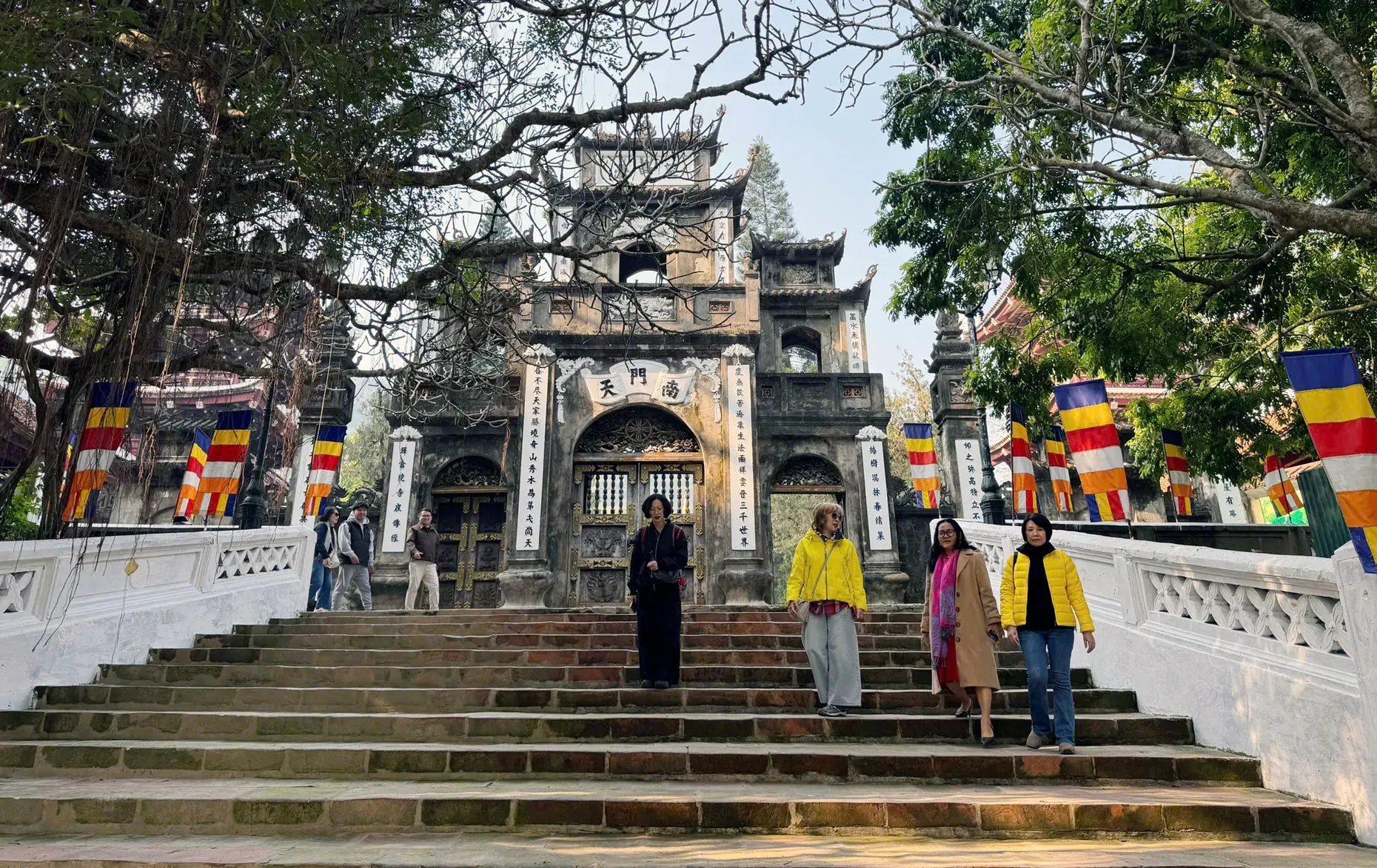
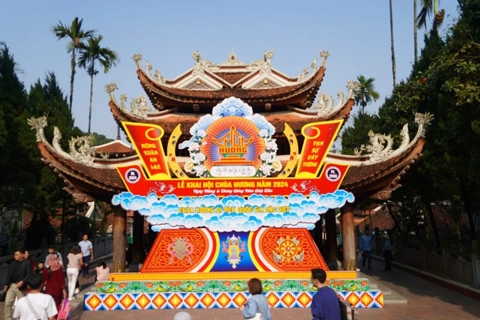
Visitors to Huong Pagoda, Huong Son Commune, Hanoi. Photo: Hoai Nam/ The Hanoi Times
Huong Son boasts a dramatic natural landscape and a dense network of historic relics, including Thien Tru Pagoda, Huong Tich Cave, Long Van Pagoda, Thanh Son Pagoda, Huong Dai Cave and Khe Pagoda, set amid lush vegetation.
Designated a Special National Monument in 2017 and recognized as a city-level tourist area in 2024, the site nevertheless sees highly concentrated visitation.
While it is expected to welcome nearly 931,000 visitors in 2024, projections for 2025 drop to about 860,000, highlighting the limits of a tourism model largely dependent on spiritual travel.
A push to break the seasonal cycle
Awakening the “sleeping princess” has become a strategic priority. That ambition shaped the recent Conference on "Surveying, Promoting & Developing Huong Son Tourism 2026 and Beyond", jointly organized by the UNESCO Hanoi Travel Club, the Hanoi Department of Tourism and the People’s Committee of Huong Son Commune.
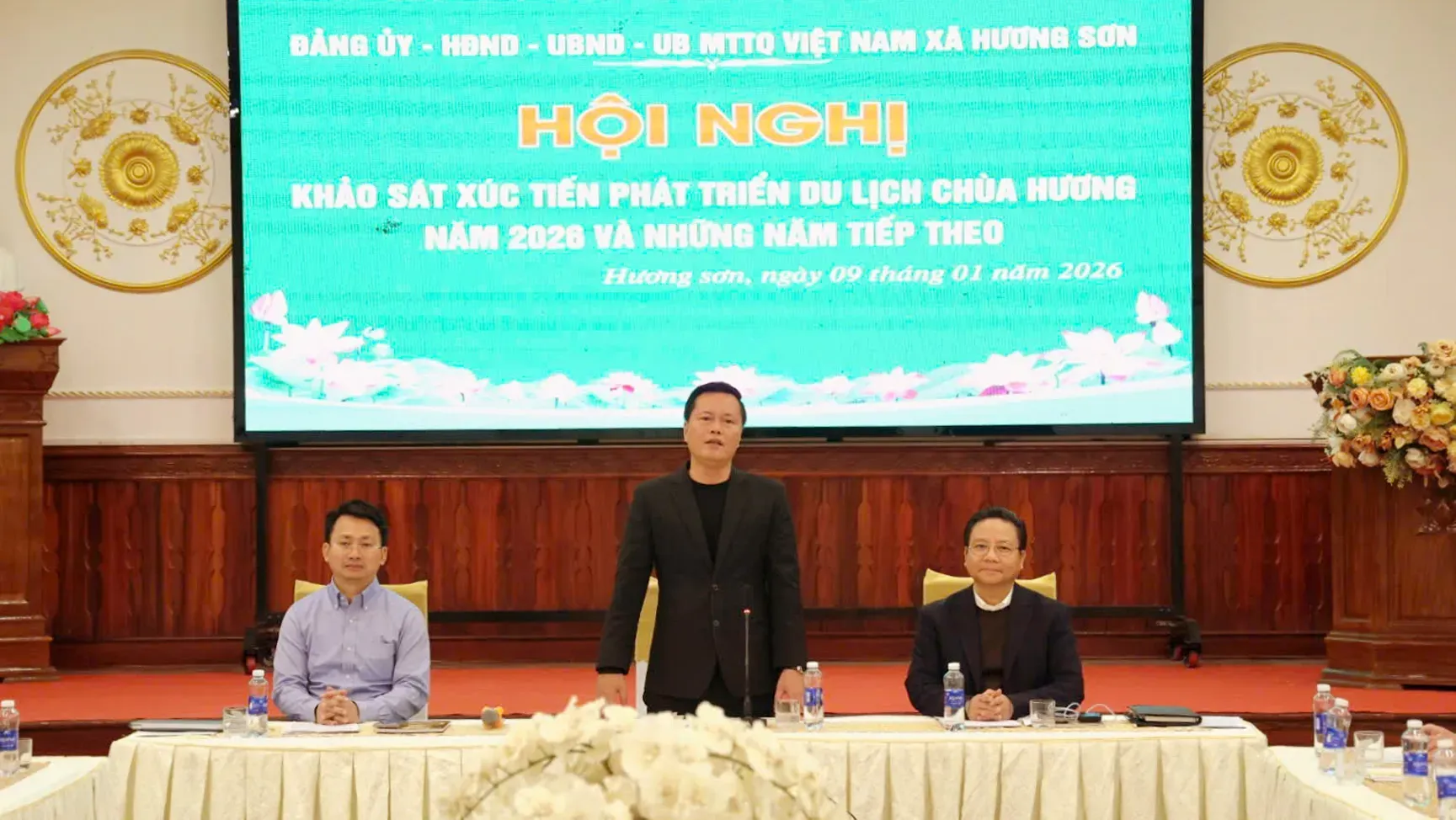
The recent conference seeks strategies to attract visitors and expand tourism in Huong Son Commune. Photo: Hoai Nam/ The Hanoi Times
Tourism policymakers, local authorities, and domestic and international operators shared a view that Huong Son does not lack assets, but diversity in how those assets are presented and experienced.
Nguyen Linh, Director of London-based World Wide DMC, proposed a seasonal, themed approach, with spring focused on festivals and spiritual tourism, summer on hiking, trekking and wildlife exploration, and autumn, when water lilies bloom across the pagoda landscape, suited to experiential travel and photography.
Lesser-known sites such as Khe Pagoda and Long Van Pagoda are ideal for nature-based hiking tours.
However, to attract wider, especially international audiences, Huong Son needs stronger storytelling and deeper engagement, as visitors increasingly seek destinations that weave landscape, culture and daily life into coherent narratives.
Designing for international travelers
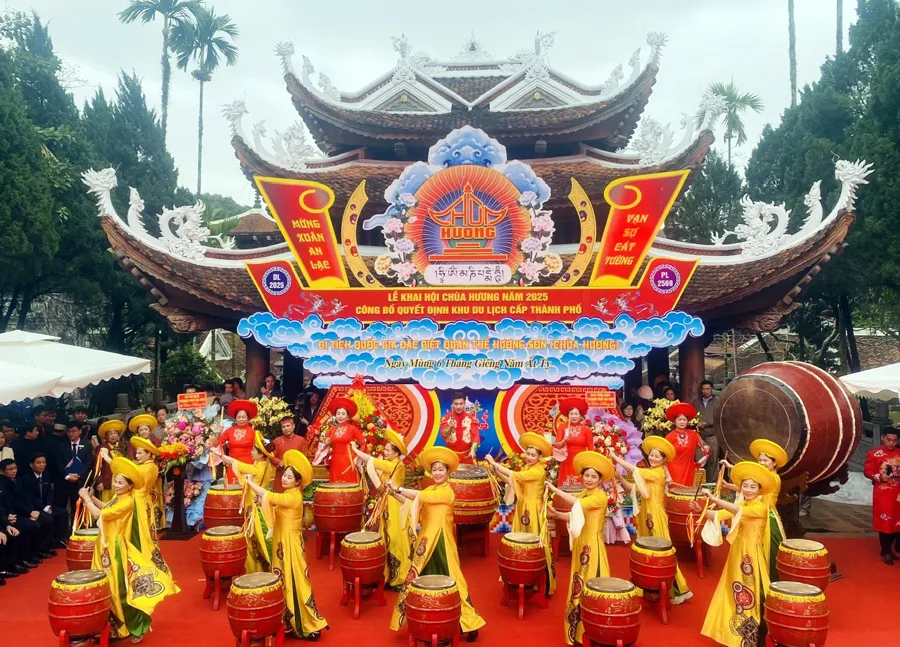
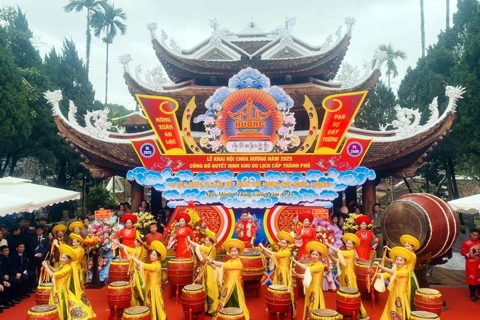
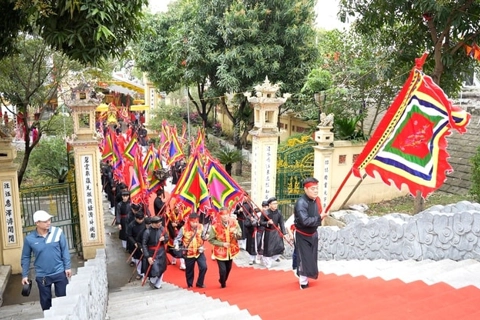
Huong Pagoda kicks off its 2025 festival with a vivid opening ceremony. Photo: Lai Tan / The Hanoi Times
That view is shared by tour operators targeting overseas markets. Dao Hong Thuong, Director of Vietsky Travel, stressed the need for well-designed, all-inclusive one- to two-day packages suited to international travel habits and shorter stays.
A typical itinerary could start with a guided boat trip along the Yen Stream and a visit to Thien Tru Pagoda, followed by hands-on experiences such as making traditional peanut candy or harvesting local medicinal herbs.
Vu Ngoc An, Director of Rainbow Tourism Company, said the Yen Stream is an underused asset, noting that few spiritual destinations offer such a unique river experience, and suggested boat tours and light recreational activities linked with visits to craft villages.
He also suggested linking Huong Son with nearby destinations such as Ninh Binh Province, home to Bai Dinh Pagoda and Dia Tang Phi Lai Pagoda, to create broader cultural itineraries.
From infrastructure to cultural economy
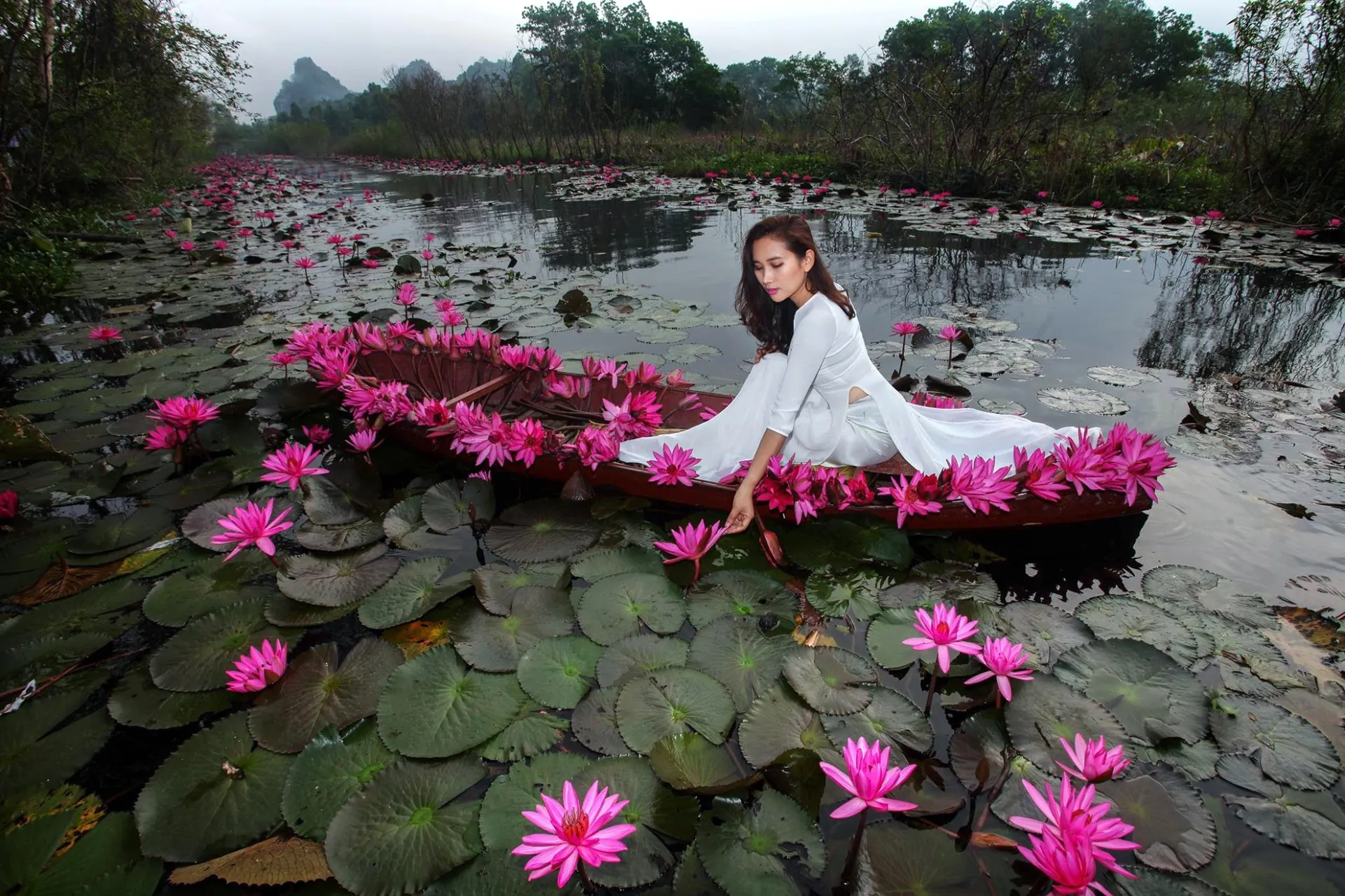
Yen Stream in summer, framed by blooming purple flowers. Photo: Tran Thanh Viet
Tran Trung Hieu, Deputy Director of the Hanoi Department of Tourism, said Huong Son has seen visible improvements in landscape and management, but the next phase will require more coordinated investment to align infrastructure, tourism products and service quality.
He added that training local residents to participate in tourism in a professional and culturally sensitive way is essential to long-term success.
Hanoi’s tourism authorities also plan large-scale promotional campaigns in the coming years, with Huong Pagoda identified as a priority destination in the capital’s tourism strategy.
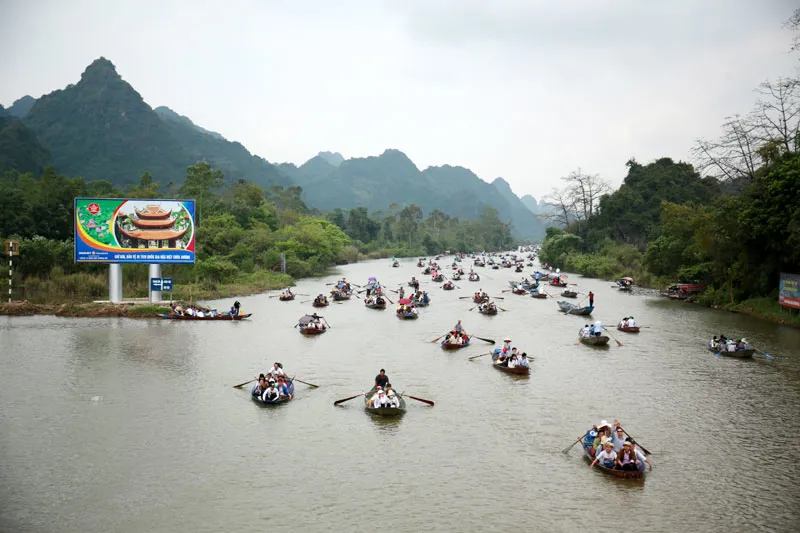
The tranquil Yen Stream at Huong Pagoda in spring. Photo: Cong Hung / The Hanoi Times
At the commune level, Huong Son is reshaping tourism as part of a broader cultural industry, with standardized guide content paving the way for multilingual audio guides and a shift toward community-based tourism linked to OCOP (One Commune, One Product) items and local specialties.
Plans include opening three new routes during the 2026 Huong Pagoda Festival to ease pressure on core sites, along with year-round cultural, experiential and sports tourism, off-season incentives and a proposed silk-themed cultural show aimed at international visitors.
For Hanoi, Huong Son is a test case for moving heritage tourism beyond pilgrimage. The “sleeping princess” is stirring, with ambitions to stay awake year-round.