WHO, UNICEF call on Vietnam to enforce food fortification rules
WHO and UNICEF said only 30% of households in Vietnam consume adequate iodized salt is alarming.
WHO and UNICEF have called on the Government of Vietnam to increase nutritional values by fostering the practice of adding vitamins and minerals to commonly consumed foods during processing.
The call was made after Vietnam was listed amongst 26 countries worldwide with iodine deficiency in the 2021 Iodine Global Network report, which was released last week.
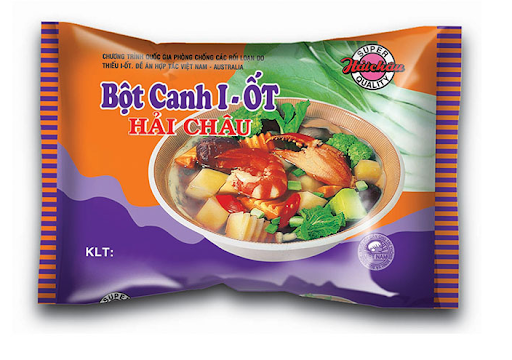
| A popular iodized soup powder in Vietnam was produced under the partnership by the governments of Vietnam and Australia. |
The two organizations strongly recommended the Government promote the implementation of Decree 09/2016/ND-CP that requires processed foods made with iodized salt and fortified wheat flour. It is in line with global recommendations to prevent and control micronutrient deficiency and highlights the Government’s commitment to improving the health of its population.
Under the decree, food producers and distributors can be supported by clear guiding regulations on compliance requirements and the use of fortified ingredients recognizing that in Vietnam, the main source of dietary salt and wheat flour is processed foods and meals consumed outside households.
“This will strengthen the human capital of Vietnam and is in line with the UN Decade of Action on Nutrition. We as part of the UN, recommit ourselves in supporting the Government’s drive toward attainment of national development priorities, including food fortification,” the two UN organizations said in a joint press statement released last week.
Iodine deficiency is a significant cause of mental retardation in children, and stillbirth and miscarriage in women. Iron deficiency increases the risk of maternal death and poor fetal development and impairs motoric and cognitive development in children and productivity among adults. Zinc deficiency increases the incidence of diarrhea, the risk of acute respiratory infection, and child mortality.
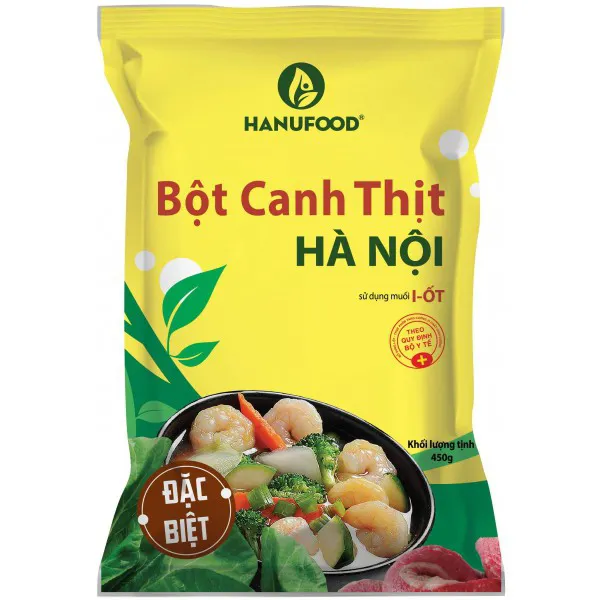
| An iodized seasoning granule popular in Hanoi. |
Based on the most recent available median urinary iodine concentration (UIC) data from 194 WHO Member States plus Liechtenstein and Palestine, Vietnam’s scorecard of iodine nutrition in 2021 in the general population based on school-age children (SAC) is “insufficient”.
In population monitoring of iodine status using UIC, school-age children serve as a proxy for the general population, therefore preference has been given to studies carried out in SAC.
Meanwhile, the 2019 General Nutrition Survey (GNS) conducted by the National Institute of Nutrition of the Ministry of Health (MOH) showed that only 30% of households in Vietnam were consuming adequate iodized salt, which is alarming.
Moreover, the GNS 2019 demonstrated that zinc deficiency among pregnant women and under 5 children is a significant public health problem, especially among pregnant women (63%) and under 5 children (58%). Iron deficiency anaemia among under 5 children was 53.2% and 50,3% among pregnant women.
WHO recommends that fortification of all food-grade salt, used in household and food processing, with iodine is a safe and effective strategy for the prevention and control of iodine deficiency disorders. Fortification of widely consumed staple foods and condiments, such as salt, vegetable, and wheat flour, is a globally recognized and highly cost-effective strategy for increasing nutrient intakes without the requirement to change eating behaviors or substantial government budget.
Based on WHO recommendations, 114 of the 126 countries have mandatory legislation for edible salt iodization have included the requirement to use iodized salt in processed foods.
Evidence shows that every dollar spent on salt iodization and flour fortification would result in a return on that investment of more than US$10. Fortification is not free, but all competitors will face the same costs of fortification. Making fortification mandatory is fair for both businesses and consumers. The same standards should be required of all relevant food products that are imported into Vietnam, the bodies noted.