Bad weather worsens air pollution in Hanoi
Experts have warned local residents against outdoor activities and advised that people should wear masks to protect themselves.
Weather conditions in recent days, with dry and cold air and a lack of rain and wind, have been blamed for the poor weather in Ha Noi. Air pollution is not new in Hanoi, but remains as pressing an issue as ever.
The Vietnam Environment Administration (VEA), under the Ministry of Natural Resources and Environment, has warned local residents against outdoor activities and advised that people should wear masks to protect themselves.
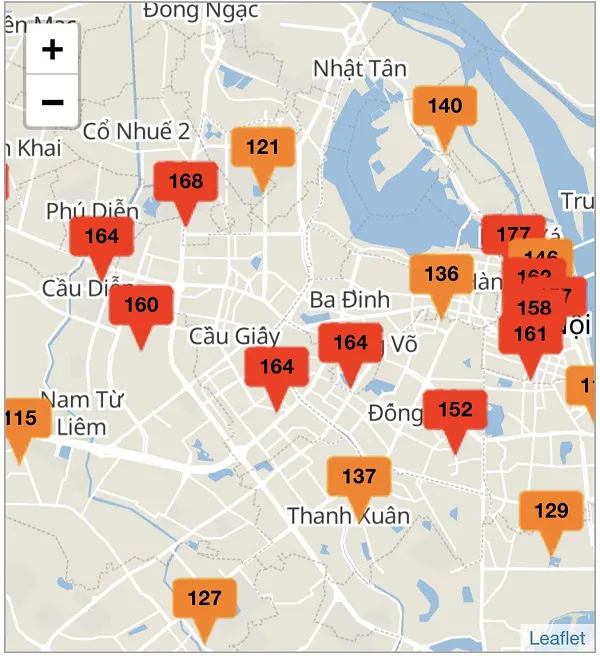
Hanoi's air quality on January 6 remains at a bad level in different locations. Source: moitruongthudo.vn |
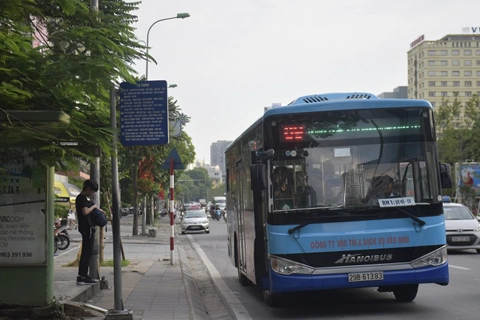
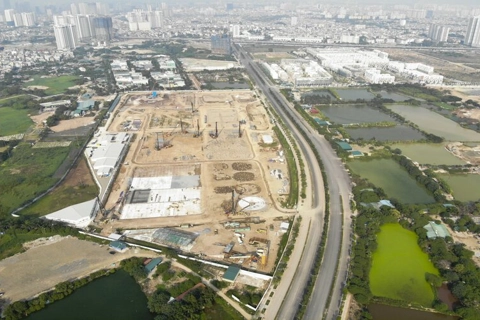
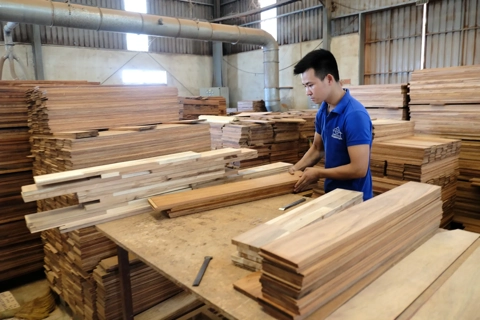
The municipal authorities have blamed the low air quality on large-scale construction, large number of private vehicles, intensive industrial activity like steel and cement production, and coal-fired power plants.
Besides, the northeast monsoon usually arrives in the northern part of Vietnam, including Hanoi, during the transitional period. The phenomenon of temperature inversion with some seasonal breeze makes the northern provinces’ air quality poorer.
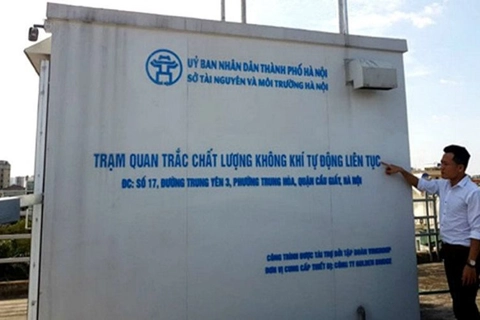
Data from automatic air monitoring points in recent days show that air quality in many northern localities of Vietnam, especially in Hanoi, is at an alarming level. The air quality in the capital city has deteriorated, with an index measuring it showing “very bad” or even "unhealthy" levels in many places.
Hanoi's current low air quality is the result of little air circulation in the atmosphere during the transitional period, the representative added.
Le Thanh Hai, former deputy head of the Vietnam Meteorological and Hydrological Administration, told VnExpress that Hanoi's low air quality is the result of little air circulation in the atmosphere during the transitional period.
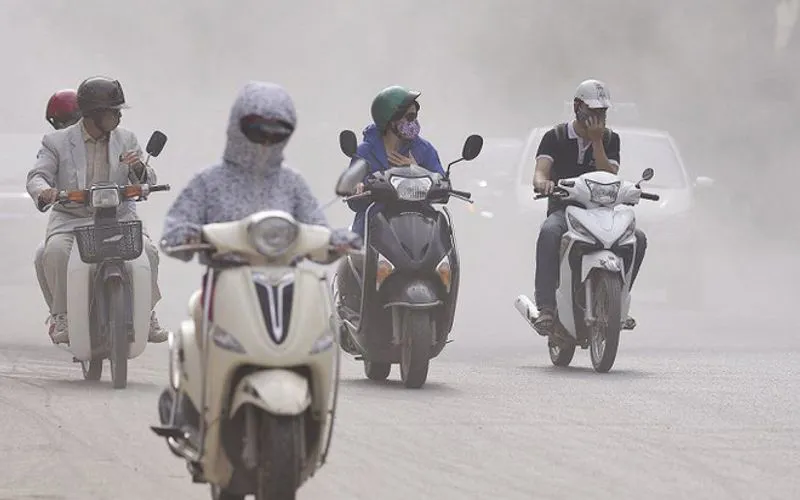
Hanoi's low air quality is the result of the transitional period. Photo: Kinhtedothi.vn |
Temperature inversion also contributed to the capital city’s poor air quality as thermal radiation is dispersed from the ground into the atmosphere, which causes fog at low altitude, he noted.
"Air masses in the city remain static instead of spreading in various shapes and sizes," Hai explained the high pollution indexes measured in the air of Hanoi in recent days.
"Air could not rise high by convection, so there was no cloud formation to produce rain and cleanse the atmosphere. There is also no wind to disperse the polluted air," he stressed.
Echoing Hai, Hoang Duong Tung, president of the Vietnam Clean Air Partnership, said temperature inversion at night prevents air from rising up into the atmosphere and confines them at the low altitude, which leads to air pollution.
"In the past, we used to pay less attention to the phenomenon of temperature inversion because there was not much dust pollution. Nowadays, air quality is automatically monitored every day, air pollution is obvious and draws people’s attention" Tung said.
"In addition to the main reasons such as heavy congestion, large-scale construction and straw burning, weather patterns during winter also make pollution levels worse than in other seasons."
Hanoi plans to ban straw and other waste burning from next year to reduce pollution. Vietnam suffers an estimated US$10.8-US$13.2 billion worth of economic losses due to air pollution each year, or equivalent to 5% of GDP.