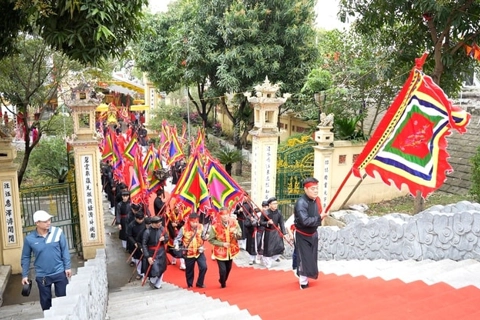
Yen Tu Spring Festival 2025 kicks off
The eagerly awaited Yen Tu Festival lasts until April, inviting pilgrims and visitors to immerse themselves in the cultural heritage of the nation.
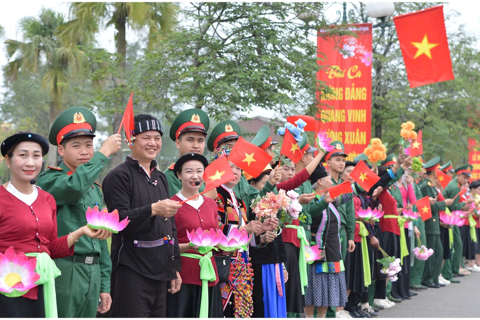
The revered Yen Tu Spring Festival 2025 was officially inaugurated on February 7 at the Truc Lam Yen Tu Cultural Center, located in Uong Bi City, Quang Ninh Province marking it as one of the largest and most spiritually significant festivals in the northern region of Vietnam.
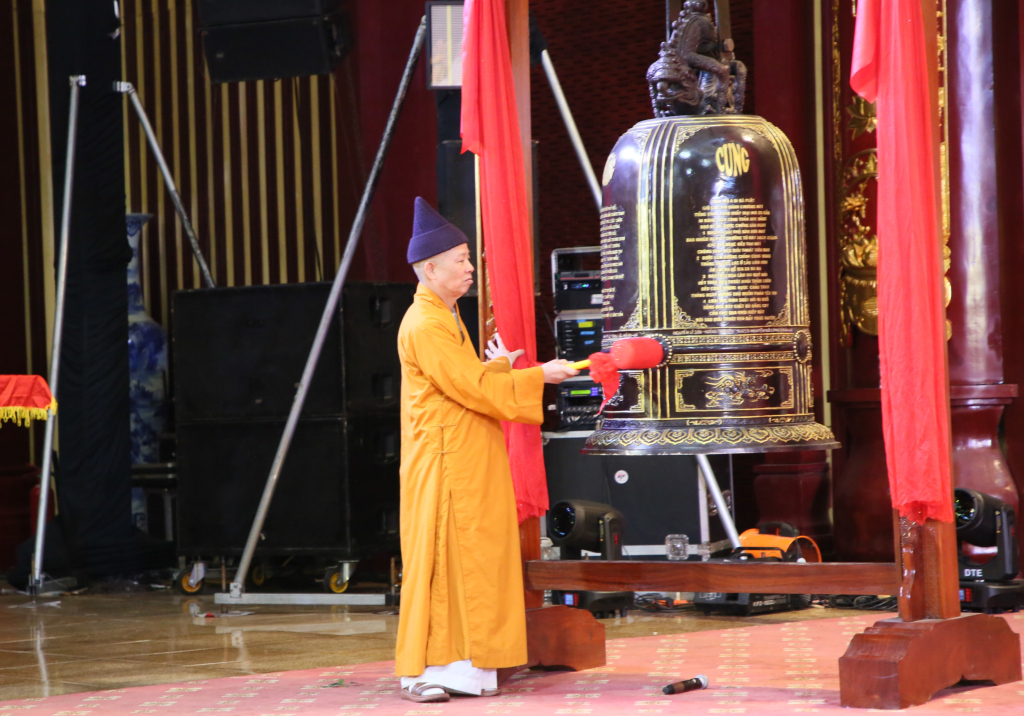
| Venerable Thich Thanh Quyet, Vice President of the Central Executive Council of the Buddhist Sangha of Vietnam, Head of the Executive Committee of the Buddhist Sangha of Quang Ninh Province, rings the bell to open the festival. Photo: Minh Ha, Duong Ha/ Quang Ninh Newspaper |
According to the Quang Ninh Provincial Buddhist Sangha, the centerpiece of this year's Festival is the sacred palanquin procession. The procession, the largest of its kind to date, will be graced by the participation of 11 palanquin teams from various localities within Uong Bi City, as well as members of the Quang Ninh Buddhist Sangha.
On the first day of the festival, it is estimated that nearly 20,000 domestic and international pilgrims visited the Yen Tu Relic Site.
Pham Tuan Dat, Chairman of the Uong Bi City People’s Committee, in his opening speech at the event, reminded visitors that Yen Tu is the holly land that has lived in the hearts of the Vietnamese people from ancient times to the present. It is here that King Tran Nhan Tong chose to retire, dedicate himself to meditation and found the Truc Lam Zen sect.
“The sacred mountain of Yen Tu carries the indelible spirit of the Vietnamese people,” he stated.
“While the Yen Tu Spring Festival serves as a profound reminder for future generations to honor Vietnamese roots, to bow in reverence, and to express gratitude to our ancestors and to King Tran Nhan Tong, the ‘Buddha King’,” he added.
| Buddhist rituals at the Yen Tu Festival |
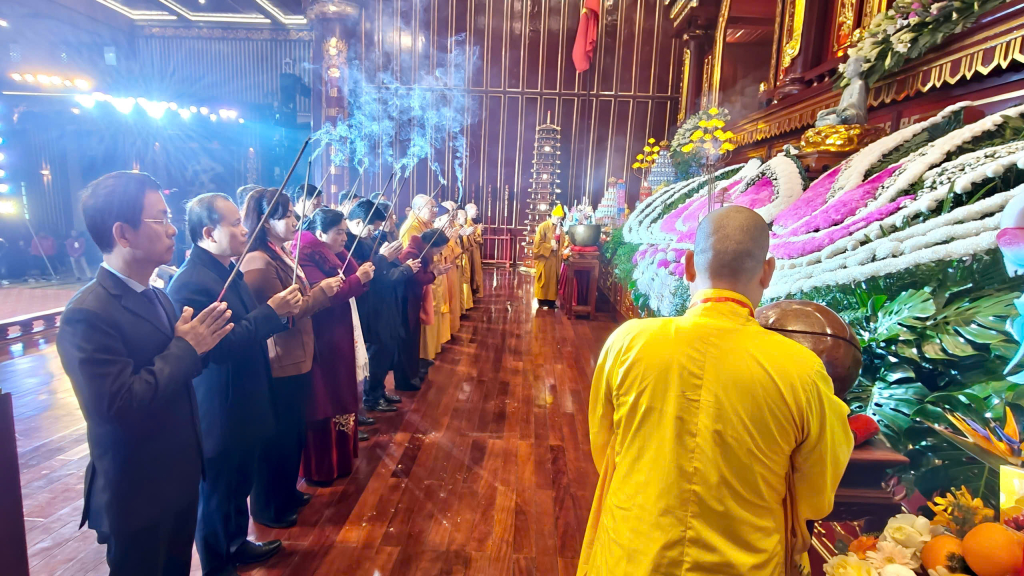
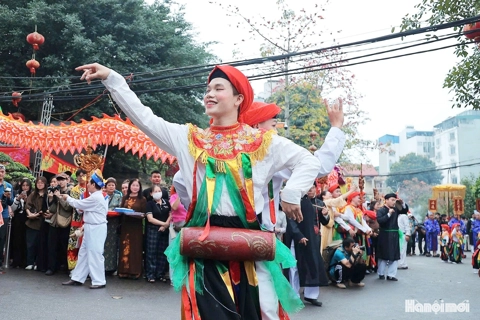
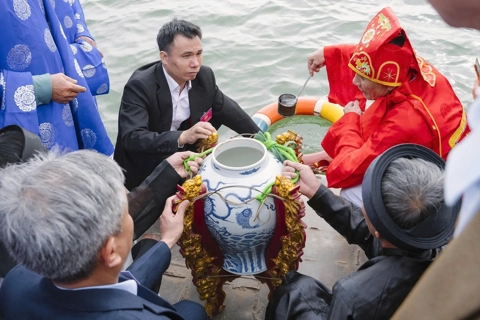
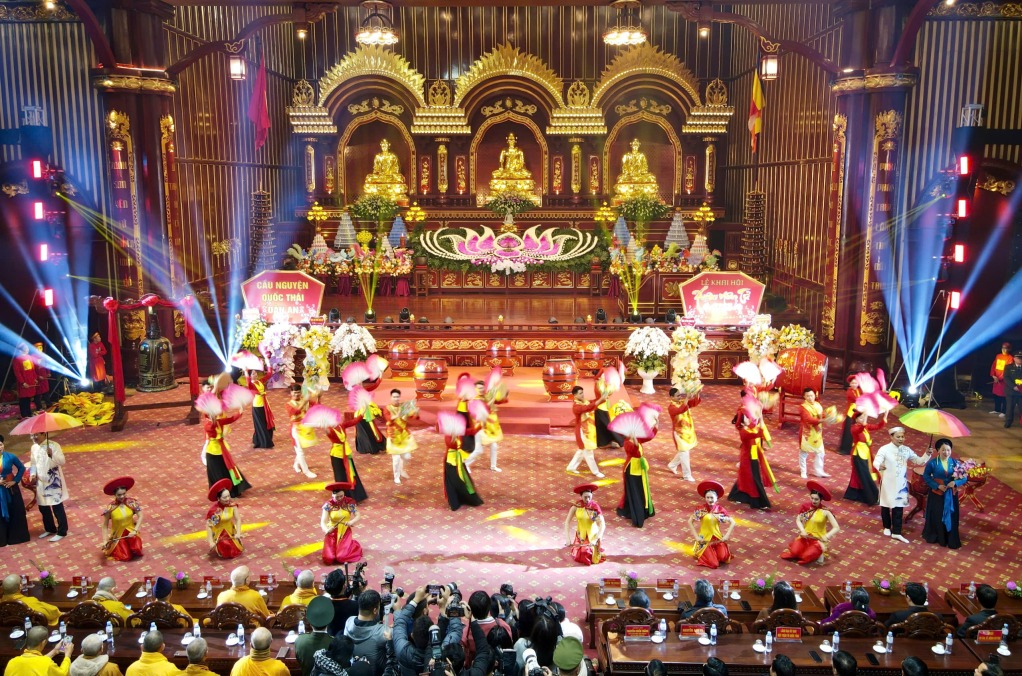
In 2025, the opening of the Yen Tu Spring Festival is marked by a grand and special ceremony that recreates an ancient spring celebration rich in tradition. The event features the revered palanquin procession, sacred offering ceremonies, and a series of profound spiritual rituals, including the Drum-Giving Ceremony, Bell-Requesting Ceremony, New Year's Blessing Ceremony, Yen Tu Sacred Seal Ceremony, among others.
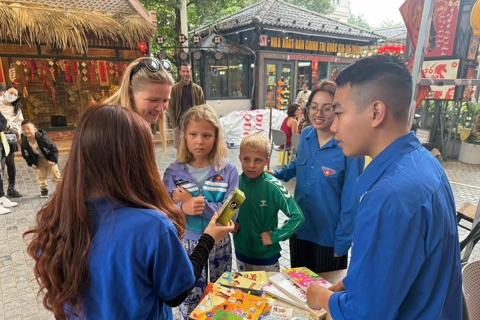
Aside from the historical and spiritual sites, the festival presents a series of cultural activities that resonate with Vietnam’s ancient traditions. These include Meditation instruction, a Spring Market, exhibitions on Dong Ho folk painting, folk games, and the flower lantern release ceremony, all of which invite pilgrims to immerse themselves in the cultural heritage of the nation.
On this auspicious opening day, monks, nuns, Buddhists, and devotees gathered with great reverence and made their pilgrimage to Yen Tu. Among them was Dao Lam Phong, a Vietnamese student studying in Germany, who shared his profound experience. “This is my first time attending the Yen Tu festival. The journey has deepened my understanding of the sacred land of King Tran Nhan Tong, who is honored as the only ‘Buddha King’ of Vietnam,” he said.
| A performance for the opening of the Yen Tu Festival |
The Yen Tu Spring Festival, held annually on the 10th day of the first Lunar New Year, has become a cultural treasure of the Vietnamese people. It embodies the spirit of “Uong nuoc nho nguon” or “When you drink the water, remember its source.” This festival serves as a gathering place for the faithful, a spiritual haven where the profound values passed down by our ancestors continue to inspire reverence and gratitude.
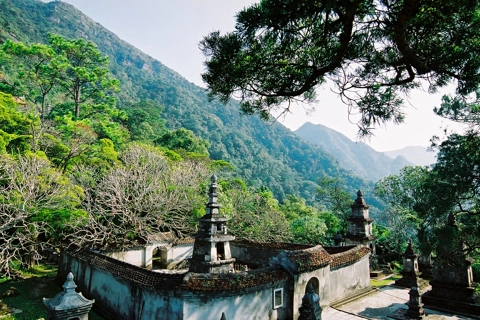
The Yen Tu mountain, at approximately 1,068 meters above sea level, is the highest peak in north-eastern Vietnam. Located north of the provincial capital of Uong Bi and not far from the world-famous Halong Bay, it is also known as Elephant Mountain, because some say it resembles a reclining elephant looking out to the sea.
The mountain has played a role in history for centuries, as a place for monks to go in search of sanctuary and seclusion. But the Yen Tu really came to prominence after the heroic Emperor Tran Nhan Tong settled here after abdicating in 1299 to dedicate himself to the practice of Buddhism and achieve enlightenment.
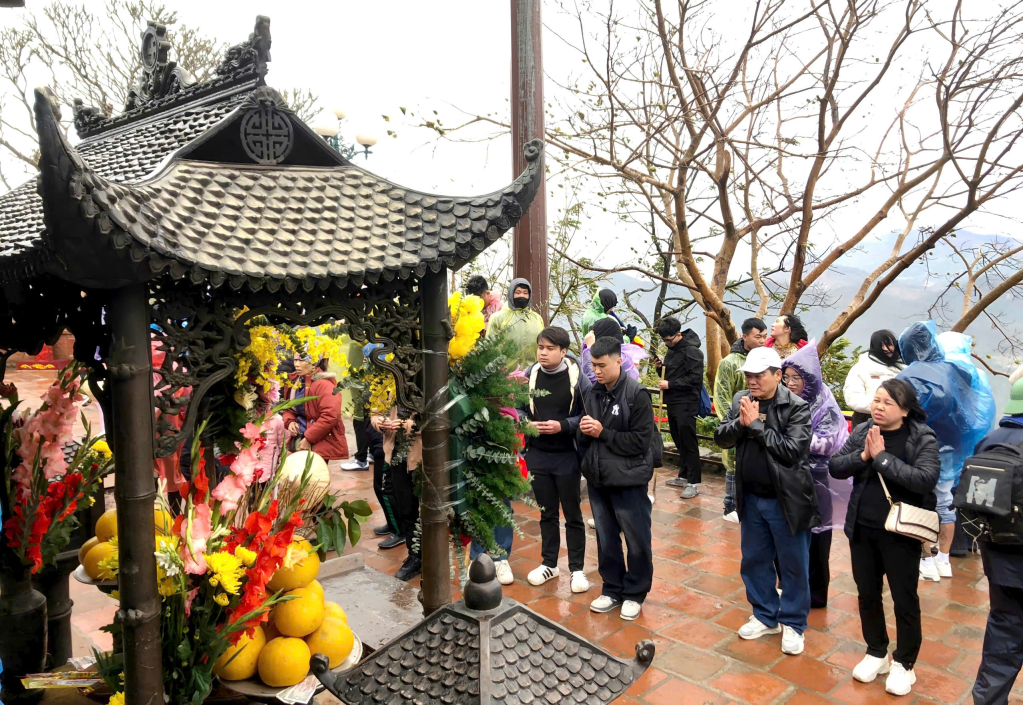
| During the Yen Tu Spring Festival, pilgrims and tourists pay homage at Dong Pagoda on Yen Tu Mountain. |
The beauty of Yen Tu, which is located in Uong Bi City, Quang Ninh Province, some 150 kilometers away from Hanoi’s center, lies in the majesty of its mountains mingled with the ancient and solemn serenity of its pagodas, shrines and towers.
Travelers to the Yen Tu Festival to distance themselves from the mundane and go on a religious pilgrimage in the midst of a mighty nature.
Earlier, in 2024, a dossier was submitted to UNESCO for the inscription of the Yen Tu Relic Site and the Yen Tu Spring Festival as World Heritage, with the hope that this sacred mountain, along with its profound spiritual and cultural significance, will be known and revered by people both within Vietnam and around the world.