99% of businesses in Hanoi plan to use e-invoices: Mayor
Hanoi would create the utmost convenience for businesses and taxpayers to turn to e-invoicing and address their concerns during the process, the city’s mayor has said.
With over 99% of businesses and associations in Hanoi planning to use e-invoices, the city is determined to further push for this new method to ensure a transparent and fair business environment.
| Chairman of the Hanoi People's Committee Chu Ngoc Anh at the launch. Photos: The Hanoi Times. |
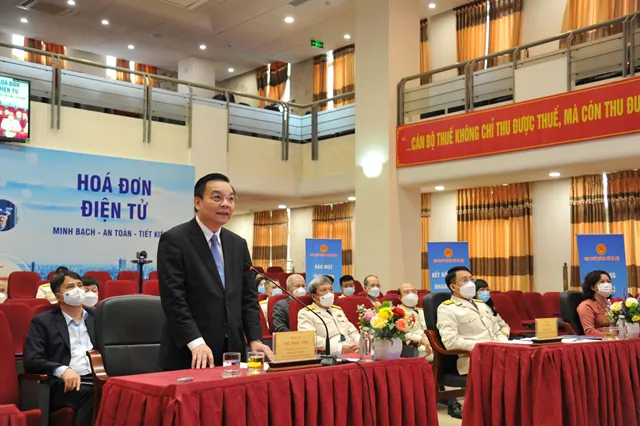
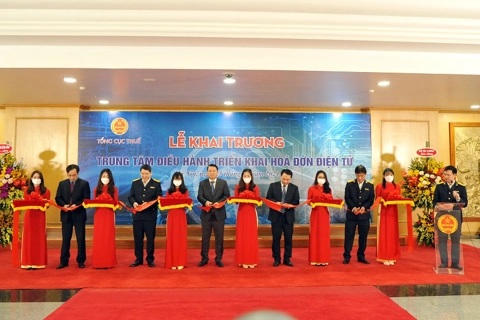
Chairman of the Hanoi People’s Committee Chu Ngoc Anh stressed the view at the launch of the pilot e-invoice management system on November 21, with Hanoi among the six localities joining the initiative.
According to Anh, this is one of the key steps towards the modernization of tax management that would directly impact the business environment and national competitiveness.
“This is particularly important as Hanoi and the country as a whole are pushing for the establishment of digital government,” Anh said.
With the huge benefits from e-invoices, especially in saving time and costs for all parties involved, Anh said the city considers the initiative significant during the process of digital transformation.
Anh said the city has set up a Steering Committee and a task force specialized in promoting the electronic billing to meet the implementation schedule set by the Ministry of Finance.
“Hanoi would create the utmost convenience for businesses and taxpayers turning to e-invoicing and address their concern during the process,” he added.
| Delegates at the launch. |

At the launch, Director of the General Department of Taxation Cao Anh Tuan noted the adoption of e-invoices would be proceeded into two phases, with the first phase to be implemented in six provinces/cities of Hanoi, Ho Chi Minh City, Haiphong, Quang Ninh, Phu Tho and Binh Dinh from November 2021; while the second phase is set to start in the remaining 57 localities later.
“The goal is to have 100% of businesses in Vietnam use e-invoices until June 30, 2022,” Tuan said.
E-invoicing adoption as key priorities in 2021-2022
Deputy Prime Minister Le Minh Khai stressed the adoption of e-invoicing in the country remains a key task for the Ministry of Finance (MoF) during the 2021-2022 period.
Khai expected the new method to substantially change the operation of both tax authorities and businesses for the better, especially in lowering administrative costs and promoting digitalization.
“This would have huge impacts not only for the tax management system but also for the business and the economy,” he said.
To ensure the effective implementation of e-invoicing, Khai called for the MoF to continue finalizing the tax management system for transparent, consistent, and accurate information.
“Vietnam’s tax management practices should aim for regional and international standards, meeting demands of both the policy-making process and taxpayers,” Khai added.
Khai requested the authorities to raise public awareness on the use of e-invoices and expand communication channels to assist the people and businesses with any issues related to this process.
For the taxation sector to play a greater role in socio-economic recovery amid the pandemic, Khai called for Government agencies to soon complete a draft economic recovery plan in line with the overall Covid-19 response strategy.
“This is the main task for Vietnam to overcome the difficulties and catch up with the global economic recovery,” he said.