A Hanoian keeps traditional crafts alive
Each artisan village offers visitors a unique experience with its own cultural and historical characteristics.
Ngo Quy Duc, a Hanoi native, founded the "Return to the Village" project with the noble mission of preserving and promoting cultural values and priceless national crafts to the community after realizing that traditional cultural values are progressively disappearing over time.
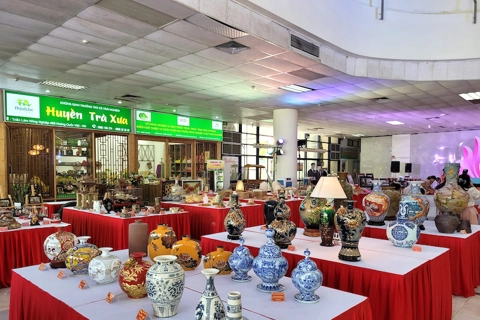
Full of enthusiasm for traditional Vietnamese village handicrafts, Duc has created a space to display them in an old French architecture house on Chau Long Street in Hanoi.
A corner displaying handicrafts made by artisans from various artisan villages throughout Vietnam in the "Return to the Village" space. Photos: Quy Duc |
.jpeg)
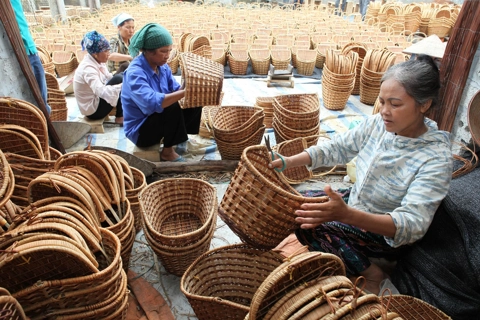
"When I was a child, I saw many traditional handicraft products in Hanoi people's houses, from simple things like baskets to more sophisticated things like tables and chairs made of rattan and bamboo. However, as I grew up, handmade products gradually lost their place in daily life, which made me feel worried and wanted to do something to preserve these traditional values," Duc told The Hanoi Times.
"I want to learn more about traditional handicraft villages and bring handmade products back into the lives of Vietnamese people. That's why I started my journey," Duc said.
Close relationships with artisan villages, forged through many visits, led Duc to the idea of preserving and promoting traditional cultural values. In 2020, with the support of partners, his project called "Return to the Village" was officially launched.
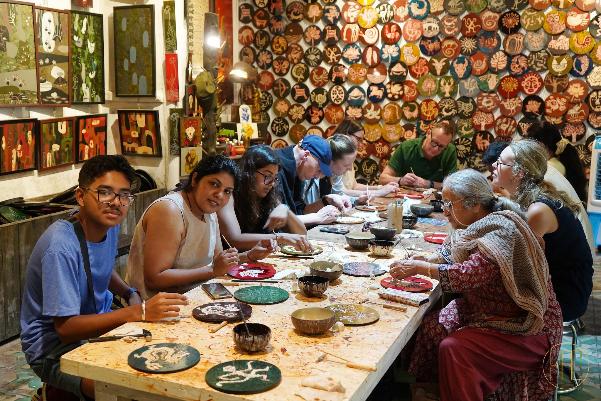
"I'm just a person who brings people together, not deeply involved in organizing professional tourism." Duc said, adding that tourists will have the opportunity to meet and interact with skilled craftsmen in the village to learn basic handicraft techniques. Thanks to this experience, everyone will know how sophisticated, meticulous and skillful it is to make a handmade product.
Ngo Quy Duc and Te Tieu ancient puppet. |
.jpeg)
"There are artisan villages that make high-quality products but have not found a market for them. At that time, I brought customers to these villages through experiential travel. I also introduce traders to these handicrafts," Duc stressed.
Rattan and bamboo artisans can join hands with ceramic craftsmen to create a product. In addition to working independently and alone, Vietnamese artisan villages can work together to create unique items.
"In the future, I hope to connect more craft villages, not just one or two, but up to four and five craft villages working together on one product," Duc said.
He emphasized that each handicraft village has its own cultural and historical values, which can provide visitors with interesting experiences. "We can create unique tours to help visitors discover the beauty of each handicraft village," Duc added.
Continue to create stories about villages.
With enthusiasm and unremitting efforts, "Return to the Village" has become a successful project, contributing to the preservation and promotion of the cultural value of Vietnamese handicraft villages and bringing elite handicraft products closer to consumers
Ngo Quy Duc suggests that Hoan Kiem District set aside an area on the walking street for handicraft activities. |

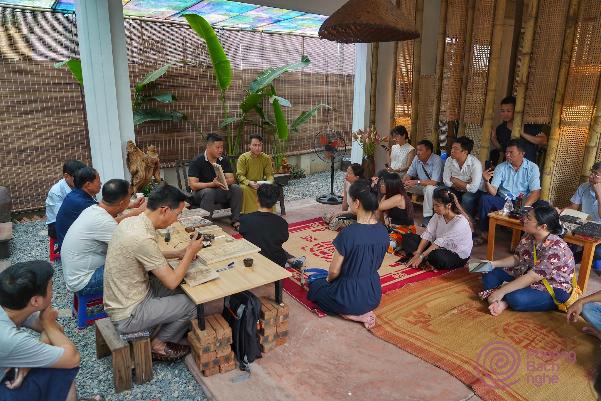
In addition, Duc and the Center for Research, Development and Application of Vietnamese Craft Village Products recently launched Bach Nghe Ward, a creative cultural space in Ha Dong District, Hanoi.
The "Bach Nghe Ward" project organizes experiential sessions on a different Vietnamese traditional handicraft village every month, providing visitors with rich and diverse cultural experiences.
The journey of "Return to the Village" and "Bach Nghe Ward" is a testament to the enthusiasm of Ngo Quy Duc in particular and those who are passionate about traditional national values in general. Duc's project has not only economic significance, but is also an affirmation of the strong vitality of Vietnamese village craft culture. The projects promise to develop and spread in the future.
Stories about history and culture not only reach the Vietnamese community, but also foreign friends. |
The website www.velang.vn is updated with information on more than 100 handicraft villages, mainly in the Northern Delta and North Central regions of Vietnam. It is a large data warehouse created by Duc alone and categorized into carpentry, leather, bronze casting, ceramics, knitting, and others.
It introduces in detail about its history, products, unique features, ways to travel, ways to contact with craft villagers. It is a reliable bridge for many tourists, customers, partners with craft villages.
Duc himself also supports many craft villages in product design, tourism models and experiences, such as Phuong Duc to he craft village in Phu Xuyen District, Hien Nhan sculpture craft village in Thuong Tin District.
"In the future, I plan to introduce the quality products of Vietnamese artisan villages not only to the local community, but also to international visitors. I want to introduce stories about the history, culture and unique identity of the Vietnamese people. I want friends around the world to see the quintessence of Vietnamese handicraft villages," Duc told The Hanoi Times.
Bach Nghe Ward has coordinated with young artisans to organize a seminar on the revival of Thanh Lieu woodcarving village in the northern province of Hai Duong. |
Handicrafts on display at the "Return to the Village" project space on Chau Long Street, Ba Dinh District, Hanoi. |
.jpeg)