Amended Capital Law to boost tourism in Hanoi: Tourism Association
The amended Capital Law provides a sound legal framework for Hanoi's tourism development.
Hanoi's tourism industry will experience a significant uptick following the National Assembly's passage of the amended Capital Law at the end of June. The Deputy Chairman of the Hanoi Tourism Association, Le Ba Dung, discusses with The Hanoi Times how the ratification of the new law will affect tourism in the city.
| Le Ba Dung, Deputy Chairman of the Hanoi Tourism Association. |

How do you think the amended Capital Law will benefit Hanoi's tourism sector?
The amended Capital Law consists of seven chapters and 54 articles, which is a huge change from the 2012 Capital Law. It provides a profound basis for the capital to further develop. As I see it, the law provides the legal basis for Hanoi authorities to improve state management in all areas and facilitates the city's seeking of private funding to support socio-economic development.
Articles 21, 39, 41 and 43 of the amended Capital Law provide an extraordinary mechanism for Hanoi's cultural, sports and tourism sector. They prove the drafters' strong will to make the tourism sector the spearhead of the local economy.
The law specifically states that resources for cultural development and preservation will be given priority and that resources should be used to their fullest potential in order to promote cultural features and draw tourists, increase trade, raise locals' standards of living, and safeguard local craft villages.
How will the amended Capital Law affect Hanoi’s tourism sector?
According to the amended Capital Law, historical relics and heritage sites are the key to preserving and promoting cultural values. Hanoi has many great places, such as the Ho Chi Minh Presidential Palace Complex, the Ho Chi Minh Mausoleum, the Ho Chi Minh Museum, the Thang Long Imperial Citadel, and the Temple of Literature. These sites have all been inscribed on the UNESCO World Heritage List. The law also allows Hanoi authorities to build a cultural industry center on the Red River islet and other areas suitable for cultural spaces.
| Foreign tourists stroll along the shore of Hoan Kiem Lake. Photo: Hoai Nam/The Hanoi Times |
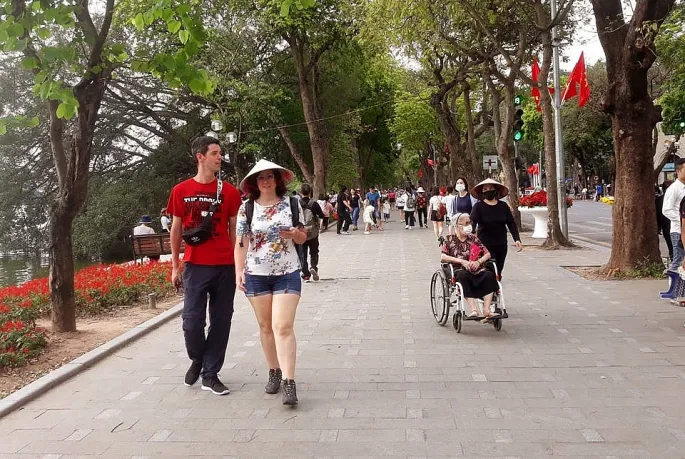
Under the amended law, which lays the groundwork for the tourism sector, government agencies and tour operators can now explore new itineraries and routes that showcase Hanoi's distinctive features and attract more domestic and international visitors to the city.
Clause B of Article 7 allows the operator of a commercial and cultural center/area to create sources of revenue and set the price to cover the operation, giving businesses more autonomy in making tourism investments.
Such provisions show that the amended Capital Law establishes a sound legal framework for Hanoi to explore and exploit cultural values and resources.
In your opinion, what would be the most important policies that have been incorporated into the amendment to the Capital Law?
I think the most important perspective and direction transposed into the amended Capital Law is greater decentralization and delegation of powers. I'm very keen on the provisions of the law on the structure of the Hanoi government. It is a whole new chapter in the amended legislation. Extraordinary policies and mechanisms require an extraordinary structure and organization of the government, much more extraordinary than that of other cities and provinces.
| A cruise on the Red River. Photo: Hoai Nam/The Hanoi Times |
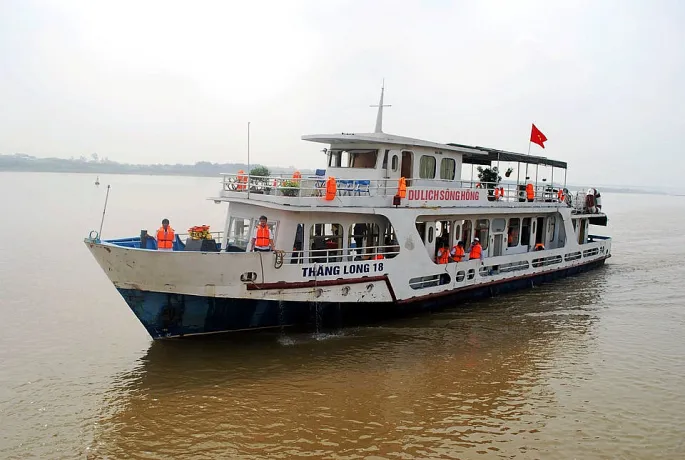
Fulfilling the tasks outlined in the amended Capital Law will require a dynamic, efficient and streamlined government in Hanoi. Leaders and officials need to be creative and have a "dare to think and dare to do" attitude. The capital must also work out policies to attract talent and cultivate a sustainable source of high-quality employees and professionals.
What do you suggest for the city's tourism sector to capitalize on the law?
Government agencies, including the Hanoi Department of Tourism, need to submit to the municipal People's Committee policies that meet the demand of people and travel companies and facilitate them to open new tours and new travel routes.
The Covid-19 pandemic has really taken a heavy toll on the local business community. Therefore, I expect the government to ease the credit conditions for local firms so that their businesses can recover. To do this, the authorities should have a dialogue with businesses and listen to them.
In addition, the city and local authorities should set the direction for tour operators to open new tour routes to explore Hanoi's cultural features. As a representative of tour operators, I expect more events from the Department of Tourism to promote Hanoi tourism in international markets.
Thank you for your time!