ASEAN Eco-Schools Awards 2025 honors 60 Vietnamese schools nationwide
The ASEAN Eco-Schools Vietnam Awards 2025 marked a nationwide effort to promote plastic waste-free campuses, recognizing exemplary education institutions for integrating sustainability, environmental responsibility and green practices into teaching, learning and daily school operations.
THE HANOI TIMES — Sixty schools nationwide, representing all levels of general education, received honorable awards at the ASEAN Eco-Schools Vietnam Awards 2025 – Plastic Waste-Free Schools ceremony in Hanoi on January 31.
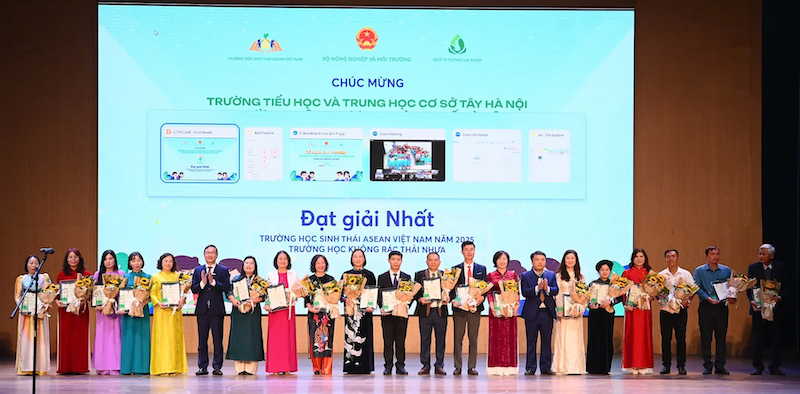
The organizing committee presents first prizes to the winning schools. Photo courtesy of the organization
The awards recognized schools for effective initiatives to reduce plastic waste and promote environmentally responsible practices.
The winners included three first prizes, nine second prizes, 15 third prizes, 24 consolation prizes and nine creativity awards.
First prizes went to Ha An Primary School in Quang Ninh Province; Tay Ha Noi Primary and Lower Secondary School in Hanoi; and FPT Primary, Lower Secondary and Upper Secondary School Bac Giang in Bac Ninh Province.
Creativity awards were presented to Le Hong Phong Primary School in Danang, Tran Quoc Toan Primary School in Lam Dong Province, Co To Primary and Lower Secondary School in Quang Ninh Province, Hiep Tung Lower Secondary School in Ca Mau Province, An Thanh Tay Lower Secondary School in Cantho, Trung Khanh Upper Secondary School in Cao Bang Province and Dam San Ethnic Boarding Upper Secondary School in Dak Lak Province.
Judges selected the winners from nearly 300 applications submitted by schools in 34 provinces and cities, highlighting growing interest in sustainability across Vietnam’s education system.
The awards form part of cooperation under the ASEAN Senior Officials on the Environment framework, reflecting ASEAN countries’ shared commitment to sustainable development and environmental protection.
Le Cong Thanh, Deputy Minister of Agriculture and Environment, said the program highlights practical green school models and aims to create lasting change in environmental awareness and behavior starting in classrooms.
“Students act as environmental ambassadors, spreading green practices to their families and communities,” he said.
He called on ministries, local authorities, schools and relevant organizations to strengthen coordination, scale up the ASEAN Eco-Schools – Plastic Waste-Free Schools model and integrate environmental education, the circular economy and sustainable development into school curricula.