Book reveals painter Trinh Huu Ngoc's career as legacy of Indochinese art
The 400-page book of Painter Trinh Huu Ngoc - Special Legacy of Franco-Indochinese Fine Arts contains more than 600 images presented bilingually in Vietnamese and English.
A bilingual book on the life and career of the late artist Trinh Huu Ngoc (1912-1997), a graduate of the Indochina College of Fine Arts in the early 20th century, was released on July 7 by Omega Plus and Fine Arts Publishing House.
Entitled Painter Trinh Huu Ngoc - Special Legacy of Franco-Indochinese Fine Arts, the publication was written by artist Trinh Lu as a dedication to his father, an artist who made tireless contributions to the fields of painting and interior design in Vietnam.
| The 400-page English-Vietnamese bilingual book includes some 600 images. Photo: Omega Plus |
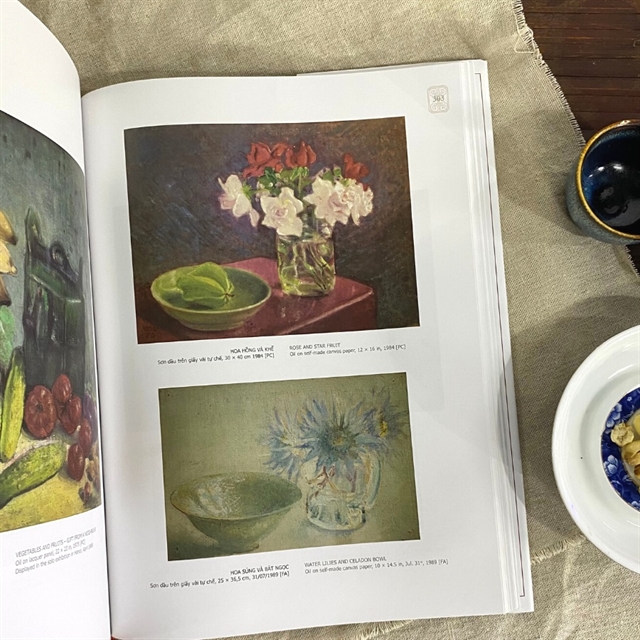
The 400-page bilingual English-Vietnamese book contains about 600 pictures and is divided into three parts: Life and Career, Special Legacy, and Commentary and Remembrance.
Starting from the flow of time with the ups and downs of life, the author has depicted the ideological progress and talent of painter Trinh Huu Ngoc during the war and the period of social transformation, despite the challenges and hardships he faced in his personal life and career.
A graduate of the Indochina College of Fine Arts, artist Ngoc utilized his expertise and creativity not only in painting and finding unique techniques for creating Vietnamese lacquer paintings, but also in other fields of art.
| The book is written in Vietnamese and English. Photo: Omega Plus |

He has achieved great success and recognition through his collaboration with the MÉMO Ébénisterie wood workshop, his illustrations for the book Hoa Xuan (Spring Flowers) and the Tri Tan newspaper, and his creativity in Zen painting, which involves using "eyes to see and hands to paint". This philosophy is reflected in the extensive collection of works presented in this book.
Readers will not only contemplate Trinh Huu Ngoc's drawing and thinking, but can also compare his works with the styles and techniques of his respected teachers such as Victor Tardieu, Joseph Inguimberty, and Alix Aymé. Through this comparison, they can understand why the celebrated artist is considered a special legacy of Indochina Fine Arts.
Speaking about Ngoc's career, historical researcher Nguyen Ba Dam said: "Even the act of carving tables and chairs to produce artworks is a testament to Trinh Huu Ngoc's talent. His name is known to many people as the owner of Mémo Carpentry, which specializes in producing modern-style furniture".
| Painter Trinh Lu wrote the book as a dedication to his father. Photo courtesy of the artist |

Painter Trinh Lu, whose real name is Trinh Huu Tuan, was born in Hanoi in 1948. He inherited his love for art from his father, the late painter Trinh Huu Ngoc, and his mother, artist Nguyen Thi Khang. He has pursued and achieved success in various fields, from painting to writing, book translation, and communication development consulting. Trinh Lu always refers to his father as a great teacher who influences his children and grandchildren in their way of life, career choices, and artistic thinking.