Bright outlook for Vietnam's real estate market
Industrial and leisure properties are expected to keep drawing investors this year.
The revision of several laws, including the Investment Law and the Law on Real Estate Trading, along with the Government’s determination to address legal violations in financial and real estate markets, is set by a new pulling factor for the field in the coming time.
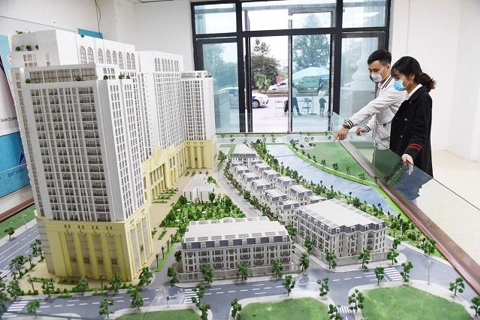
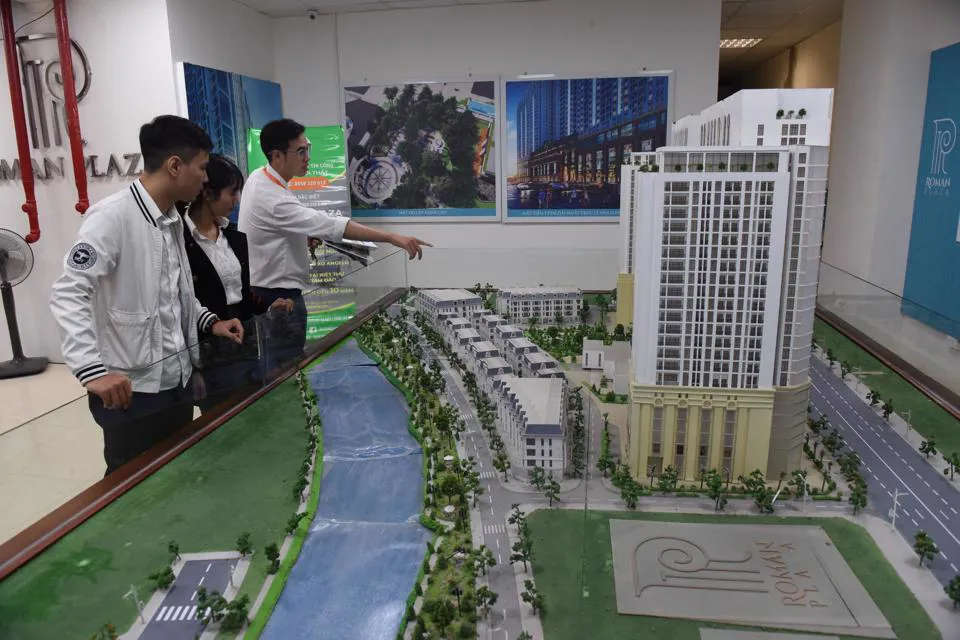
| Buyers look at a property project in Hanoi. Photo: Cong Hung |
The real estate market in the first quarter of 2022 went through a turbulent period with leaders in several provinces/cities being arrested for land mismanagement, and property companies artificially inflating land prices to manipulate the market in Thu Thiem New Urban Area, Ho Chi Minh City.
These issues have put the market into a crisis mode as it has already been severely hurt by the pandemic since last year.
According to experts, there remains a silver lining as the pandemic remains an opportunity for the market to clear out weak and inefficient companies, and only those with great adaptability and resilience can survive.
Meanwhile, the Government’s efforts to clean the market would pave the way for its healthy and sustainable development in the long-term and build back confidence from investors.
“Compliant businesses and investors should be protected by the law, while all market activities are expected to be transparent and public for the interests of all parties involved,” said Chairman of the Vietnam Association of Realtors (VARS) Nguyen Van Dinh.
Market highlights
In a difficult time, industrial properties have emerged as a highlight for the real estate market with an average growth of 15-18%, according to the Vietnam Real Estate Association, referring to steady inflows of FDI.
During the first quarter of 2022, Vietnam attracted US$8.9 billion in FDI commitments, of which the disbursed amount rose by 7.8% year-on-year to $4.42 billion, the highest first-quarter figure in the past five years.
Among economic fields, FDI into real estate rose by 213% year-on-year, while the number of new property developers has also increased by 47%.
The positive expansion of the industrial property sector is set to create spillover effects to other segments, especially as foreign investors are now able to return to Vietnam.
This is not to mention the fact that the market is one of the main beneficiaries of the socio-economic recovery program for the 2022-2023 period worth US$15.4 billion, as the Government eyes a quick economic rebound.
Market research from the real estate website batdongsan.com.vn reported growing interest in all market segments by 23% year-on-year in the first quarter of 2022.
It is expected that 54,000 new products would be listed during the 2022-2023 period.
In the North, industrial parks are in high demand with occupancy rates going up to 95% in Bac Ninh, 90% in Hanoi, Hung Yen (89%), or Haiphong (73%).
“In 2022, industrial and leisure properties are expected to keep drawing investors’ interest”, said Dinh from the VARS.