Building Hanoi’s identity through architecture
For Hanoi to be a cultured, civilized, and modern city, there must be a heightened awareness of preserving heritage and natural landscapes for the community.
Experts have recommended that Hanoi bolster its brand identity by fostering architecturally harmonious development that seamlessly integrates with natural, economic, cultural, social, and environmental facets.
| An old French architectural villa in Hanoi. Photo: Doan Thanh/The Hanoi Times |
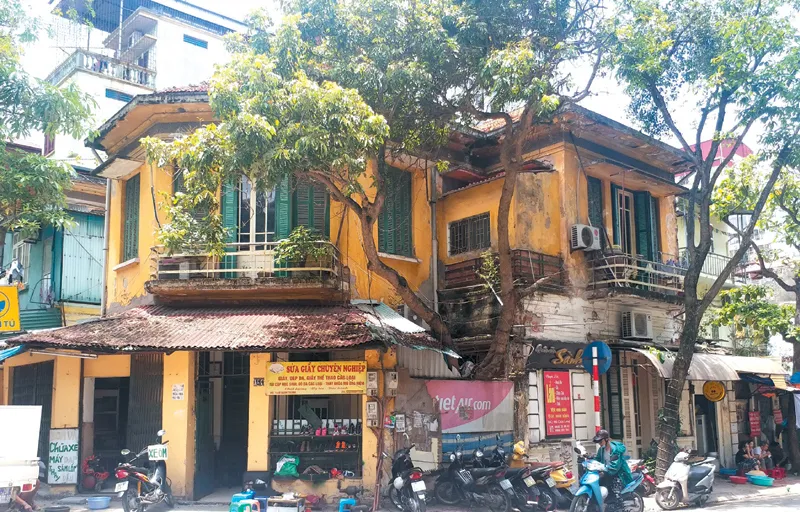
Professor and Architect Hoang Dao Kinh in a recent conference on the vision for Hanoi's planning until 2030, with a vision to 2045, expressed his view that the architectural heritage of the French colonial period, from the late 19th to the mid-20th century, contributes significantly to the urban assets and defines the image of the capital.
This heritage encompasses a full spectrum of architectural styles found in modern cities, including street and block planning that reflects the characteristics of the colonial era. It serves as a seamless connection between the urban patterns of East Asian cities and Western urban models, he noted.
“The architectural landscape, ranging from monumental structures to townhouses, exhibits a diversity of styles and scales, creating a harmonious and enduring aesthetic for the city,” said Kinh.
Sharing Kinh’s view, Architect Pham Hoang Phuong from the National Institute of Architecture argued that in Hanoi, a historically rich city with 1,000 years of history, establishing the architectural identity for historic downtown areas and the city as a whole contributes to building the city's brand. Additionally, this direction serves as a foundation for developing urban architectural landscapes that make substantial contributions to the overall economic, cultural, and social development of the capital, as well as enhancing the quality of life for residents.
"In general, the fundamental factors that establish the urban identity include cohesive elements such as the environment, natural landscapes, the accumulation or structure of urban culture, development history, spatial characteristics, physical and visual characteristics, material and functional structures, socio-economic structure, lifestyle, and quality of life, social environment, and the city's social relationships," analyzed Phuong.
Architect Pham Thanh Tung, Head of the Office of the Vietnam Architects Association, believed that Hanoi, along with the entire country, is facing new opportunities in the fourth industrial revolution, which is characterized by digitization, the Internet of Things, and artificial intelligence.
Therefore, the city needs to integrate new technologies into the management of its Urban Architectural Heritage Fund. "For Hanoi to be a cultured, civilized, modern, smart, and distinctive city, there must be a heightened awareness of protecting and preserving heritage and natural landscapes for the community," emphasized Tung.
In line with the aforementioned direction and solutions, architect Pham Hoang Phuong suggested that the architectural identity of Hanoi should be built on five fundamental pillars should be simultaneously. These involve developing the capital city with modern architecture based on the application of new technologies, materials, and architectural forms while preserving a distinctive and recognizable character by inheriting local architectural and cultural values. The planning process for the development of Hanoi must ensure the preservation of identity and harmony with natural, economic, cultural, social, and environmental conditions, as well as scientific and technical standards. It should also guarantee consistency in managing architectural spaces, striking a harmonious balance between the past and the present.
Furthermore, existing urban areas need comprehensive development and infrastructure enhancements, taking into account technical and social aspects, in harmony with natural conditions, climate, topography, and local characteristics. The establishment of regional identity based on the inheritance of architectural and urban landscape values is crucial. Efforts to preserve the urban architectural heritage, especially valuable structures, will serve as the foundation for promoting the distinctive architectural values of each region, he noted.
Hanoi has recently released an action plan for architectural development until 2030, with a vision to 2050. Under the plan, specific measures for the capital’s urban development include research into environmentally friendly materials to achieve "green architecture" criteria. This involves the gradual creation of landscaped spaces that blend in with nature, ensuring efficient land use, and coordinating the overall and specific management of architectural spaces in line with Hanoi's general planning. |