Cau Giay District: Land of traditional craft villages
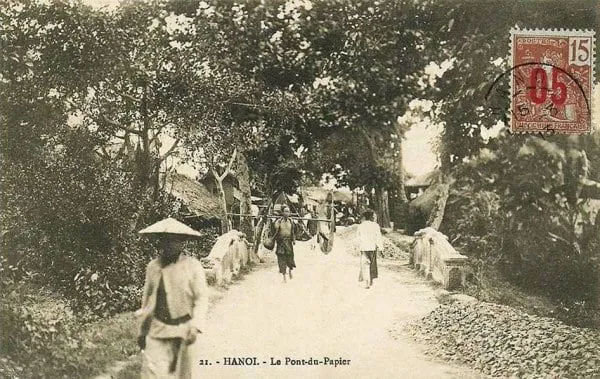
Cau Giay means paper bridge. The name comes from the traditional craft of making paper since ancient times.
Cau Giay (Paper Bridge) District is an ancient land of Thang Long (now Hanoi) with many traditional craft villages and a proud history.
The name Cau Giay comes from paper making. Each village specialized in making different kinds of paper. Yen Hoa villagers made raw paper, do (poonah) paper; in An Thai, people made giay ban (paper for common people's use), while Nghia Do villagers made giay sac phong (paper used to make king's certificates to grant titles to people).
Paper making craft
After many administrative boundary adjustments of the capital, the current Cau Giay District with 8 wards is located in the west of Hanoi, bordering Tay Ho and Bac Tu Liem Districts in the north, Dong Da and Ba Dinh districts in the east, Thanh Xuan District in the south, and Nam Tu Liem District in the west.
| Cau Giay (Paper Bridge) in the past. File photo |
Cau Giay is home to several handicraft villages, including Vong Village (Dich Vong Hau), known for making com (young green sticky rice flakes, a specialty of Hanoi cuisine), Gian Village, which produces incense, and Nghia Do Village, which specializes in making malt candy.
The people of Cau Giay are also famous for their eagerness to study. It is the home of 18 Ph.D. holders in the villages of Giay (Thuong Yen Quyet) and Cot (Ha Yen Quyet). The number of bachelors in Cau Giay in ancient times reached hundreds.
Cau Giay District has many historical, cultural and revolutionary relics.
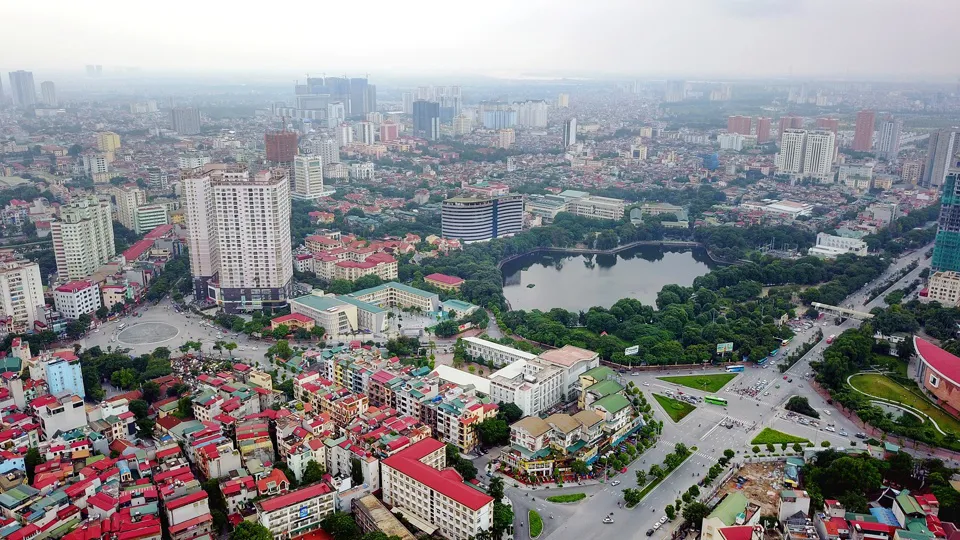
Now, Cau Giay is a metropolitan district with an increasingly modern urban infrastructure after Hanoi expanded to the west.
Many excellent schools are located in the district, including the Academy of Journalism and Communication, the University of Languages and International Studies, and the Vietnam National University.
The economy of Cau Giay District has always been oriented towards services - trade, industry - construction in order to accelerate economic development and improve living standards.
In particular, Cau Giay District is proud to be the home of the first centralized Information Technology Park in Hanoi.
| Cau Giay District nowadays. Photo: The Hanoi Times |
Bui Tuan Anh, Chairman of the Cau Giay District People's Committee, said the local government is always focused on improving people's lives and supporting businesses.
In the coming period, Cau Giay District will continue to improve infrastructure and ensure better welfare in the area.
"In addition to business development, we are also concerned about people's health care and education, providing support for invalids, veterans, martyrs' families and people in difficult circumstances in the district," he said.
Famous destinations
Cau Giay District has many famous monuments and attractions that tourists should not miss when visiting.
Ha Pagoda
Ha Pagoda was built in the 6th century and attracts many Buddhists and tourists. The pagoda is located in a quiet and serene place, giving visitors a peaceful experience.
Many young people visit Ha Pagoda to pray for love and happiness, although the pagoda is not associated with any love-related legends.
Vong Village
Vong village is famous for its green sticky rice, the ingredient of Hanoi specialties such as banh com (green sticky rice cake stuffed with mung bean), com xao (fried green sticky rice) and xoi com (green sticky rice cooked with mung bean and lotus seeds).
| Vong villager makes green rice flakes. Photo: The Hanoi Times |
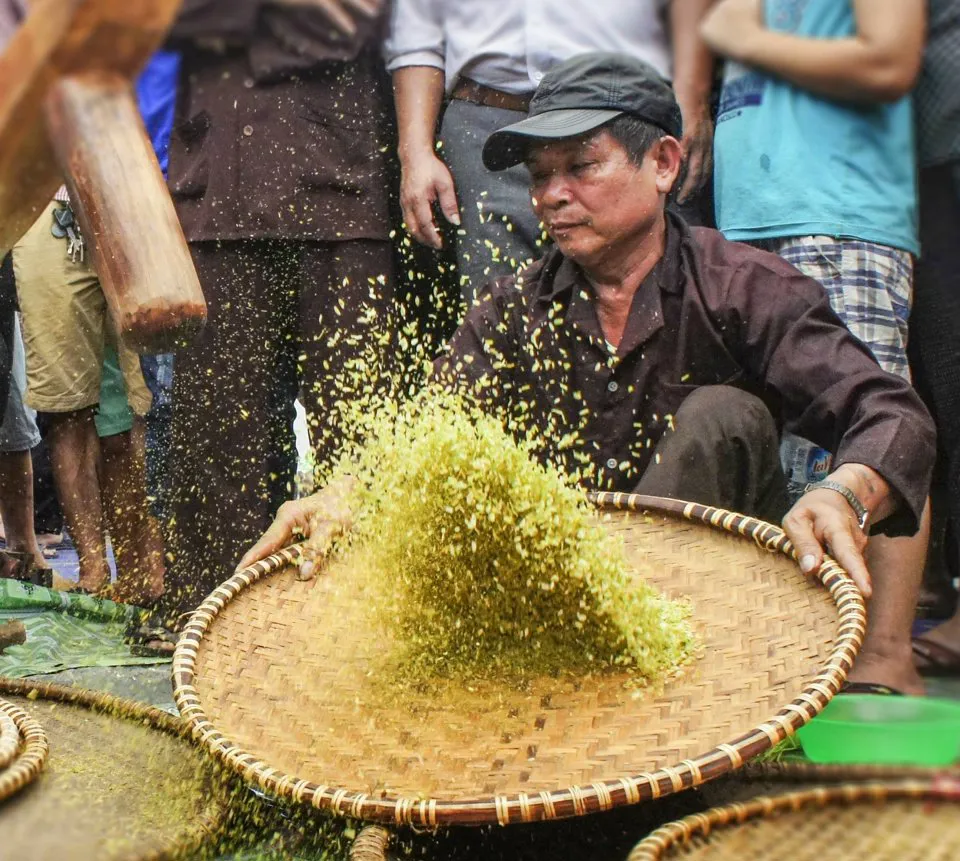
Legend has it that many centuries ago, when the rice was about to be harvested, a natural disaster flooded the entire field. To avoid starvation, the Vong villagers cut the young rice grains and roasted them for better preservation. This improvised preparation gave the dish an extremely delicious taste, so it has been handed down to the present day.
Vietnam Museum of Ethnology
Located on Nguyen Van Huyen Street, 8 km from the city center, it covers an area of 4.5 ha and has preserved many cultural and historical values of 54 ethnic groups of Vietnam. It is also known as the largest and most exciting ethnology museum in the country.
The Vietnam Museum of Ethnology is a center for research, collection, preservation and restoration of objects and materials of ethnic peoples; organizing exhibitions, performances and other forms of activities to introduce the cultures of ethnic groups in Vietnam as well as in other countries.
The idea of the Vietnam Museum of Ethnology was conceived in the 1980s, when the socio-economic conditions of the country were still extremely difficult in the post-war period. On October 24, 1995, the Prime Minister issued a decision on the establishment of the Vietnam Museum of Ethnology.
On November 12, 1997, on the occasion of the Francophone Summit in Hanoi, the museum was inaugurated in the presence of Vietnamese Vice President Nguyen Thi Binh and French President Jacques Chirac.