Celebration of Doan Ngo festival at Thang Long citadel relics
The traditional way of celebrating the Doan Ngo festival is a folkloric experience whose origins are directly related to agriculture and climate.
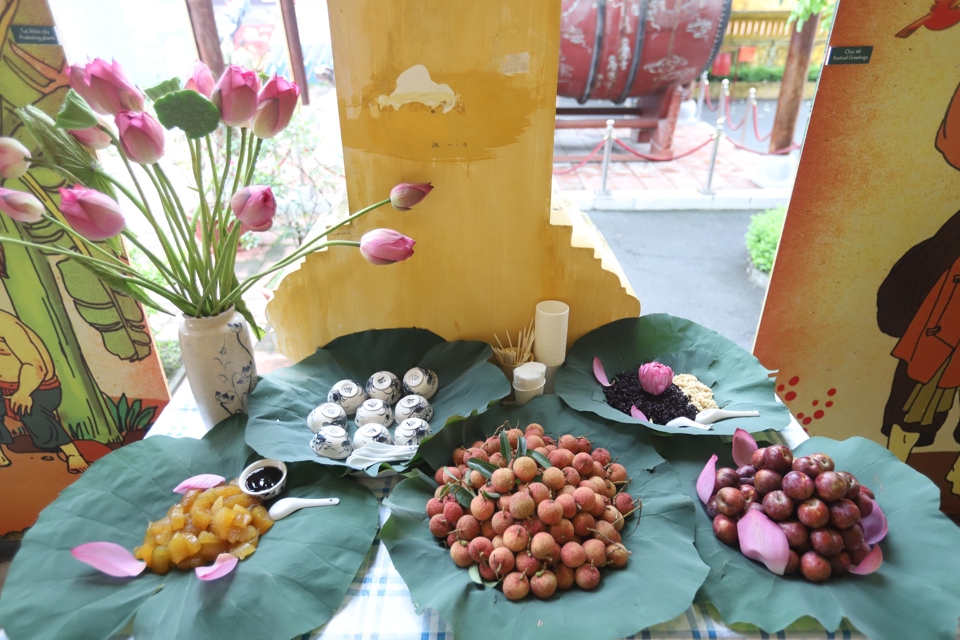
On the morning of the Doan Ngo Festival, women often get up very early to buy fruits such as lychee, plum, fermented sticky rice, and banh tro (made from sticky rice soaked in ash water) and place them on the altar to offer to their ancestors, praying for a bountiful harvest, good luck, and good health.
Festivals inspired by weather and agriculture
The Doan Ngo Festival, commonly called the Pest Killing Festival, is one of the many traditional customs of the Vietnamese people. It is held on the fifth day of the fifth lunar month, which falls on June 22.
"Doan" means the beginning, while "Ngo" is the period from 11 am to 1 pm. "Doan Ngo is when the sun is closest to the earth.
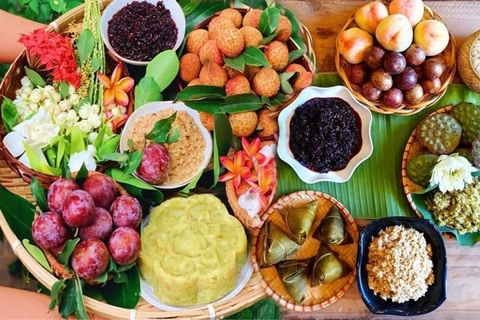
| Special food for Doan Ngo Festival. Photo: Lai Quang Tan/The Hanoi Times |
Meanwhile, the ancient practice of catching and killing pests and insects that harm crops and people's health gave rise to the popular name of the Pest Killing Festival.
On this day, people often offer traditional sour dishes to the ancestors and pray for bumper crops, good business and good luck in the new season. In addition to typical fruits such as litchi and plum, fermented sticky rice is an essential part of the meal.
Banh tro (or banh gio) is made from glutinous rice soaked in ash water (the ash is made by burning a variety of leaves, such as dried sesame or rice straw, and adding them to water).
Anh Tuyet, a famous culinary artisan of Hanoi, explained that since the weather during the festival is often very hot, the cake helps people cool down and detoxify their bodies and can act as a diuretic to help rid the body of salt and water.
Since the old days, locals have believed that Doan Ngo Festival is the very day that Yang is at its peak, leading to the proliferation of insects, causing diseases, so eating fruits, fermented sticky rice and banh tro would dispel all bad luck and diseases.
"According to traditional medicine, eating banh tro helps improve health as it is easily digestible and very suitable for the elderly and children with fever," Tuyet said.
Unlike the banh tro made by northerners in the form of a 20-centimeter long stick without a filling, women in the south make it in a pyramid shape with green bean and sugar filling. All types of banh tro are more delicious when dipped in molasses.
"Quite different from the North and South, people in the central region habitually eat duck meat at the festival. This time, the duck meat is tasty without a distinctive bad smell, so it is enjoyable," said culinary expert Anh Tuyet.
They believe that duck meat can remove heat from the body, and it is very suitable to eat on a hot day and can improve health," she added.
Another tradition of the Doan Ngo Festival is the Asking Tree. On this day, gardeners who grow fruit trees will pretend to talk to the trees, which are usually fruit trees that have little fruit or are full of pests.
Nguyen Thi Mai, a 40 year-old woman in Hanoi, still remembers going to the garden with her grandfather to ask the tree when she was young. She climbed up the branch to play the role of the tree, her grandfather held a knife, knocked or chopped a little at the root of the tree. They asked and answered at least three questions. After each question, the grandfather hit the tree once. For example:
The grandfather: Who are you?
Mai: I am a jackfruit tree.
The grandfather: How old are you?
Mai: I am five years old.
The grandfather: Will you give me your fruit this year?
Mai: Yes.
The grandfather: How many fruits do you have?
Mai: Thirty.
"I still have fond memories of the Doan Ngo festival. In the morning, my mother woke me early and fed me plums, fermented sticky rice, and sweet wine so that the parasites in my body would get drunk and die. After that, I went to the garden with my grandfather to beat the trees," Mai said.
Doan Ngo festival celebrated in royal style
An ancient ritual was re-enacted at the Thang Long Imperial Citadel in Hanoi as part of the celebration of the Doan Ngo Festival to preserve traditional cultural values and educate younger generations.
During the Later Le Dynasty (1533-1789), kings hosted a ritual to give fans to all mandarins during the Doan Ngo festival in summer.
| A corner of the room revives the tradition of giving fans to dignitaries. Photo: Ngo Minh/The Hanoi Times |
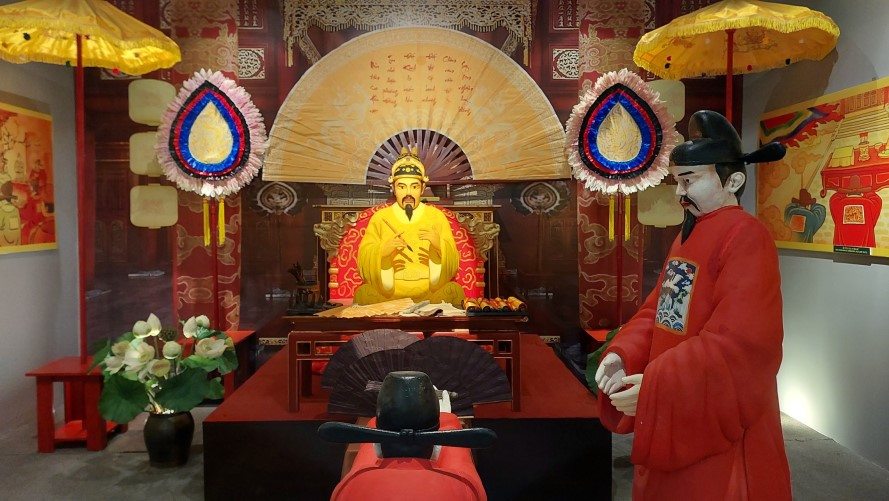
During the Later Le Dynasty (1533-1789), the kings organized a ritual to give fans to all mandarins during the Doan Ngo Festival in summer. Given the heat of the Doan Ngo festival, the ritual showed the king's special care for his subjects.
Historian Le Van Lan appreciated the efforts of the Thang Long Heritage Conservation Center in preparing costumes and offerings for the ritual.
"The re-enactment of the ritual helped people better understand the tradition. The center's experts did exactly as described in historical books," Lan said.
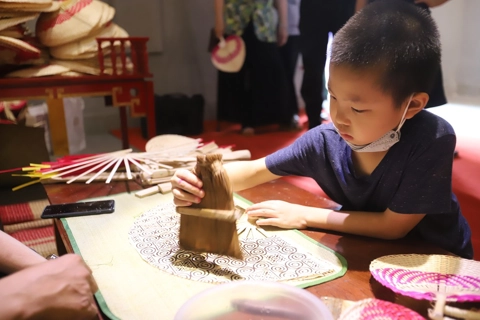
The Doan Ngo Festival exhibition will run through this weekend at the Thăng Long Royal Citadel, 19C Hoàng Diệu Street, Hà Nội. During the program, visitors, especially children, will have a chance to enjoy traditional fan-making activities, folk games and a water puppet show.
Through the artifacts and paintings of Henri Oger (a French researcher in colonial Indochina), the culinary art of artisan Anh Tuyet, and a unique collection of handmade paper fans on Thang Long landscapes by artisan Lan Tuyet, visitors will understand more about the traditional celebration of Doan Ngo Festival.
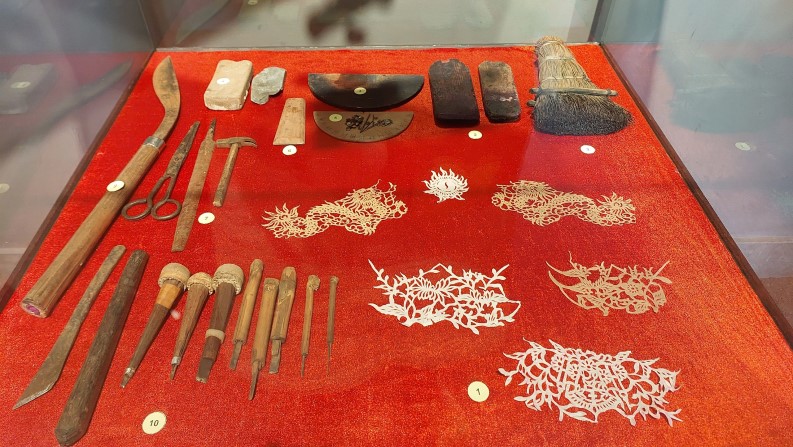
| Tools used to make traditional fans on display at the Thang Long Heritage Conservation Center. Photo: Ngo Minh/The Hanoi Times |