Concerted action needed to tackle food safety risks
Consumers are urged to be more vigilant and courageous in exposing food producers and traders who breach food safety laws.
The relevant authorities in Hanoi have uncovered numerous cases involving the transport and trade of tons of tainted food and have imposed fines running into thousands of dollars. The risk of food safety violations in the city is ever-present, with negative implications for consumer health.
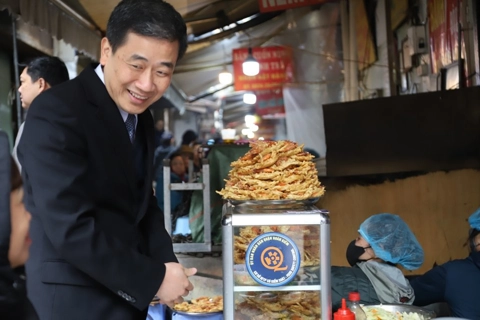
| Competent authorities seized 1.5 tons of pork stew and 400 kg of sausages in Thanh Tri Ward, Hoang Mai District. Photos: Thanh Binh |
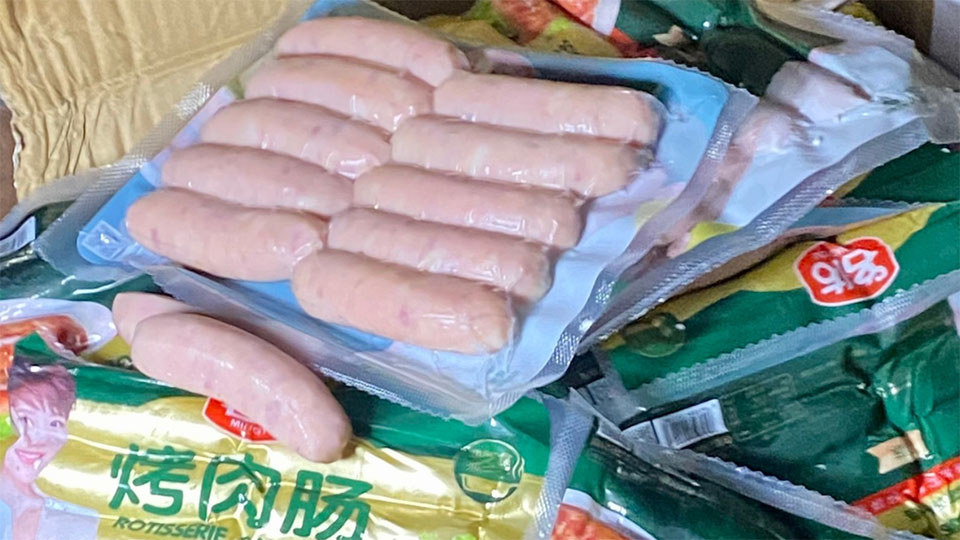
Last month, a joint inspection by Hanoi Police and Market Surveillance Team No. 24 of a food warehouse at 115 Dong Tien Street (La Phu Commune, Hoai Duc District) found nearly four tons of sausages and chicken wings of unknown origin that lacked quality and food safety certificates.
In the same month, a Phuc Tho district police task force inspected two business households in Phung Thuong commune (Phuc Tho district, Hanoi) and found about 1.7 tons of frozen meat, bones and pork feet without business registration certificates and invoices or documents proving the origin of the shipment. Meanwhile, police in Ha Dong District seized and destroyed animal offal of unknown origin.
Chu Xuan Kien, director of Hanoi's Market Surveillance Agency, said the tactics used by these illegal traders are highly sophisticated. To hide their production facilities, the perpetrators only do business online through social media and e-commerce platforms. They use express delivery networks and frequently change warehouse locations to evade regulatory oversight.
"These unscrupulous traders can easily take advantage of the current trend of online shopping among the majority of consumers to make a profit," he told The Hanoi Times.
Raising consumer awareness
Major General Nhu Thi Minh Nguyet, Deputy Director of the Environmental Police Department, has raised critical concerns regarding the escalating issue of food safety violations, particularly prevalent among small vendors and street food establishments. The sale of untraceable food products, especially in areas close to schools and industrial zones where the primary consumers are students and workers, represents a severe threat to public health. The current level of oversight and control in these high-risk areas is alarmingly inadequate, necessitating urgent reforms.
A recent inspection in Bac Tu Liem District, Hanoi, unearthed a staggering 1,700 unverified food items being sold in close proximity to Duc Thang Primary School and Sao Mai Kindergarten. This startling discovery not only highlights the pervasive nature of the problem but also underscores the critical need for more stringent regulatory measures and rigorous enforcement of food safety standards to protect vulnerable consumers. Moreover, the rise in counterfeit food products, particularly within categories such as dietary supplements and foods designed for vulnerable groups—including the elderly and children—is increasingly concerning. Violations within the frozen food sector also present a growing problem.
Historical data reveals that law enforcement agencies confiscate nearly 100 tons of untraceable and expired food products annually. This staggering figure emphasizes the persistent and widespread nature of the issue, highlighting a critical need for reform in how food safety violations are addressed. General Nguyet pointed out that food safety monitoring often lacks timely intervention. Current management models have significant shortcomings, and local agencies tasked with overseeing food safety frequently display inconsistent practices.
This overlap in responsibilities creates confusion and hampers effective enforcement, particularly in small food production facilities where compliance is often overlooked. Addressing these issues requires a comprehensive strategy. There is an urgent need for coordinated efforts that involve stricter legal frameworks, enhanced public awareness initiatives, and improved resource allocation for food safety enforcement. Collaboration among various agencies is essential to increase the effectiveness of monitoring and enforcement. As the situation stands, the health and safety of consumers, particularly in high-risk areas, are at grave risk. Immediate action is paramount.
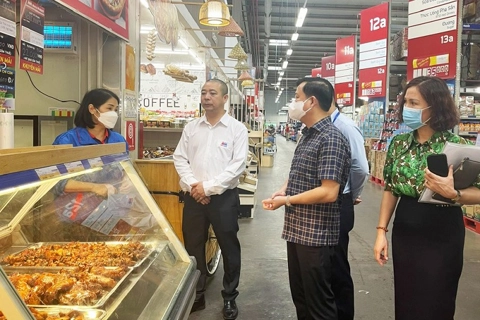
| Authorities inspect labels on frozen food at a supermarket in Hoang Mai district. |
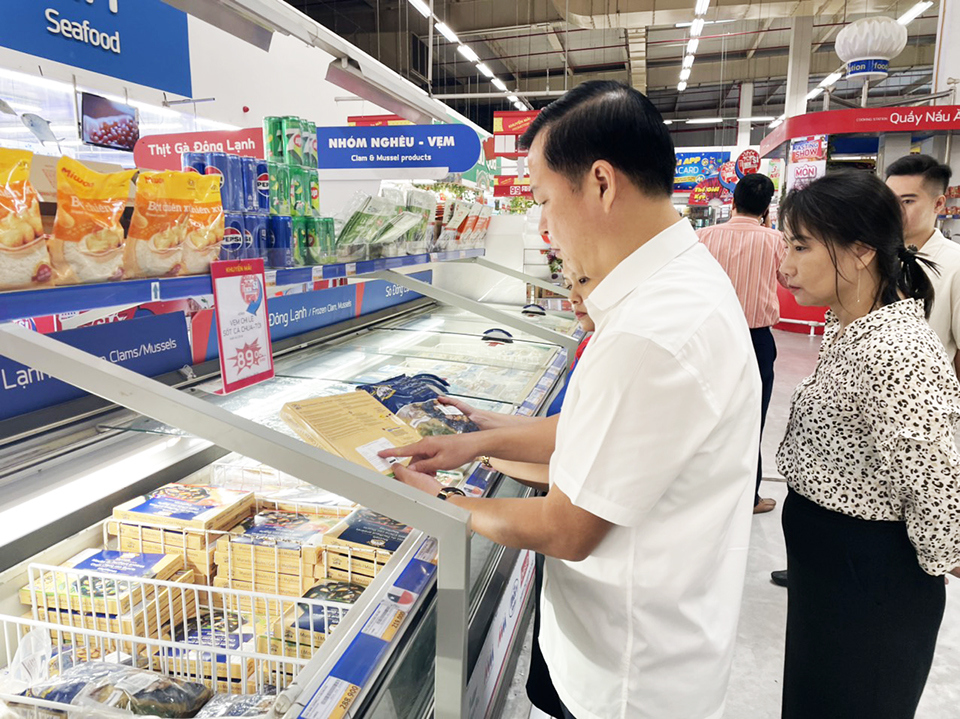
Authorities must prioritize food safety to safeguard vulnerable populations and ensure that all food products meet established safety standards. Without decisive measures, the cycle of violations and threats to public health will persist, resulting in significant challenges for both the community and the economy.
Ultimately, the commitment to improving food safety is not just a regulatory responsibility but a moral obligation to protect the well-being of all citizens. Only through concerted efforts can we hope to eradicate these violations and foster a safer food environment.
Some experts say that the lack of awareness of legal compliance and business ethics among those involved in production, transport, storage and processing is to blame for rampant food safety violations. Producers and traders, driven by profit motives, are willing to break the law.
According to the Hanoi Market Surveillance Agency, a significant number of consumers do not really prioritize their own health and that of their families; they are only interested in visually appealing and cheap products. Taking advantage of these consumers, dishonest individuals have smuggled goods into Vietnam and then distributed them through social media platforms.
Meanwhile, the agency said the legal framework and policy mechanisms for tougher sanctions remain inadequate and have been slow to be revised and strengthened.
Acknowledging that the battle against substandard and adulterated food has long been a pressing issue, Tran Huu Linh, Director General of the Market Surveillance Agency under the Ministry of Industry and Trade, said it was imperative to raise food safety awareness among producers, traders and consumers to manage the risk of food safety violations.
He also emphasized the need for coordination and shared responsibility among all levels, sectors, organizations, media, and local authorities to strengthen inspection and supervision and strictly deal with violations of food safety regulations.
"Consumers must resolutely intensify their vigilance and courage to expose food producers and traders who breach food safety laws," he told The Hanoi Times.
The agency has directed market surveillance forces across the country to constantly ramp up market inspections and monitoring to prevent smuggling, commercial fraud and counterfeit food, he stressed.
Combating food safety violations requires a comprehensive and coordinated implementation of preventive measures, including legal policies, dissemination of laws, management of human resources, public service and business ethics. Particularly important are solutions involving material/technical resources, control mechanisms, coordinated case handling and publicity of legal sanctions, said Lawyer Dang Van Cuong, Head of the Chinh Phap Law Firm under the Hanoi Bar Association. |