Cultural industry designed as spearhead economic sector of Hanoi
All 30 districts citywide can develop cultural industry, making it a spearhead economic sector by 2030.
All parts of Hanoi are able to develop cultural industry regardless of economic growth and geographic differences, a municipal leader has said while stressing the importance of culture in the city’s development.
The city's top leaders have affirmed the direction in numerous documents and meetings guiding the implementation of agencies.
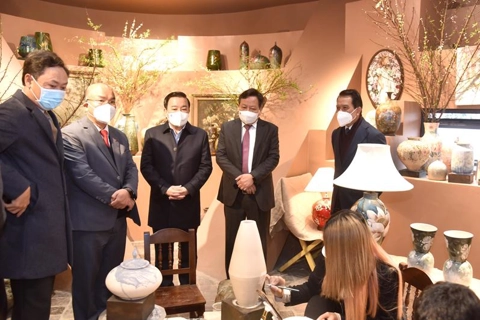
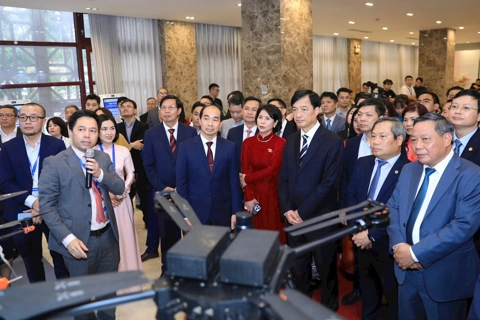
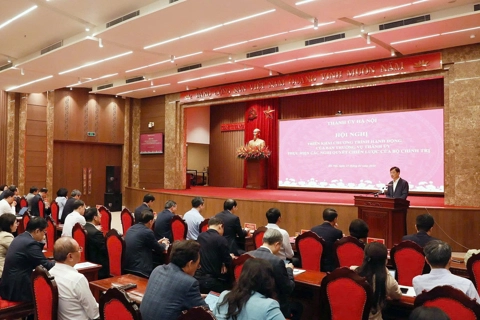
Recently, Deputy Secretary of the Hanoi Party Committee Nguyen Van Phong said at a conference which draw the participation of the central and municipal high-ranking leaders and more than 26,000 grassroots staff.
Phong said the starting point is not an important factor in deciding whether to develop a culture or not. He argued that cultural industry does not depend on countries’ development levels. As such, any country can develop a cultural industry.
“Hanoi has a lot of potential for this field, all localities have conditions and can take advantage of cultural industry development, even at the grassroots level, so that the municipal Party Committee’s Resolution could come to life,” Phong said at the event guiding the implementation of the strategy, which is listed among the municipal party’s key pillars for the years to come.
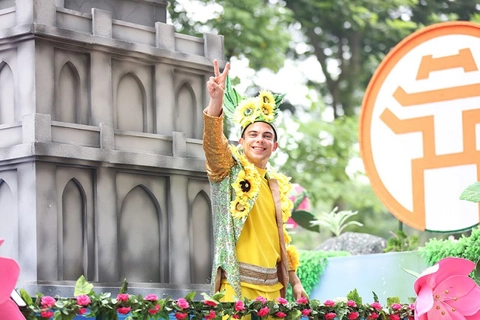
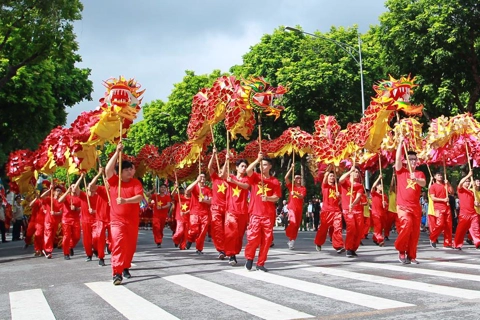
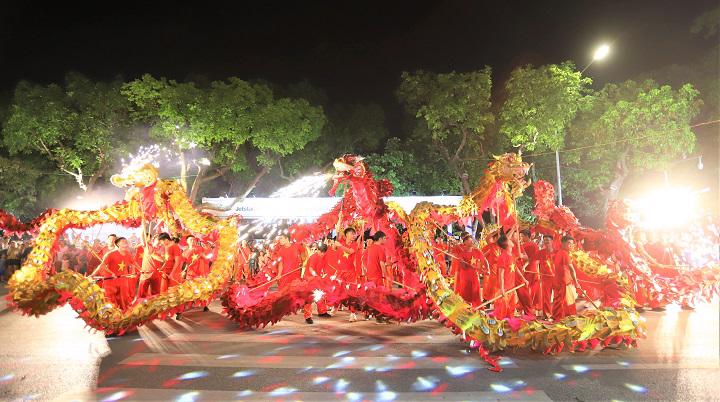
| Art performance in downtown Hanoi. Photo: The Hanoi Times |
Give culture a higher role
The cultural industry is designed to become an important economic sector in Hanoi by 2025, contributing about 5% of the city’s gross regional domestic product (GRDP) while maintaining and developing the brand of the capital of thousand years of civilization, “City for Peace”, and “Creative City.”
By 2030, the cultural industry will basically become a spearhead economic sector, contributing roughly 8% of the city’s GRDP, at the same time making Hanoi an influential “Creative City” in Southeast Asia, being among cities with the leading cultural industry.
The goal by 2045 is to make the cultural industry a spearhead economic sector, contributing approximately 10% of the city’s GRDP. Culture would be the foundation for Hanoi's high quality of life, on par with leading capitals and cities in the region while forming a number of symbolic new cultural works.
To make the goal possible, Deputy Chairman of the Hanoi People’s Committee Chu Xuan Dung tasked local authorities with working out specific plans, asking them to fulfill the targets with a focus on disseminating the strategy on media.
Accordingly, the local authorities are in charge of eight missions, namely changing mindset and raising awareness of cultural industry; completing mechanisms and policies; improving human resources; strengthening the application of science and technology; developing the cultural industry market; attracting investment; expanding international cooperation; implementing Hanoi’s initiatives committed to UNESCO when joining the Creative Cities Network.
Sharing his view at the conference, Le Anh Quan, Secretary of Gia Lam District, said the locality has built plans to develop the cultural industry by choosing typical factors for the long-term mission.
It is home to 320 historical and cultural heritages with thousands of precious relics and artifacts and 100 traditional festivals, including the Giong Festival in Phu Dong Temple and the Giong Festival in Soc Temple, which is inscribed in the Representative List of the Intangible Cultural Heritage of Humanity.
Meanwhile, Hoan Kiem District is home to Hoan Kiem Lake, Ngoc Son Temple, the Old Quarter, the Hanoi Opera House, the Water Puppet Theater, and walking zones, among others. It’s the first and must-go place for many domestic and international visitors who come to Hanoi.