Dong Son bronze drum shows strong vitality of Vietnamese culture
Visitors will be able to admire the newly discovered collection of unique artifacts from the ancient culture of Dong Son.
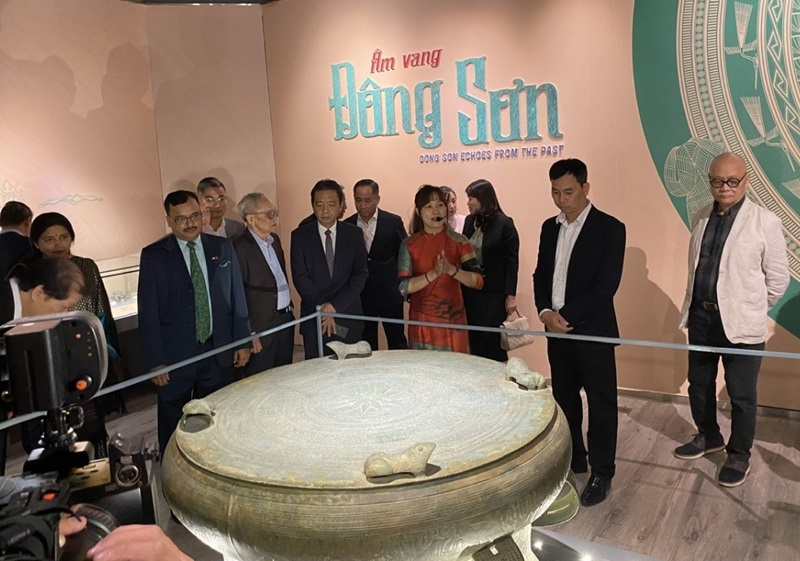
The thematic exhibition entitled "Am vang Dong Son" or "Dong Son Echoes from the Past" is on display at the Vietnam National Museum of History until the end of April 2024.
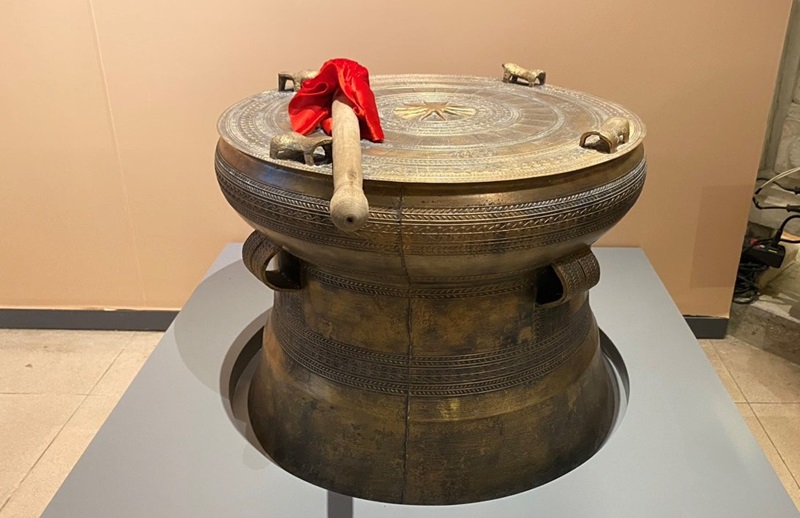
| The Dong Son bronze drum, cast in 2022, is said to be 80% similar to the prototype. Photo: VOV2 |
The exhibition aims to celebrate Vietnam's Heritage Day (November 23) and the 100th anniversary of the discovery of Dong Son culture.
Nguyen Van Doan, Director of the Vietnam National History Museum, said the Dong Son culture played an important role in the evolution of the country's history. It was named Dong Son by archaeologists based on the accidental discovery of some ancient bronzes dated about 2,000 years ago in 1924 in Dong Son Village on the banks of the Ma River, Thanh Hoa Province.
"Dong Son archaeological artifacts from the Bronze Age (from 1000 BC to the first century AD) are extremely rich, diverse, and highly aesthetic," Doan said.
These work tools, household utensils, weapons, musical instruments, and jewelry were made of copper, iron, ceramics, glass, wood, and stone, among other materials. In particular, the brass artifacts were delicately crafted and reached a skilled technical level.
The exhibition is divided into three parts: "The newly unveiled materials related to Dong Son culture"; "Dong Son drum mold discovered from Luy Lau underground"; and "Experimental Dong Son bronze drum casting."
| Visitors to the thematic display entitled Dong Son Echoes from the Past at Vietnam National Museum of History. Photos: VOV2 |
The exhibition displays the results of archaeology and research conducted by the Vietnam National History Museum in cooperation with the National Museum of Korea and East Asia University (Japan) at the archaeological sites of Dinh Trang (Hanoi), Bai Coi (Ha Tinh Province) and Luy Lau ancient citadel in Bac Ninh Province.
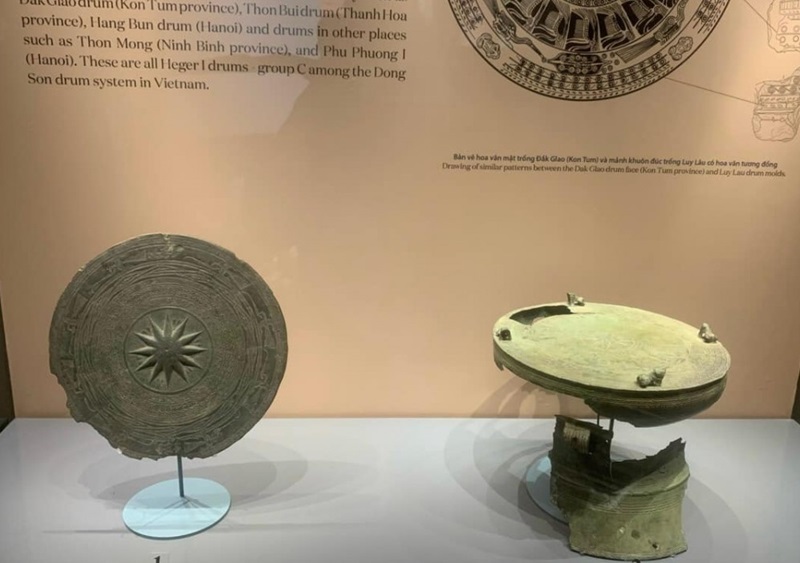
Thousands of broken pieces of bronze drum molds dating back to the 2nd century AD were recently found in Luy Lau Citadel in Thuan Thanh District, Bac Ninh Province, demonstrating the strong vitality of Dong Son culture and helping to solve mysteries related to bronze drum casting techniques of the ancient Vietnamese some 2,000 years ago.
To date, Luy Lau is the archaeological site in the world where the largest fragments of the Dong Son drum mold have been found. Previously, a single piece of the mold was found on the surface of the citadel in 1998. In 2001, the other piece was found buried deep under the wall.
It is noteworthy that this latest exhibition of the Vietnam National History Museum is the first to display the first drum cast based on scientific input, which is 80% similar to the original.
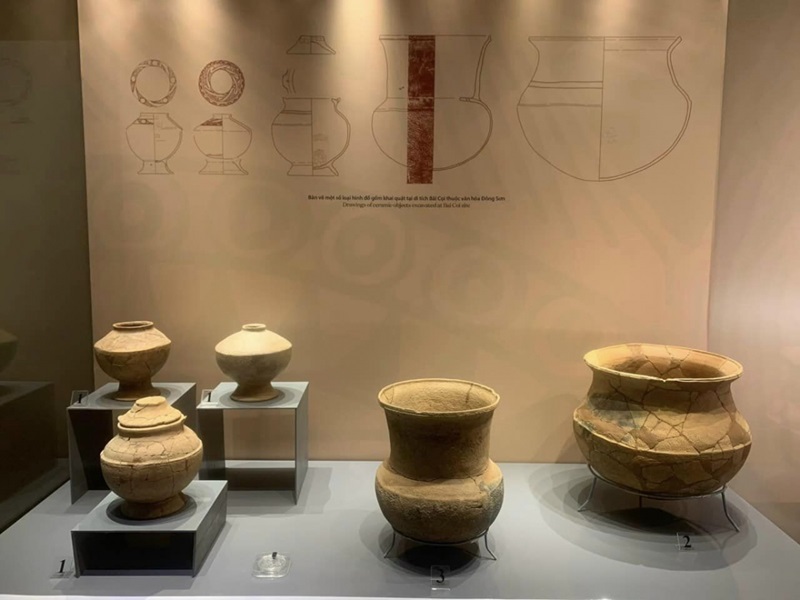
| Artifacts on display at the exhibition. |
From 1964 to 1975, the Vietnam Museum of History (now the Vietnam National Museum of History), in coordination with the Vietnam Museum of Fine Arts, cast some samples of bronze drums based on the analysis of alloy composition and technical traces on artifacts.
However, the first four casting attempts were all fruitless. The fifth casting, which took place in 2022 at Che Bronze Casting Village in Thieu Hoa District, Thanh Hoa Province, is the most successful, with about 80% similarity to the prototype.
Deputy Director of the Vietnam National History Museum Nguyen Thi Thu Hoan said the bronze drum casting experiment helps scientists better understand the sophisticated techniques of the ancient Dong Son people. The complete casting of a drum using only small pieces of mold shows the efforts of local scientists, archaeologists, and craftsmen from the centuries-old traditional village.
Even after thousands of years, the technique of casting large ancient bronze drums with elaborate patterns remains a mystery.
| The Dong Son Echoes from the Past exhibition helps visitors better understand the Dong Son culture. |
The Dong Son culture, also known as the Lac Viet culture (named after the village of Dong Son), was a Bronze Age civilization of ancient Vietnam centered in the Red River Delta, in the north of the country, from 1000 BC to the 1st century AD. The origins of the Dong Son culture are evidenced by the Dong Son drums, which show the skilled bronze casting techniques of the ancient men. The Go Mun culture gave rise to the Dong Son culture, which was the culmination of the Bronze Age and the beginning of the Iron Age. Bronze drums were used in warfare when the chief summoned the tribe's warriors by drumming, in mourning, and during festivals, and the scenes cast on the drums indicate that Dong Son leaders had access to bronze casters of remarkable skill. The scenes are local, including drummers and other musicians, warriors, rice processing, birds, deer, war vessels, and geometric designs. The Dong Son bronze drums show "remarkable skill". The one found in Co Loa, on the outskirts of Hanoi, weighs 72 kilograms and would have required the smelting of between one and seven tons of copper ore. |