Exhibition shows Hanoi valuable 19-20th century documents
The exhibition "The Citadel and Streets in Old Days" provides a new insight into the history, culture, land and people of Thanh Long-Hanoi in the early 19th to mid-20th centuries.
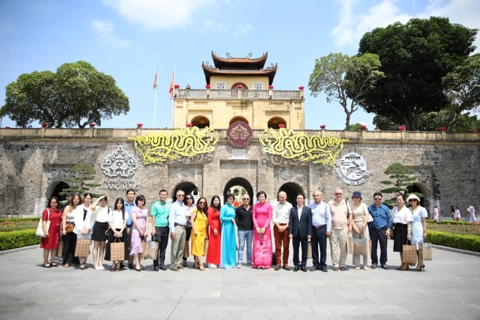
On October 6, the exhibition "The Citadel and Streets in Old Days" opened at the Thang Long Imperial Citadel, featuring 150 artifacts, including documents, materials, images, maps and technical drawings, which provide a new perspective on the history, culture, land and people of Thang Long-Hanoi from the early 19th century to the mid-20th century.
"Old Citadel, Old Town" depicts the evolution of Hanoi over the course of more than a century, from the citadel built in the original Vauban style of the Nguyen dynasty, which still stands west of the Old Quarter, to the old districts and historic quarters that have remained largely untouched despite modern urbanization. This contrasts with a Hanoi that is gradually changing, built and planned in the Western style with grid streets.
| Visitors learn about Hanoi's history at the exhibition. Photo: Ngo Minh/The Hanoi Times |
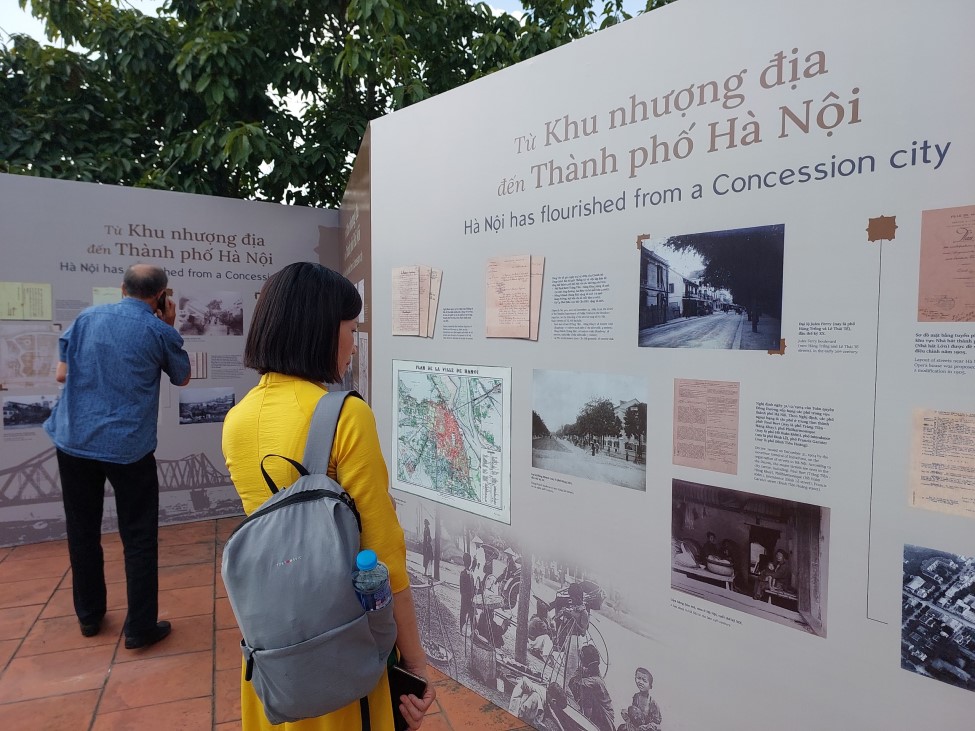
According to Nguyen Thanh Quang, director of the Thang Long-Hanoi Heritage Conservation Center, the exhibition brings together valuable images and documents currently kept at the National Archives Center I and other agencies to introduce to the public the planning and construction process of Hanoi during this period, with the transformation of functions of the Hanoi Citadel and the formation of new streets.
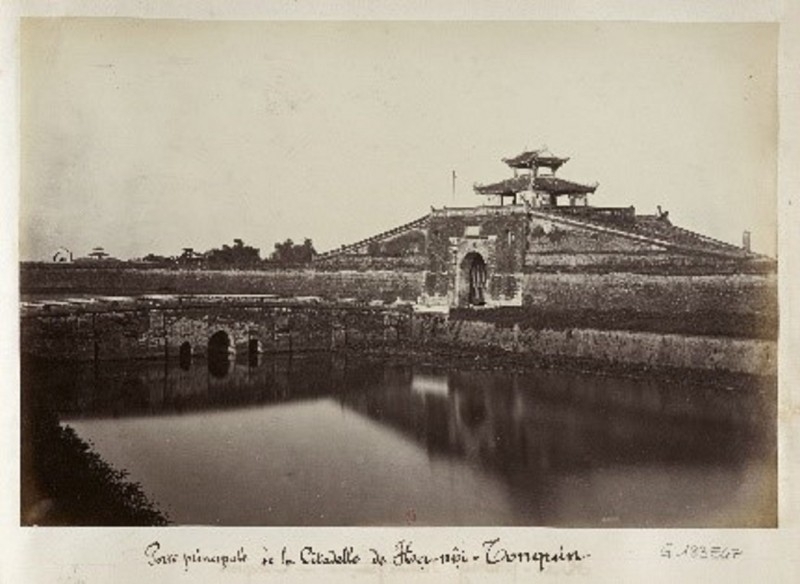
The Thang Long Imperial Citadel was built by the Nguyen Dynasty (1802-1945) in the Vauban style, a fortification design named after Sébastien Le Prestre de Vauban, a famous French military engineer of the 17th century.
From 1802 to 1844, the Nguyễn dynasty built 32 Vauban-style citadels throughout the country, but the one in Hanoi was the largest. Before the French invasion (1873 and 1882) in the north, the Hanoi Citadel was the political, military and administrative center from which the North Vietnam region was governed (1802-1831). Starting in 1897, the French colonialists demolished the citadel, leaving only a part of it that remains today, including the North Gate, Hau Lau (Princess Pavilion), two dragon-shaped railings in front of Kinh Thien Palace, and Doan Mon (Main Gate) and Ky Dai (Flag Tower).
| Thang Long Imperial Citadel in the old days. File Photo |
After taking over Hanoi, the French quickly implemented the idea of transforming Hanoi into a European-style city, making Hoan Kiem Lake the center and starting point for this plan.
Here, the French began to build the administrative headquarters of the colonial government apparatus at all levels in Hanoi, such as the Tonkin Palace, the Hanoi City Hall, the Indochina Bank, the Hanoi Post Office Department, all along Francis Garnier Avenue (now Dinh Tien Hoang Street), Paul Bert Street (now Trang Tien and Hang Khay Streets), and Henri Rivière Avenue (now Ngo Quyen Street).
Dr. Tran Duc Cuong, Chairman of the Vietnam Association of Historical Sciences, praised the documents on display, saying that the organizing committee had chosen the right archives to demonstrate the history of Hanoi's development, paying special attention to Hanoi's spatial change and the planning and development of new areas.
The exhibition will last until the end of the year at Thang Long Imperial Citadel, 9 Hoang Dieu, Hanoi.