Finding historical and cultural values of Vietnamese people in the Ceramics Museum
Bat Trang Ceramics Museum tells the story of 19 native families in the village who have developed their pottery imbued with the culture of each dynasty in the flow of time.
From Sword Lake, crossing the historic Long Bien iron bridge, going down the alluvial banks of the Red River, and taking a bus for about 30 minutes, you will reach Bat Trang Pottery Village.
Unique architecture
| The exterior of the Center of Vietnam Quintessential Handicraft, including seven towers with upward spirals representing the waves on the Red River. Photo: Hoi Nguyen |
.gif)
The first thing that impressed us was the Center of Vietnam Quintessential Handicraft or so-called Bat Trang Ceramics Museum, with seven upward spiral-shaped towers representing the stylized interior of the dragon kiln, which was popular among Bat Trang people in the 20th century before they switched to gas like today. The towers are painted red-brown - the color of clay, and the spirals symbolize the endless waves on the Red River.
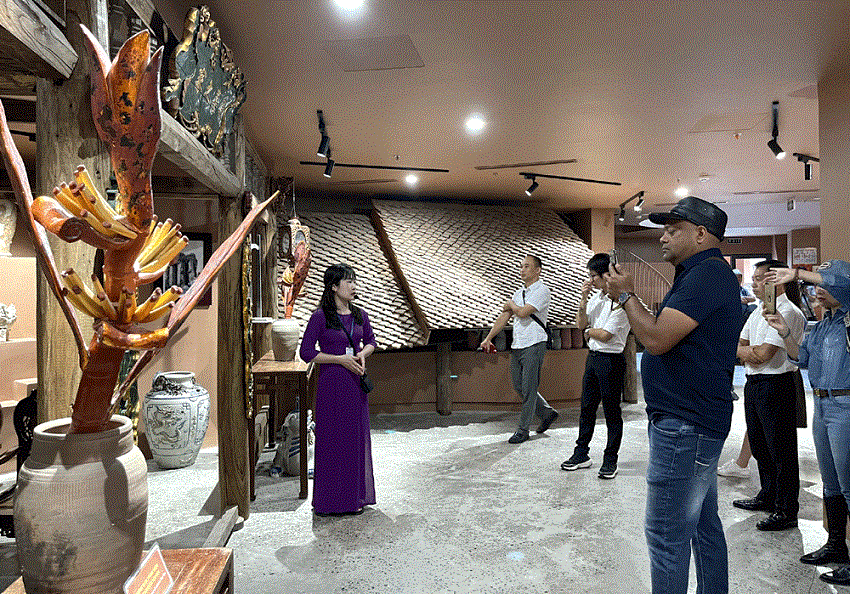
The museum has many precious artifacts and superior ceramic products of 19 ancient families. There is also an area for introducing Hua Vinh Kieu, the ancestor of Bat Trang pottery, born in Bo Bat Village, Yen Mo District, Ninh Binh Province.
All the areas for introducing the history and culture of Bat Trang ceramics are reasonably arranged according to the timeline. Visitors to Bat Trang used only to watch artisans make pottery and buy the products, but now there are trained local guides at the museum to offer more profound knowledge.
Nguyen Minh Chau, a traveler from Hoan Kiem District, Hanoi, has visited Bat Trang Village many times, but this time he could learn the whole development history of pottery through the museum.
"The building is wonderful, and the architecture also depicts the shapes in pottery. The museum has fully systematized the craft's development as well as the country's history and the Vietnamese culture that has survived through dynasties, especially from the Ly Dynasty until now," he told The Hanoi Times.
Telling the historical-cultural story of the village
| The boat used by people from Yen Mo District, Ninh Binh Province as they went upstream along the Red River and settled in Bat Trang, and the ceramic tools in the early days. Photo: Tran Mai Anh |
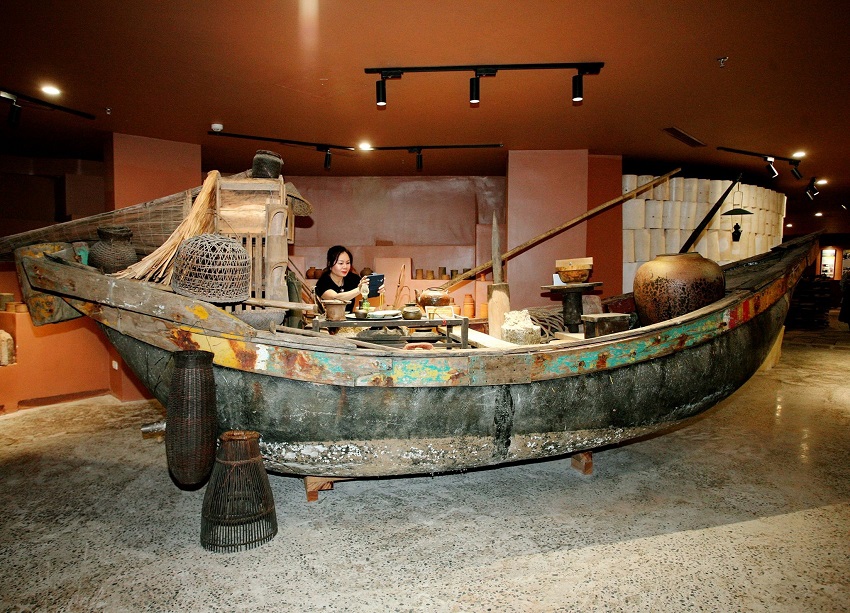
Right at the museum’s entrance lies a boat, which houses ceramics and artifacts from the early period, when five large families left Yen Mo District and followed in the footsteps of the royal family upstream along the Red River and settled in Thang Long, now Hanoi.
The vases, dishes, and bowls displayed date from the 13th century over many dynasties. In each period, Bat Trang people always created their pottery techniques and various enamels, such as white, brown, blue, mosaic, or blue and white. Bat Trang people often bring activities in their daily social life onto decorative patterns, such as banana trees, elephants, goat herding, or sworn brothers, showing the wet rice civilization.
Artisan Ha Thi Vinh, Vice Chairwoman of the Vietnam Association of Craft Villages and a native Bat Trang resident, devoted herself to building the center and the museum.
She said: “The Center of Vietnam Quintessential Handicraft is an open museum. The architecture and each displayed section here tell the story of the craft. My hometown is nearly 1,000 years old, with a long history and a handicraft that has never died out. There is a lot of quintessence here, crystallized generation after generation. Honors change manners, and professions result in money and prosperity. Prosperity is followed by abundance, activities, culture, spirituality, and festivals. We want to tell that story of prosperity for our children to study and succeed for generations.”
| The area for displaying ancient ceramics by Bat Trang people and the area for introducing ceramics with light art. |
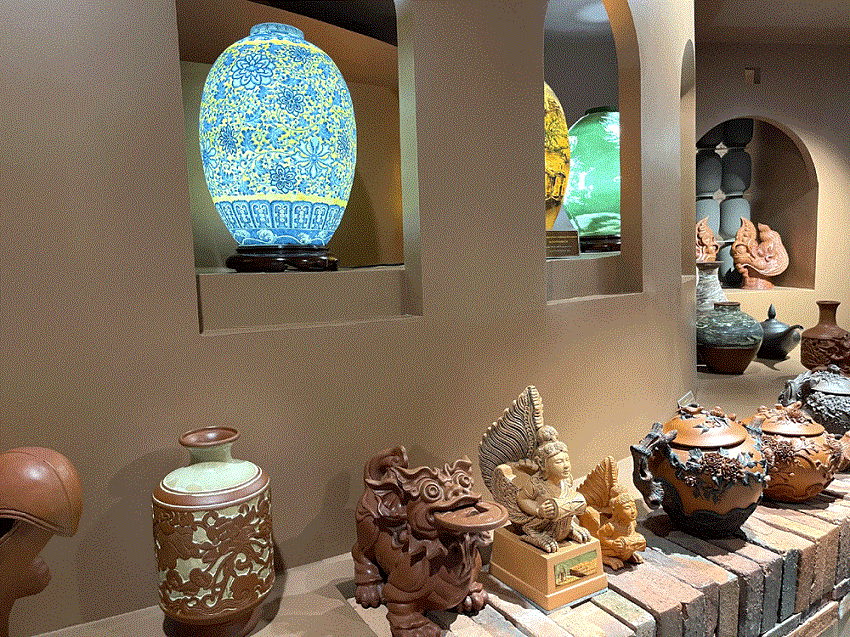
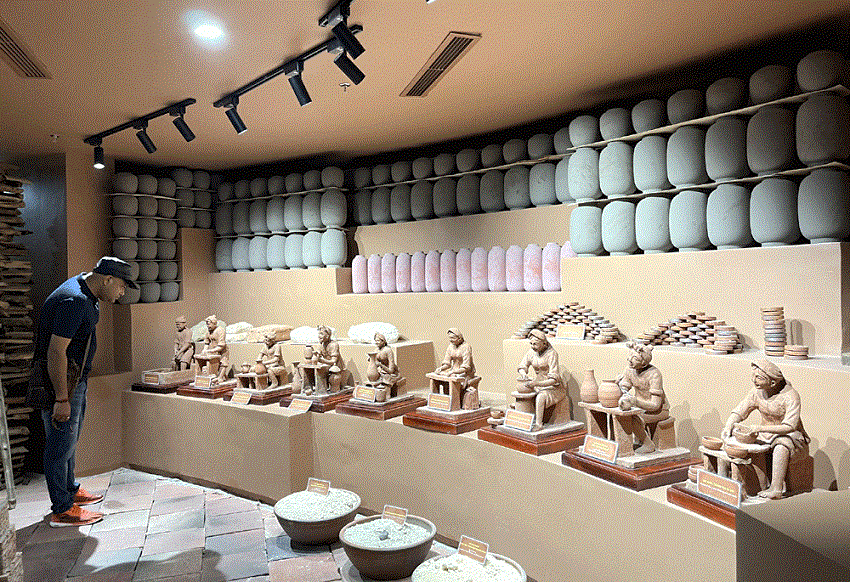
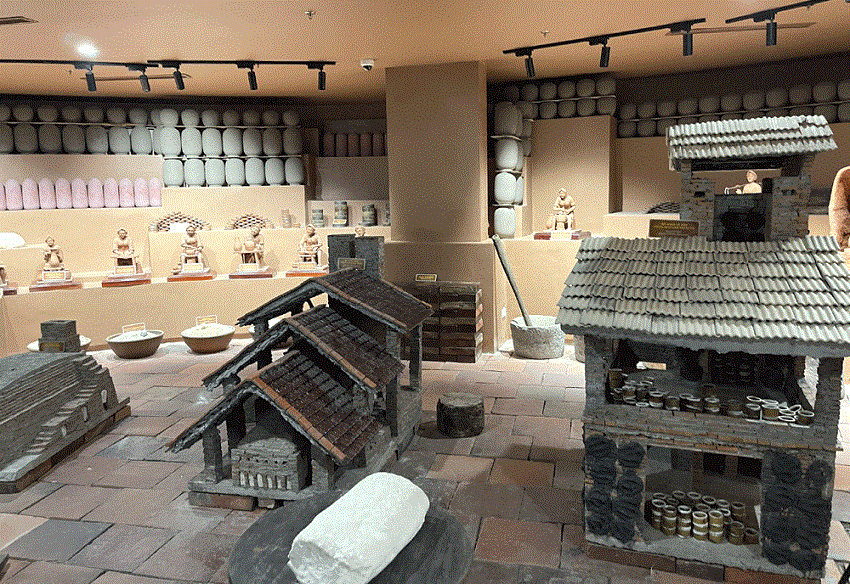
In the museum, we could also see ancient pottery kilns from various periods, such as the types using firewood and coal. And we learned for the first time that Bat Trang was also a village of studies, with 364 ancient Confucians and sages and a lot Trang nguyen and Tien sy or best court examinees.
After visiting the museum, Yavendra Singh, CEO of TravelPro (India), excitedly commented: “When I come here, I can feel the ancient history and culture of Vietnam. In India, there is also such a long-standing culture. The products in the ceramic village are amazing. There are similar villages in India, yet the products here have an interesting feature. Surely after this trip, I will develop plans to promote ceramics. I intend to recommend interested customers to come here and learn about Bat Trang pottery techniques. I feel a sense of closeness here and believe there will be an easy interaction between Vietnam and India.”
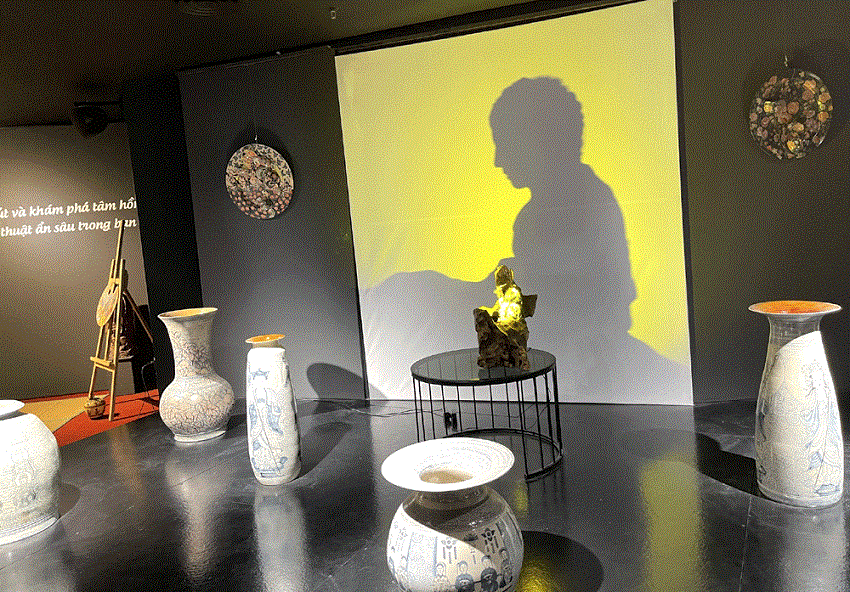
Shortly, Bat Trang craft village will organize a professional tour, connecting the center and museum with visits to the ancient village. There are mossy communal houses and pagodas, narrow alleys, and high walls peculiar to Bat Trang. In addition, visitors will be amazed by the presentation of sharp, impressive light artwork.
| Yavendra Singh, CEO of TravelPro (India), looks at the steps in the ancient pottery making process introduced at the museum. |
The Center of Vietnam Quintessential Handicraft is located at No. 28, Hamlet 5, Bat Trang ancient village, Gia Lam District, Hanoi. This building was designed by architect Hoang Thuc Hao, who had a lot of unique ideas before its construction started in 2018. Having received an estimated investment capital of VND150 billion or US$604, this is an architectural complex covering 3,700 square meters, with one side facing Bat Trang Village and the other overlooking the Red River.
| The ancient pottery kilns simulated and introduced at the museum. |
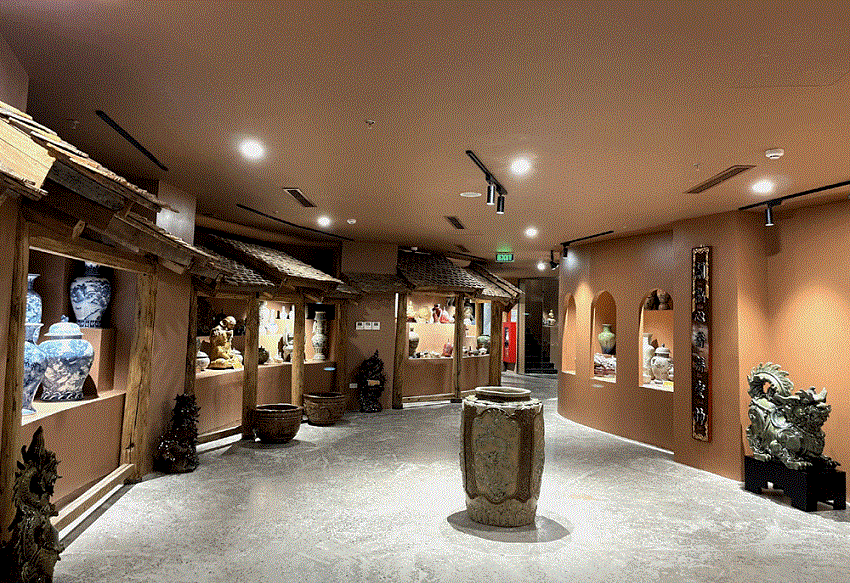
| The space of the Bat Trang Ceramic Museum. |
| The area for creating unique artworks with light. |
| Visitors to the ceramic museum introduced to the history of the village. In the photo: the area for introducing Hua Vinh Kieu, the godfather of pottery. |