For the love of Hanoi: Four practical recommendations
Preserving the wonderful character of Hanoi should not be misinterpreted as trying to convert Her [Hanoi] into a museum.
Such conservationist approach makes sense for a small historic town like Hoi An, but it would be misguided in the case of a major urban agglomeration.
For sure, Hanoi has a wealth of great architecture, from traditional temples and pagodas to elegant French villas to imposing Soviet-style buildings. It would be a waste for the city, and for the entire world, if this legacy was lost or damaged.
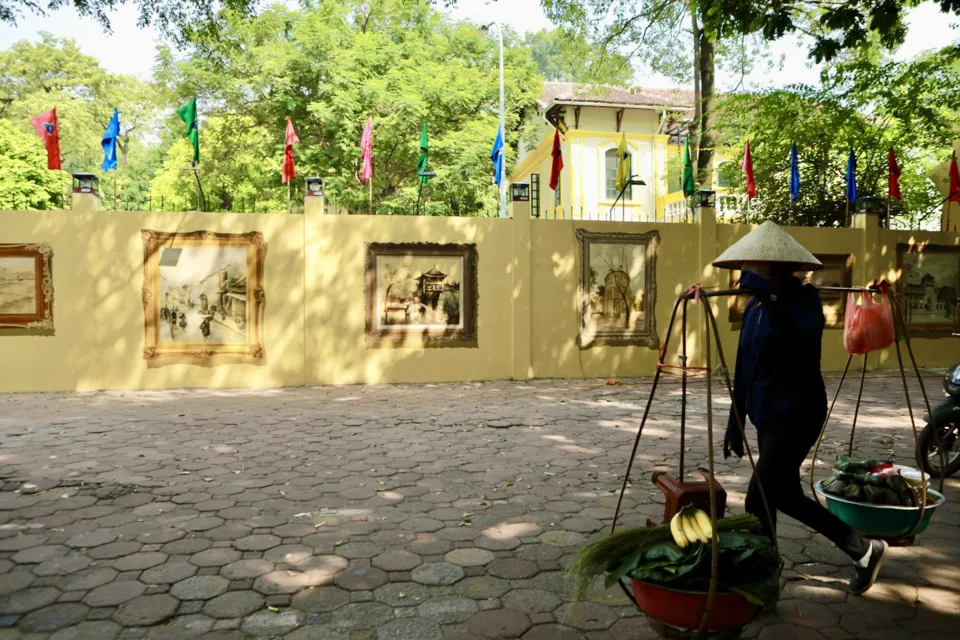
| A corner in Hanoi. Photo: Duy Minh/The Hanoi Times |
But major urban agglomerations are one of the most important engines of economic development. Converting them into a frozen image of their past would amount to slowing down Vietnam’s march toward prosperity. For Hanoians, living in an urban museum could be nice, but not if it came at the expense of improved housing, better-paying jobs or shorter commuting times.
Moreover, the amazing character of Hanoi is not just made of remarkable buildings. It is in fact more subtle than that. She is special because of Her tree-shaded streets, Her pleasant lakes and lively sidewalks, Her yellow walls and garden-like balconies… Focusing on the city’s architectural legacy alone could amount to missing some of the aspects that make Her so unique, and so loveable.
Major urban agglomerations like Hanoi bring together people, jobs and services. They also attract talent and encourage the exchange of ideas. An urban museum, no matter how pretty, cannot perform these important functions. It can bring in tourists and generate good business for hotels and restaurants, as Hoi An does. But it cannot propel the country to a higher level of development.
As an economist, I know that Hanoi needs to become a global city, one with great urban infrastructure, connected to the world and vibrant with creativity. But as someone who truly loves Her, I am convinced that all this can be done without sacrificing Her attaching character.
Here, I want to propose four practical ways to reconcile heritage preservation and urban development. Using the jargon of urban economics, I will call these four ways “zoning”, “land use”, “regulation”, and “incentives”. These terms may sound abstract, but hopefully their meaning will become clearer below, as I try to explain what I mean.
Zoning is a tool urban planners use to determine which types of buildings are authorized in different parts of the city. It establishes how high a construction can be in a specific area and how far away it needs to stand from other buildings, or from public spaces.
To develop, a city needs to densify. Taller buildings allow hosting more people in a smaller area. With proper transport infrastructure, greater density increases the range of jobs available within short distance and reduces commuting times. But density should be kept under control in the most distinctive parts of Hanoi.
Tall buildings keep emerging in the old quarter, and even taller ones in the French quarter. The resulting height breaks create discontinuity, damaging the atmosphere of those neighborhoods. My first suggestion is to strictly enforce building heights in key areas of Hanoi. Tall buildings should also be avoided next to urban landmarks such as quiet pagodas and intimate lakes.
Land use refers to the kind of activities that can be performed in a specific area. Hanoi is an unusually lively city because living quarters and business spaces stand side by side. In fact, in the old Asian way, these activities stand literally on top of each other, as city residents often have shops on the ground floor and bedrooms in their upper floors.
By contrast, cities with segregated land use tend to become dead in the evening, when everybody returns home. Land use segregation is common in American cities, and it is becoming increasingly visible in some of the new areas built by large developers in Hanoi, which are tidier than old Hanoi, but often much more boring.
Thus, my second suggestion is that mixed land use should remain the norm in Hanoi’s most distinctive neighborhoods. And it should also remain the norm in relation to sidewalks, where food stalls should continue to be authorized during mealtimes, and especially in the evenings.
Regulation is important to coordinate decisions by millions of households and firms, so that together they lead to a better city. Urban regulation in fact plays the same role as a music conductor, ensuring that many instruments playing at the same time deliver a harmonious melody, not an annoying cacophony.
Some regulations should encourage harmony, by fostering what architects call “a pattern language”. At present, in some areas of Hanoi investors are requested to build in “French style”, but guidance could be broadened to include other distinctive elements of the city, such as garden-like balconies. Guidance should also apply to urban authorities. For example, it should ban widening streets at the expense of tree-shaded, livable sidewalks.
Other regulations should penalize cacophony. Today, an investor who builds an excessively tall building, or demolishes a protected French villa, faces a fine. But the cost of the fine is often negligible compared to the profit from misbehaving. Instead of being fined, delinquent investors should be forced to demolish excessively tall buildings, or to reconstruct demolished French villas, at their own expense.
Finally, incentives are needed to align the interests of households and firms with those of society at large. For example, protecting a beautiful French villa is good for the city but costly for its owners, who would profit from selling it for an investor to demolish it and build tall in its place. Property owners would also face a cost if they were requested to regularly repaint their walls in Hanoian yellow, or to turn their balconies into small urban gardens.
Budget resources could be used to offset these costs. For example, urban authorities could undertake the annual painting of walls in Hanoian yellow at no cost to residents. Or they could offer a cash bonus to the households which beautify their balconies in a truly Hanoian style.
Designing appropriate incentives is more challenging in relation to demolition bans. In this respect, easements would be an important legal instrument to consider. An easement obliges the property owner to preserve some key aspects of it (such as the façade), with the obligation being transferred to any future owners. But in exchange for agreeing to the easement, the property owner receives compensation, for example under the form of tax relief.
These are just four suggestions to reconcile heritage preservation and urban development. They can be further developed, and other instruments can be considered as well. But in making these four proposals I just want to argue that the wonderful character of Hanoi can be preserved as She becomes a modern and prosperous metropolis, without converting Her into a museum.
The story is taken from the book For the Love of Hanoi by Martin Rama - an economist working for the World Bank.
Martin Rama is known to many Vietnamese for his book Hanoi Promenade, which won the Bui Xuan Phai Award - For the Love of Hanoi in 2014. Almost a decade later, Martin Rama has published his second book on Hanoi. Taking its title from the Bui Xuan Phai Award, the book shows Martin Rama's ever-growing love for the city, from being enchanted while strolling through Her - as he affectionately calls Hanoi - to being deeply committed to it.
His second book on Hanoi - For the Love of Hanoi - was officially released on July 29, 2023.