Friendship exhibition: 24 artists from three countries engage in artistic dialogue
The exhibition offers a multi-colored visual journey where the public can experience the richness of the visual language, aesthetic thought and cultural depth of the three countries.
THE HANOI TIMES — An international fine arts exhibition is underway at Hanoi’s Temple of Literature complex, contributing to the promotion of the capital’s international exchange and image as a UNESCO Creative City.
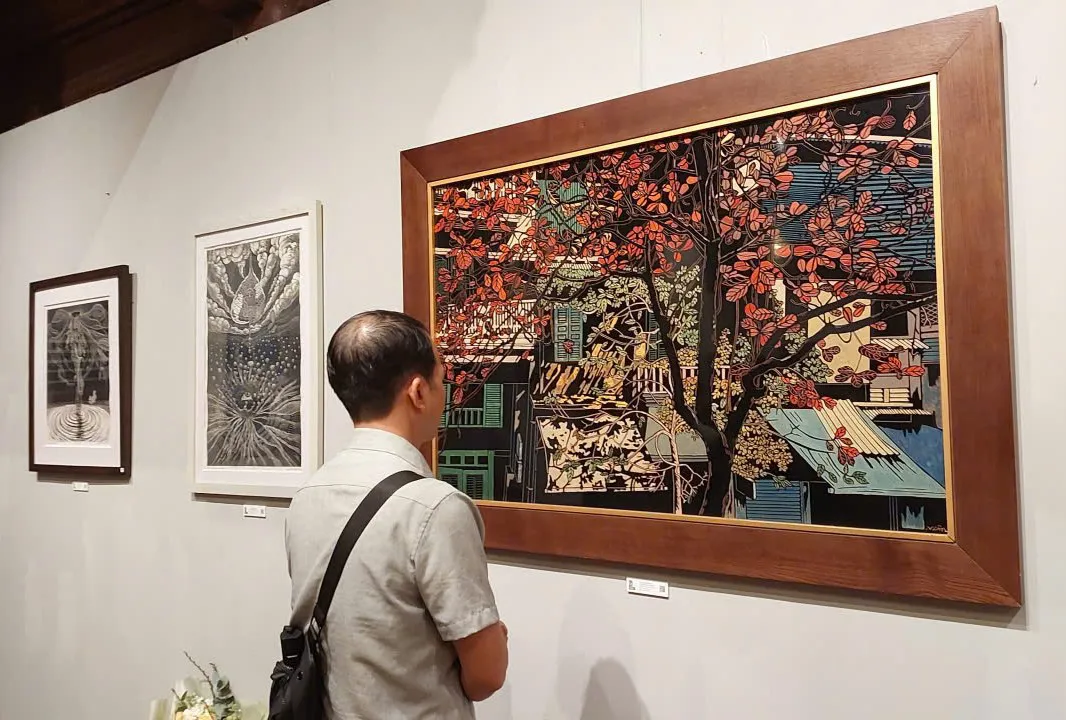
The exhibition brings a glimpse at contemporary art in Vietnam, Spain and the Philippines. Photos: Ngo Minh/The Hanoi Times
Under the theme "Tinh Ban - Amistad - Pagkakaibigan", the exhibition features 24 artists from Vietnam, Spain and the Philippines with 49 drawings and paintings that showcase a variety of styles and approaches, with themes centred on heritage, people and nature.
The theme of the exhibition also means “friendship” in Vietnamese, Spanish and Tagalog (the Philippines). It highlights fine arts as a cultural bridge that fosters empathy and connectivity between cultures and communities.
According to artist Le Thi Thanh, this is an opportunity for Vietnamese, Spanish and the Philippine visual arts to speak together.
Painting, graphics, sculpture, installation and 3D mapping projections blend together, overcoming all boundaries of borders, languages and time, becoming a bridge connecting souls, she said.
"We believe that each work on display is a story about history, identity and aspiration. Together they form a large picture of friendship, respect and sustainable cooperation between countries," Thanh added.
Vietnamese artists bring works rich in identity, from images of dragons, lotus, bronze drums to rural landscapes, urban life and Vietnamese people in the transitional period. Lacquer, silk and acrylic are used in various ways to demonstrate their ability and constant creativity.
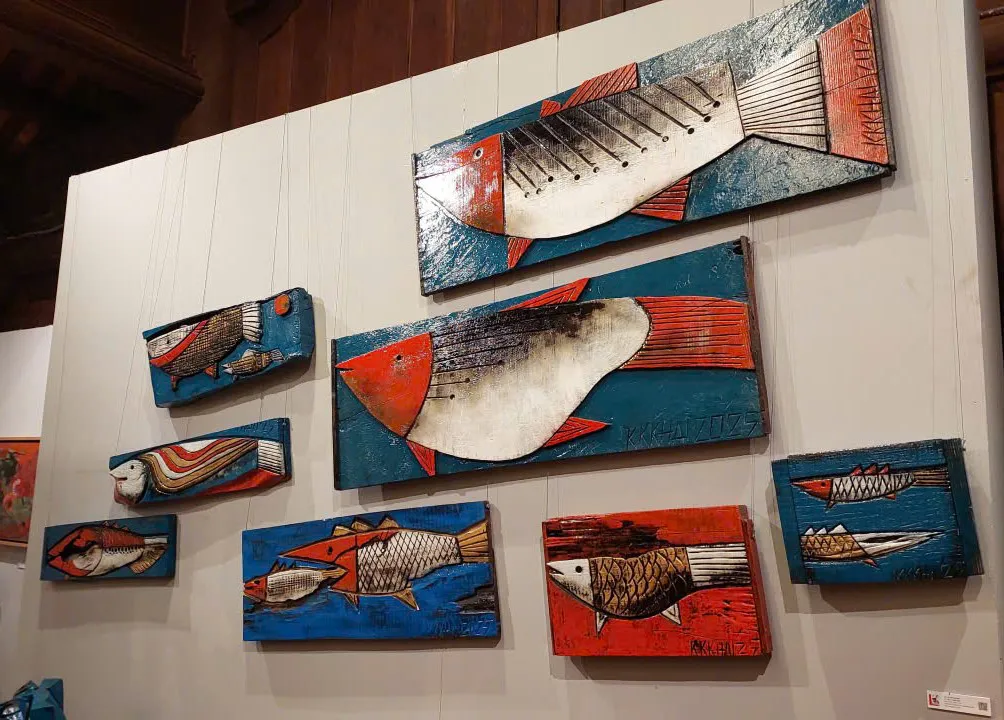
Ocean, the art installation by Ku Kao Khai.
Spanish art is bold, expressive and deeply influenced by tradition and surrealism. The works in this exhibition continue to be inspired by masters such as Picasso, Miró or Dalí but still have their own mark, revolving around themes of history, ego and humanity. Bright colors, impressive shapes, and deep thoughts create a unique appeal.
Philippine art is the result of the fusion of indigenous, Spanish, American, and Asian cultures, creating an identity that is both liberal and profound.
The works often express the relationship between humans and nature, beliefs, history, and social reality, from folk paintings to conceptual and contemporary art - all rich in humanity and expressive power.
Le Xuan Kieu, Director of the Van Mieu-Quoc Tu Giam Culture and Science Center, hoped that the display will be an artistic rendezvous and a cultural dialogue space, spreading inspiration for creativity and strengthening friendship.
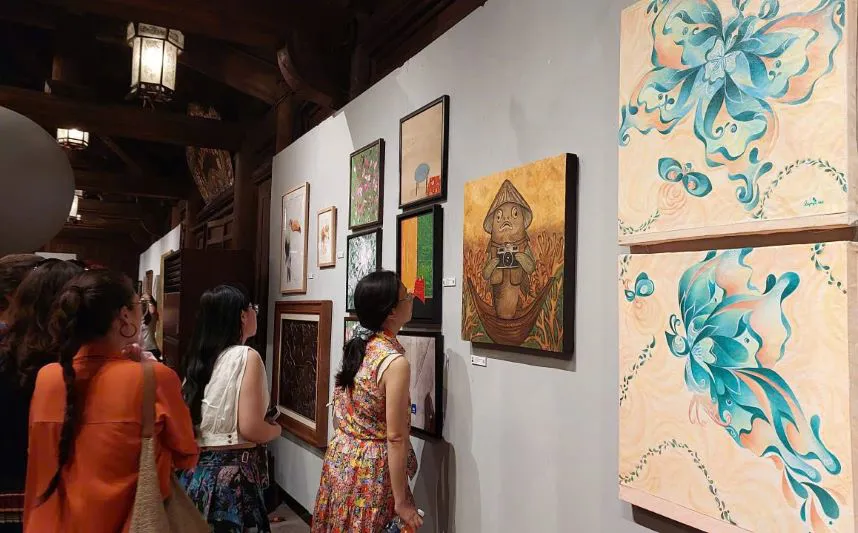
Art lovers can join an interactive program on painting landscapes and portraits, with direct guidance from participating painters.
The exhibition also comprises an interactive program on painting landscapes and portraits in which the audience will directly engage in creative practices and cultivate a love for art linked to national cultural heritage.
The exhibition will run through September 21.
Van Mieu-Quoc Tu Giam (the Temple of Literature complex) is one of the most popular relics and tourist destinations in Hanoi and the country at large. Built in the 11th century during the Ly Dynasty (1010-1225), it is also among the most important Confucian symbols in the country.
The complex consists of Van Mieu, a temple dedicated to Chinese scholar Confucius as Confucianism used to be a popular religion in Vietnam in feudal times, and Quoc Tu Giam, the first national university of the country.
It taught disciples on the Confucian way of life and revered Chu Van An, one of Vietnam’s most respected scholars. Between 1076 and 1779, Quoc Tu Giam educated thousands of talented men to serve their country to the best of their abilities.