Going green must take social realities into account
A transition to cleaner transportation requires careful planning, robust infrastructure, and widespread public support
THE HANOI TIMES — Hanoi will prohibit fossil fuel-powered motorbikes in the area inside Ring Road No. 1 starting July 1, 2026, as part of a plan to reduce emissions and ease urban congestion.
In an interview with the Vietnam News Agency, Vu Anh Tuan, Deputy Head of the Transport Planning and Management Department at the University of Transport and Communications, discussed the challenges and conditions necessary for a successful transition.

Vu Anh Tuan, Deputy Head of the Transport Planning and Management Department, Faculty of Transport Economics, University of Transport and Communications.
How feasible to ban fossil fuel-powered two-wheelers in central Hanoi starting in July 2026?
This policy indicates a defining aspect of Vietnam’s climate strategy, particularly in the transportation sector, as it is one of the leading contributors to national greenhouse gas emissions.
Starting with Ring Road No. 1 is not only symbolic, but also strategic because it targets the most densely populated and polluted urban area.
However, feasibility depends on more than intention, but technical conditions, economic realities, and behavioral factors.
A blanket ban without adequate preparation could lead to public resistance and unintended consequences. To avoid this, the policy should be phased in and backed up with communication campaigns that offer practical alternatives for daily mobility. Only then can the policy gain social acceptance and deliver meaningful environmental benefits.
What are the main technical challenges of switching from gasoline to electric motorbikes?
The first and most apparent challenge is the insufficient charging infrastructure. Although several pilot projects have set up public charging stations, most are in new urban zones or commercial centers, not in older, high-density neighborhoods, where motorbike use is most prevalent. The current infrastructure only meets less than 10% of peak demand.
In the short term, home charging and shared stations may help offset the shortage. However, in the long term, Vietnam must have technical standards, installation procedures, and safety oversight.
Without these foundations, the rapid growth of electric vehicles could pose new risks, especially in densely populated residential areas.
At the same time, domestic manufacturers must be prepared to ramp up production, and consumers should be assured that switching vehicles will not cause financial strain, especially if their current bikes are relatively new.

Public bikes in Hanoi are favorite alternatives to gasoline vehicles. Photo: Lai Tan/The Hanoi Times
Does switching to electric vehicles alone solve Hanoi’s traffic congestion problems?
Not entirely. While switching to cleaner fuels reduces local air pollution, it does not reduce the number of vehicles on the road. Congestion is primarily a product of vehicle volume, not engine type. Even if all motorbikes were electric, Hanoi would still experience traffic congestion during peak hours, particularly in central districts with narrow roads and limited parking.
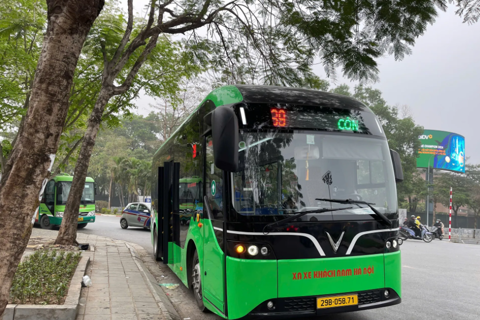
Therefore, any plan to reduce emissions must be accompanied by efforts to cut traffic volume. Building a more reliable and convenient public transportation network with buses, metro lines, and park-and-ride systems that encourage people to leave their vehicles at home is key. Only by changing how people travel can we achieve cleaner air and smoother traffic.
What approach should Hanoi take to ensure this transition is successful?
The transition must be phased in, adaptive, and evidence-based. Rather than imposing sweeping bans from day one, authorities should start with pilot zones, test responses, and adjust policies based on real-world feedback. This kind of staged rollout reduces risk and builds public confidence.
Infrastructure must come first. Without a supportive ecosystem of charging stations, accessible public transport, and reliable connections, people will resist change.
Education and communication campaigns also play a critical role in helping citizens understand the rationale for the policy and its long-term benefits.
Equally important is learning from international case studies. While Hanoi has its own unique characteristics, it shares common challenges with other Asian cities that have established low-emission zones or phased out aging vehicle fleets. These experiences can offer valuable lessons about opportunity, incentives, and public outreach.
What is needed now to support both environmental goals and the public’s ability to adapt?
A successful transition requires clear rules, public trust, and targeted support like EV subsidies, tax breaks for phasing out old vehicles, and incentives to make public transport more affordable and accessible.
The transition must be continuously monitored with clear metrics, public feedback, and adaptable plans to ensure it improves Hanoi’s environment and quality of life, steering the city toward a cleaner, quieter, and more livable future.
Thank you for your time!