Ve day bon canh chim troi and the real cost of a last minute cancellation
The abrupt cancellation of Ve day bon canh chim troi (Come Home: Four Wings of the Sky) concert hours before showtime has left audiences with financial losses, wasted time, disrupted plans and a deep sense of frustration.
THE HANOI TIMES — Within hours, the incident moved beyond disappointment and became a wider debate about trust, accountability and whether large scale entertainment projects can still be treated as ordinary civil transactions when they fail.
Part of the reason the cancellation triggered such strong public reaction lay in the scale and symbolism of the program itself.
The event, self styled as The Legend Live Concert Ve day bon canh chim troi, was promoted as a rare musical gathering bringing together four towering figures of Vietnamese music, each representing a different generation in the evolution of modern Vietnamese songwriting.
The program paid tribute to composers Van Cao, Pham Duy, Trinh Cong Son, and Tran Tien, whose works have accompanied Vietnamese audiences from the early days of modern music through to the present. Their songs have shaped collective memory across generations, making the concert more than a commercial event, but a cultural occasion.
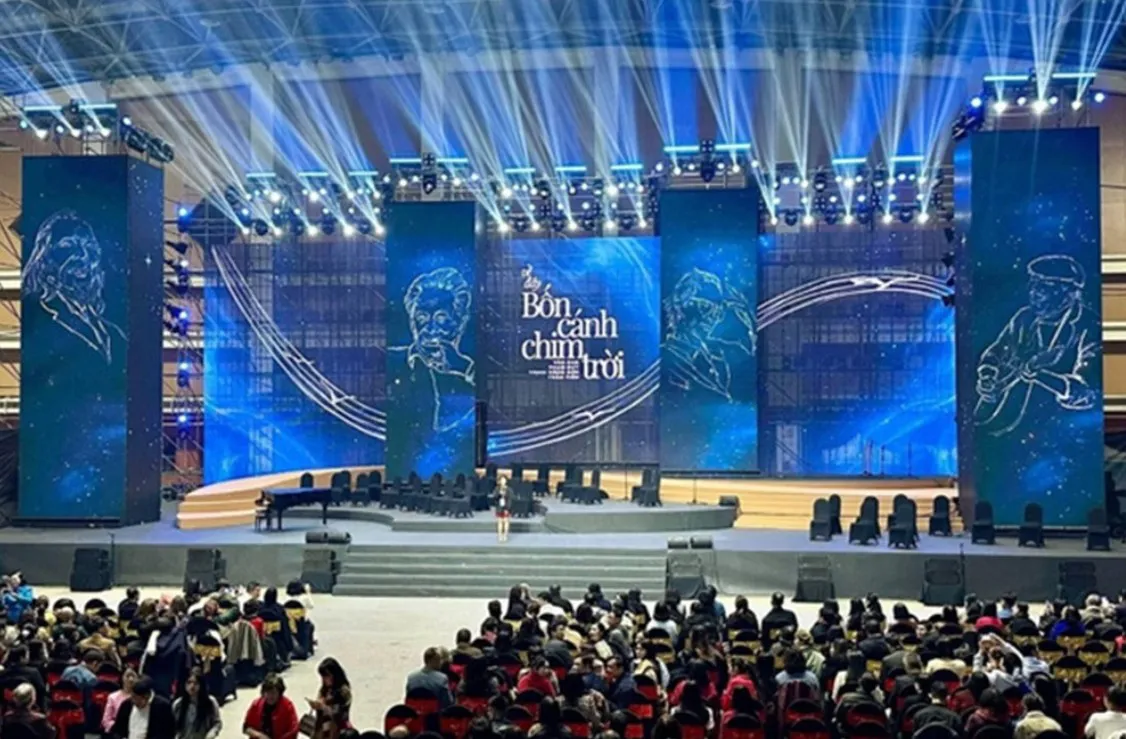
The venue was filled with seated audiences, but the concert never took place. Photo: Tintuc
For many ticket buyers, the loss extended well beyond the ticket price. Audiences described taking time off work, traveling long distances, booking accommodation, and paying for meals in advance, all based on the expectation that the concert would take place as announced.
One ticket buyer, Hiep Vu, said he had travelled from another province and checked into a hotel near the venue before receiving the cancellation notice. While he accepted that the ticket price might eventually be refunded, he stressed that the time and effort invested could not be recovered. Another ticket buyer, Tuan Long, described waiting in his car outside the venue, repeatedly checking his phone, uncertain whether to feel anger or resignation after having already committed time and money to attend.
As similar accounts accumulated, public discussion gradually shifted from inconvenience to responsibility. Many ticket buyers pointed out that the late timing of the cancellation left them with no meaningful way to mitigate their losses, reinforcing the perception that key decisions had been made without sufficient regard for the consequences borne by the audience.
This sense of frustration soon expanded beyond the organizer to include questions about the role of participating artists. Tuan Long argued that artists had also exercised poor judgment, noting that the organizing company had previously been associated with controversies. In his view, agreeing to participate under such circumstances risked undermining the artists’ own professional credibility and public respect.
A similar sentiment was shared by Ly Do, who said responsibility should begin with self reflection before assigning blame elsewhere.
According to Ly Do, the situation arose partly because artists were too willing to cooperate without carefully assessing the organizer’s track record, and that refusing to work with partners who carry a negative reputation from the outset could help prevent similar incidents in the future.
Other ticket buyers approached the issue from a legal standpoint while still questioning ethical responsibility. Vo Minh Hoang described the organizer’s failure to honor commitments as meeting the legal threshold of fraud, given that the risks extended beyond ordinary occupational uncertainty. At the same time, he argued that the ethical obligations of participating artists should not be ignored.
Thao Vu raised further questions about the preparation process, asking why artists continued to cooperate for months if payment delays or contractual problems had already emerged. If financial obligations were repeatedly unmet, she said, it was unclear why collaboration continued until the final moments before cancellation.
Industry professionals also offered more structural critiques in interviews with The Hanoi Times, speaking on condition of anonymity. Several experienced event organizers said the program appeared to lack a robust risk management framework, leaving it poorly equipped to respond once problems escalated. While legal responsibility can be assessed from multiple angles, they said, weak contingency planning made the fallout harder to contain and increased losses for all parties involved.
Veteran marketers in the live entertainment sector pointed to a deeper, long standing issue within the industry. Many music events, they said, continue to operate within blurred boundaries between personal relationships and contractual responsibility. Organizers, artists, and production teams often know each other personally, leading to informal arrangements and tolerance of delays or irregularities that would be unacceptable in more tightly governed industries.
This reliance on personal trust rather than clearly enforced contractual discipline creates gray areas that become especially problematic when disputes arise. When familiarity replaces formal accountability, responsibility can become diffused, leaving audiences exposed when projects fail.
At the same time, a familiar counter argument continued to surface. Some cautioned against criminalizing civil disputes, emphasizing that business inherently involves risk and that not every failed event should result in criminal liability. This position is grounded in established legal principles, as functioning markets depend on a clear distinction between commercial failure and criminal wrongdoing.
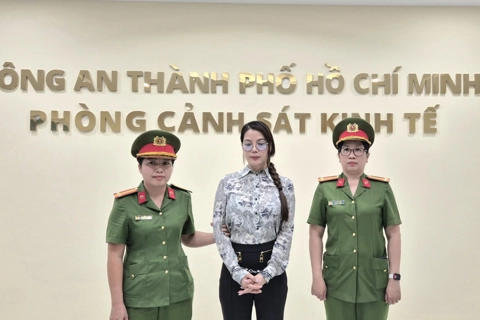
However, the case did not remain within the scope of a typical civil dispute. On December 30, Hanoi police arrested and charged the director of the organizer, Ngoc Viet Company, with fraud and asset misappropriation. According to investigators, the concert did not meet legal conditions required for staging, yet tickets continued to be sold and funds were collected from the public.
Legal experts emphasized that this distinction is critical. Lawyer Dang Van Cuong of the Hanoi Bar Association said advertising a specific time, venue, and program to establish public trust while knowing that legal approval was lacking constitutes fraudulent conduct rather than a contractual breach. Under Vietnams Penal Code, fraud involving particularly large sums may result in prison sentences ranging from 12 to 20 years, or even life imprisonment.
This legal context helps explain why public opinion has largely supported the investigation. The issue is not simply that the show failed to take place, but that money was collected from a large number of individuals while unresolved legal and operational risks remained.
The cancellation of Ve day bon canh chim troi has therefore become more than a failed show. It stands as a test of how the entertainment industry manages risk, protects audiences, and accepts accountability when trust is broken.