Government to enhance enforcement of Capital Law
The enforcement of the Capital Law will fuel foreign investment, green space, cultural preservation, environmental protection, and social advancement.
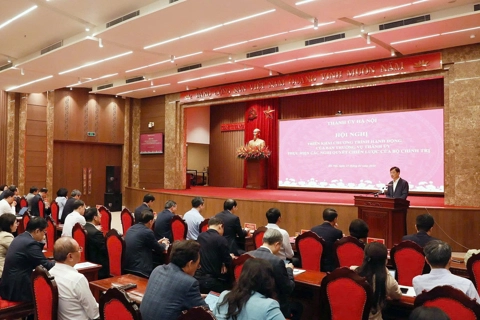
Vietnam’s Prime Minister Pham Minh Chinh is rallying ministries and sectors to join forces with Hanoi in implementing the revised Capital Law. This call to action aims to transform legal frameworks into dynamic, effective policies, setting the stage for Hanoi's next chapter of growth and innovation.
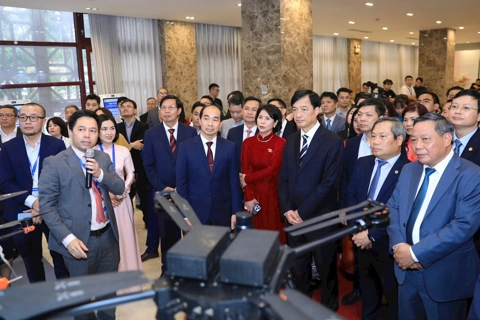
| Prime Minister Pham Minh Chinh at the meeting with Hanoi's leaders on August 17. Photos: Nhat Bac/VGP |
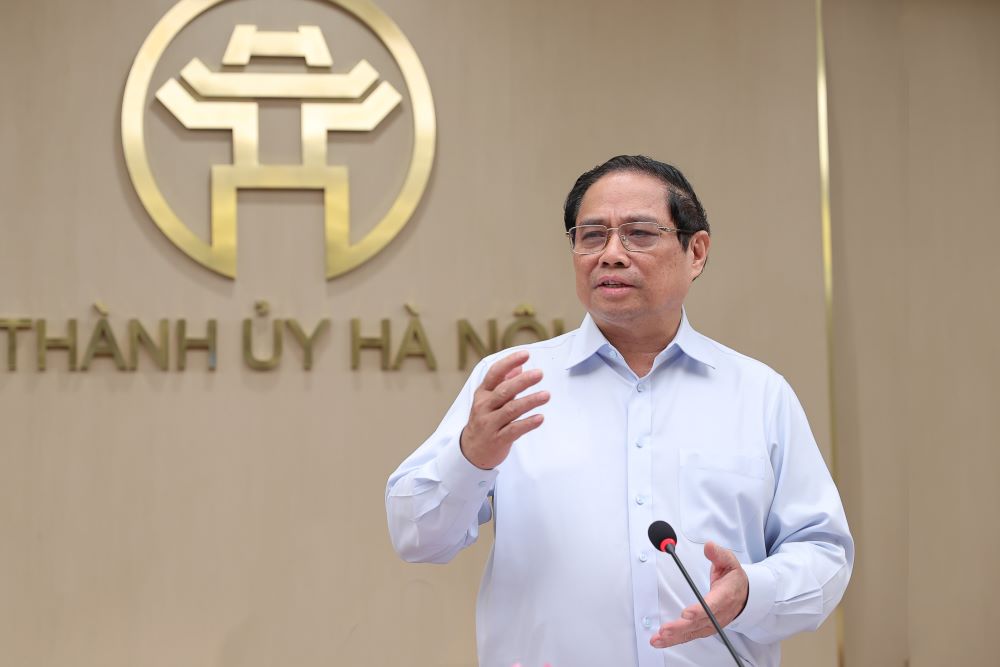
During his visit to the Hanoi Party Committee on August 17, Prime Minister Pham Minh Chinh highlighted his discussions with the city’s leaders, focusing primarily on economic development. Key areas of attention included attracting investment, advancing smart city initiatives, expanding urban railways, enhancing green spaces, preserving culture, and improving environmental protection.
At the meeting, Hanoi’s leaders recommended measures to boost enforcement of the Capital Law and its role in drawing foreign investment in industrial parks, especially hi-tech ones; in the capital city’s master plan; developing smart cities, social housing, urban railways, belt roads, and spaces around Red River; preserving cultural and historical values, especially the Thang Long Imperial Citadel, Co Loa Ancient Capital; solving environmental pollution along Nhue-Day river; tackling problems at big projects, among others.
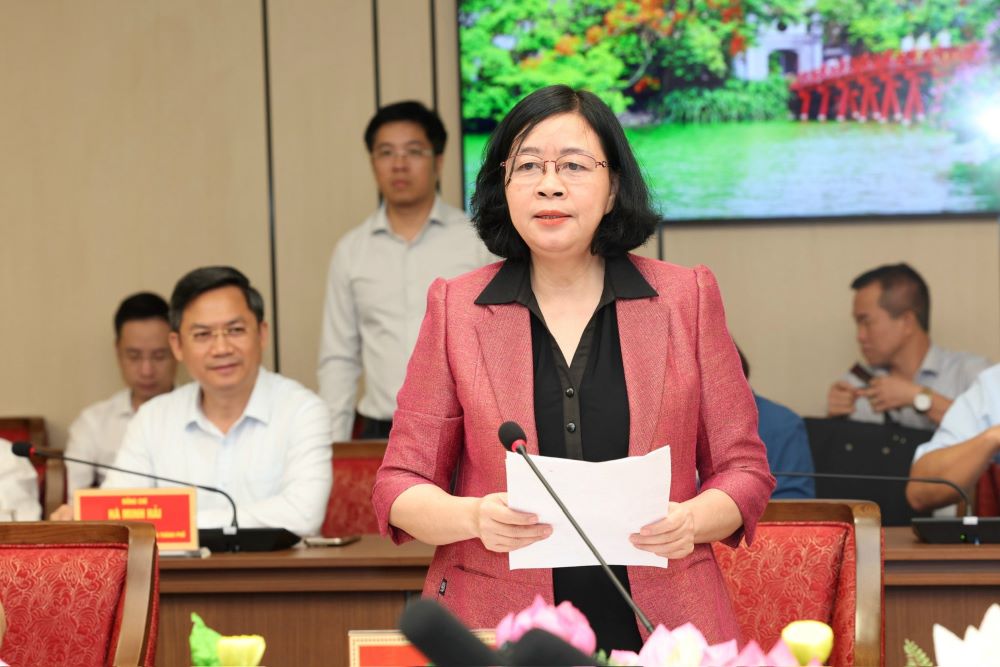
| Secretary of the Hanoi Party Committee Bui Thi Minh Hoai. |
Hanoi urged to set an example with civilized values
Deveping Hanoi into a “modern and civilized” capital is a crucial political undertaking, Prime Minister Pham Minh Chinh told the city’s leaders.
It’s the first and foremost task of Hanoi’s Party and government, as it holds a special role in national protection and development. “Developing Hanoi with the motto “Hanoi for the entire country, the whole nation for Hanoi,” Chinh said.
He said it’s both pride and responsibility for Hanoi, so it requires the local authorities to make the city famous for being safe, beautiful, peaceful, and rich in culture.
To make the goals attainable, the prime minister asked Hanoi to be decentralized in governance to ensure the effective operation of the whole political system while focusing on economic development by monitoring inflation and ensuring major economic balances. At the same time, it needs to speed up administrative reforms while boosting digital transformation. Last but not least is ensuring social welfare and developing cultural industry to make it the spearhead sector in the civilized capital city.
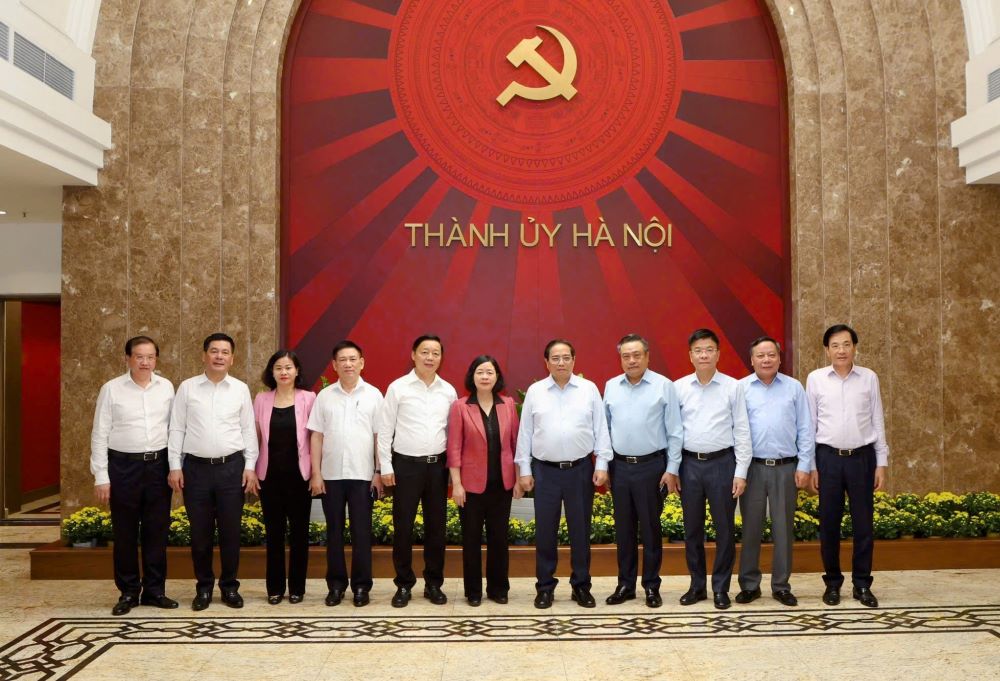
| Prime Minister Pham Minh Chinh, some cabinet members, and Hanoi's leaders. |
Regarding economic matters, PM Chinh urged Hanoi to accelerate public investment disbursement and lead in innovation, incubation, and smart city development. He also emphasized the need to enhance competitiveness, tackle urban infrastructure challenges, and improve transport, education, healthcare, and environmental issues.
Secretary of the Hanoi Party Committee Bui Thi Minh Hoai said the city will remove barriers to facilitate investors while speeding up socio-economic programs directed by the prime minister.
She expected that the city would receive support from the government and the cooperation between central agencies and Hanoi to make typical policies for further development of Hanoi to make it the country’s political and administrative hub and the “modern and civilized” capital.
The Capital Law, originally passed in 2012, was revised to address the city's unique challenges and opportunities, particularly as the political, cultural, and economic hub of Vietnam. So far, the Prime Minister’s efforts have been recorded in some fields related to strengthening the legal framework for Hanoi's development, collaborative efforts for efficient implementation, focus on sustainable urban development, addressing socio-economic challenges, and promoting international cooperation. The revised Capital Law aims to give Hanoi more autonomy and create a more comprehensive legal framework to support its development. The law covers various sectors, including urban planning, infrastructure, environmental protection, and administrative management. Prime Minister Chinh has emphasized the importance of ensuring that the law is effectively enforced and that all relevant ministries and sectors coordinate to support Hanoi's growth. This includes policy alignment to improve governance, enhance infrastructure, and maintain social stability. He has called on key ministries, such as the Ministry of Planning and Investment, Ministry of Finance, Ministry of Construction, and Ministry of Natural Resources and Environment, to actively work with Hanoi authorities. The goal is to ensure that the legal provisions are applied effectively and to address any emerging challenges. Sectors such as transport, education, and health have been encouraged to contribute to the city's modernization efforts in line with the revised law. The Prime Minister has stressed the need for a sustainable approach to Hanoi's urban development. This includes protecting historical sites, managing population growth, and improving public services like waste management and transportation. He has also urged the integration of smart city technologies and green development practices, which are outlined as priorities in the revised law. PM Chinh is rallying support to address pressing socio-economic issues in Hanoi, including housing shortages, traffic congestion, and pollution. Ministries are tasked with helping the city implement long-term solutions in these areas, particularly through investment in infrastructure and public services. The Prime Minister has encouraged Hanoi to strengthen its international cooperation, especially in areas like trade, investment, and tourism. The revised Capital Law gives Hanoi the legal framework to more effectively engage with foreign partners, and the central government’s support is crucial in these efforts. | |