Grand exhibition showcases Hanoi Traditional and Creative Space
Hanoi Traditional and Creative Space 2025 is an occasion to honor the thousand-year cultural journey of the Capital, affirming the harmonious blend between tradition and innovation, between heritage and creativity.
THE HANOI TIMES — The Hanoi Traditional and Creative Space 2025 exhibition is a special highlight, contributing to promoting achievements in culture, tourism, and creative industries of the capital.
The event is organized by the Hanoi People's Committee, opened on August 28 as part of the Exhibition of Socio-Economic Achievements commemorating the 80th anniversary of National Day (September 2).

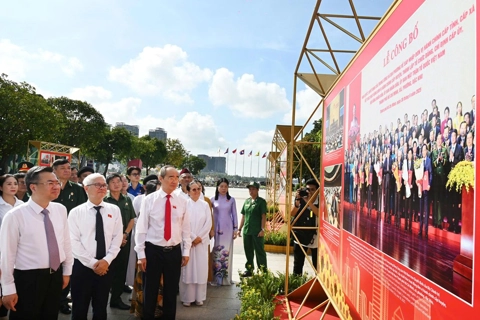
Vice Chairman of Hanoi People's Committee Nguyen Manh Quyen inspects preparations for the event. Photos courtesy of Hanoi People's Committee
The exhibition space is a blend of tradition and modernity, heritage and technology and urban/suburban areas.
It is arranged as a continuous flow from the past to the future, aimed to honoring the traditional values that have forged the cultural identity of Thang Long, and converging and spreading creative ideas, pioneering spirit and aspirations of the capital.
Thereby, the event portrays the image of a new Hanoi that is brave, civilized, creative, ready to accompany the country into the new era of national development.
The space is divided into 6 main parts.
The red lines of Hanoi
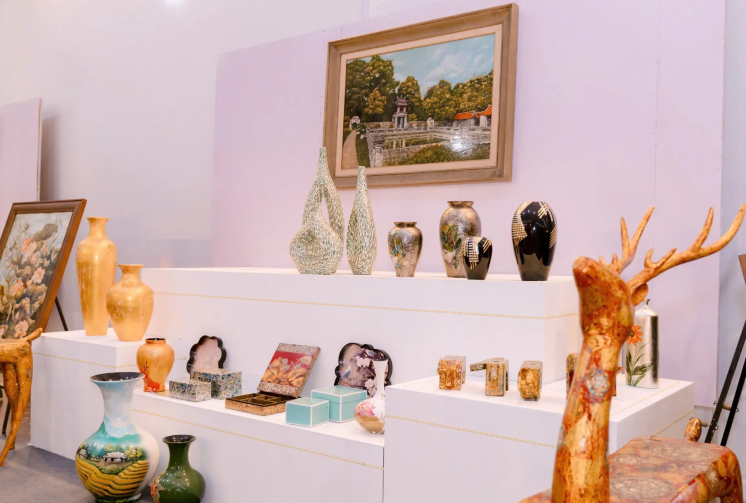
This is a place to honor the values of Hanoi traditional handicrafts, which have been built up through the ups and downs of the country's history.
From ceramics, rattan, lacquer to mother-of-pearl inlay, each product on display shows off sophisticated techniques, creativity, passion and love of the craftsman.
All blend together, creating a brilliant red line in the cultural picture of Hanoi.
The space is dotted with typical cultural symbols of Thang Long-Hanoi such as the One Pillar Pagoda, and Khue Van Cac (the Literature Constellation Pavillion) at the Temple of Liturature.
The quintessence of craft streets
Hanoi is the land of a thousand years of culture with some 1,350 traditional craft villages, a typical feature that is rarely found anywhere else.
Many craft villages have existed for hundreds of years. They are preserved and passed down intact to this day as part of the soul of the capital.
The quintessence of craft streets is a meeting place for talented artisans, whose passion and dedication have kept the crafts alive until today.
Here, visitors can listen to the ups and downs of the crafts, and feel the artisans' intense love and burning desire to preserve the quintessence of the crafts that their ancestors created.
The space is also an intersection between tangible and intangible heritages, between the hands of artisans and the flow of trade and tourism.
It is expected to position Hanoi as a creative destination and a leading cultural tourism center in the region and the world.
Pioneer in technology
The exhibition also showcases the most outstanding achievements of the industry and trade sector converge, from artificial intelligence solutions, smart management programs, to digital technologies applied in many fields such as healthcare, transportation, construction and post and telecommunications.
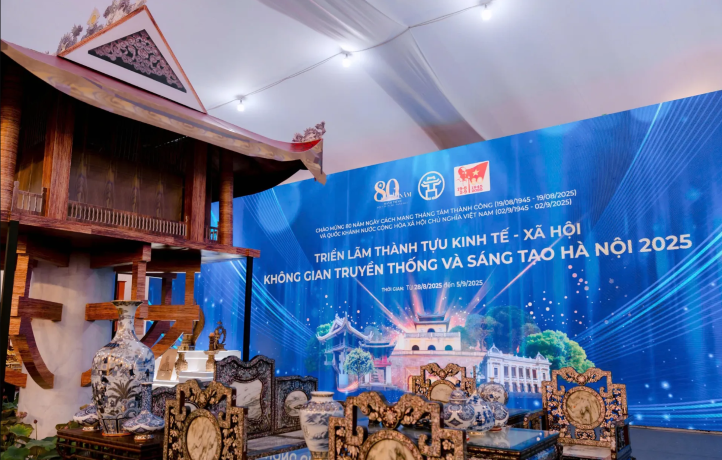
The space depicts the image of a capital as a flagship city in innovation, production, application and development of technological solutions to better serve the country's socio-economic growth.
Hanoi sees breakthrough initiatives, modern technologies and innovative thinking are the "golden key" to foster its civilization and modernity, get ready to enter a new era, confidently standing shoulder to shoulder with advanced capitals in the region and the world.
Hanoi cuisine
Hanoi has a rich and diverse culinary culture, where the typical quintessence of the Northern Delta converges.
The appeal of Hanoi cuisine is presented in the flavors and colors of the dishes, and through the techniques, professional secrets and surrounding stories that reflect the depth of cultural history.
Coming to the exhibition, visitors can try typical flavors of the capital cuisine: com (green rice flakes) of Vong Village, pork ham of Uoc Le Village, dried fruits, peanut candy, lotus longan sweet soup and lotus tea.
Source of culture
Here, the public can experience traditional cultural activities such as writing calligraphy, making conical hats, making fans, molding to he (toy figurines) which are simple cultural features but containing the deep spirit of Hanoi people.
Village in the city
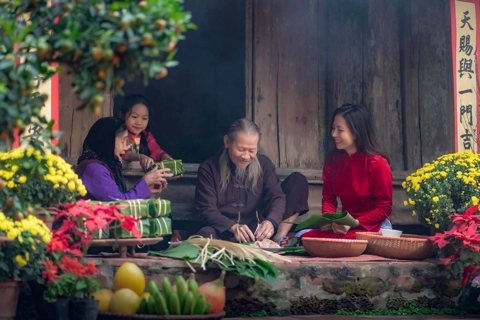
This area recreates the image of a Northern countryside village in the heart of a modern city through rustic scenes such as ancient village gates, mossy communal houses and time-discolored ceramic walls.
Standing out in the space is the display area of ornamental plants with works and bonsai trees of high artistic value, creating a peaceful space in harmony with nature.
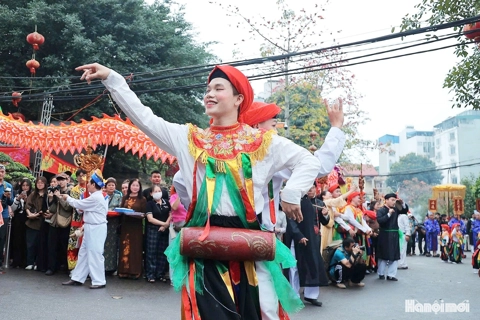
In addition, traditional art performances such as ca tru (ceremonial singing), xam (blind’s music), cheo (traditional operetta), tuong (classical drama), ao dai (traditional long dress) performance are held in the communal house yard, creating a cultural space imbued with Vietnamese identity and honoring the elegant and sophisticated life of the ancient Hanoians.