Hanoi accelerates urban greening with over 400,000 new trees in 2026
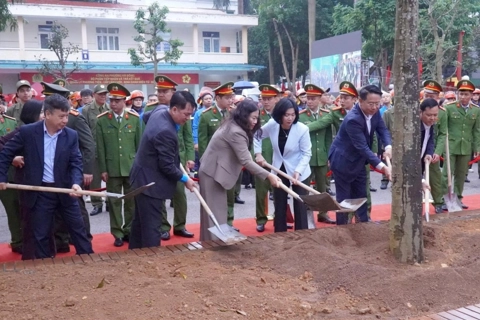
The campaign highlights the ecological value of tree planting and raises public awareness of forest development and urban greening.
THE HANOI TIMES — Hanoi will plant more than 400,000 new trees in 2026 as the city accelerates urban greening alongside forest protection and broader environmental goals to improve urban landscapes while linking tree planting with sustainable development and ecological balance across the capital.
Around 200,000 shade and timber trees and about 200,000 fruit trees will be planted along roads and at government offices, parks, hospitals, schools and residential areas.
Hanoi also plans to establish 30 hectares of new production forests while continuing to manage and protect special-use and protective forests to maintain stable forest coverage.
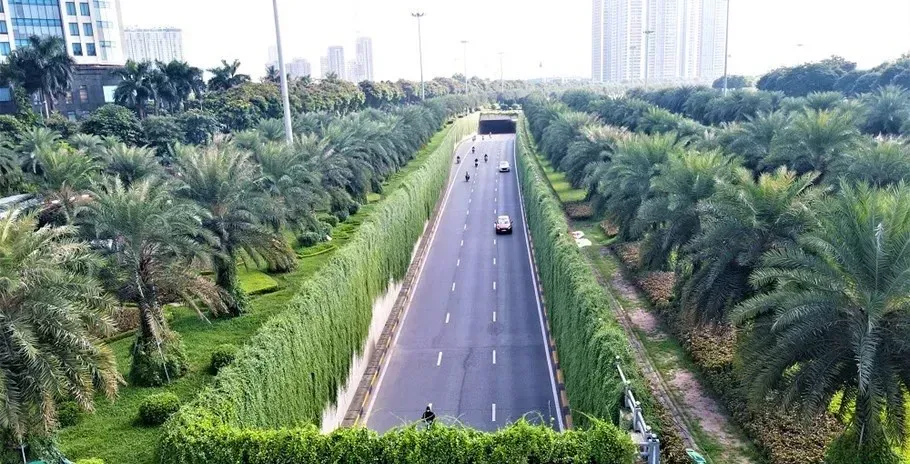
Plants are seen at a tunnel of the Thang Long Avenue in Hanoi. Photo: Pham Cong/The Hanoi Times
According to Chairman of the municipal People's Committee Vu Dai Thang, tree planting campaign is a long-standing tradition that helps expand green coverage in a capital among those most affected by climate change.
“As part of its goal to develop Hanoi into a green - civilized - modern city, tree planting and the maintenance of the urban greenery system remain a key task in the city’s annual socio-economic development plans,” said Thang.
He stressed the need to diversify tree species, prioritize indigenous varieties and introduce new ones suited to Hanoi’s soil and climate, with standardized tree sizes and proper care.
The annual Lunar New Year tree-planting campaign, launched in response to President Ho Chi Minh’s initiative, has contributed to significant gains in urban greening and afforestation, the mayor said.
Tree planting must align with traffic networks, urban infrastructure and underground facilities, while investors in transport and urban development projects are required to comply with approved tree standards and are barred from converting designated green land for other uses.
Hanoi will also upgrade its existing tree system by replacing diseased, deformed, leaning or unsuitable trees that fail to meet urban requirements.
Organizations and households are encouraged to green buildings with plants, flowers and lawns, alongside plans to renovate gardens, playgrounds and parks and expand green belts along highways.
Local authorities are tasked with raising public awareness of the long-term benefits of greenery and the shared responsibility for planting, caring for and protecting trees.
Tree planting significantly improves Hanoi’s environment
According to a report by the United Nations Educational, Scientific and Cultural Organization (UNESCO), Hanoi has made efforts to expand its green cover from the city center to its suburbs and ring roads, which has helped protect the environment.
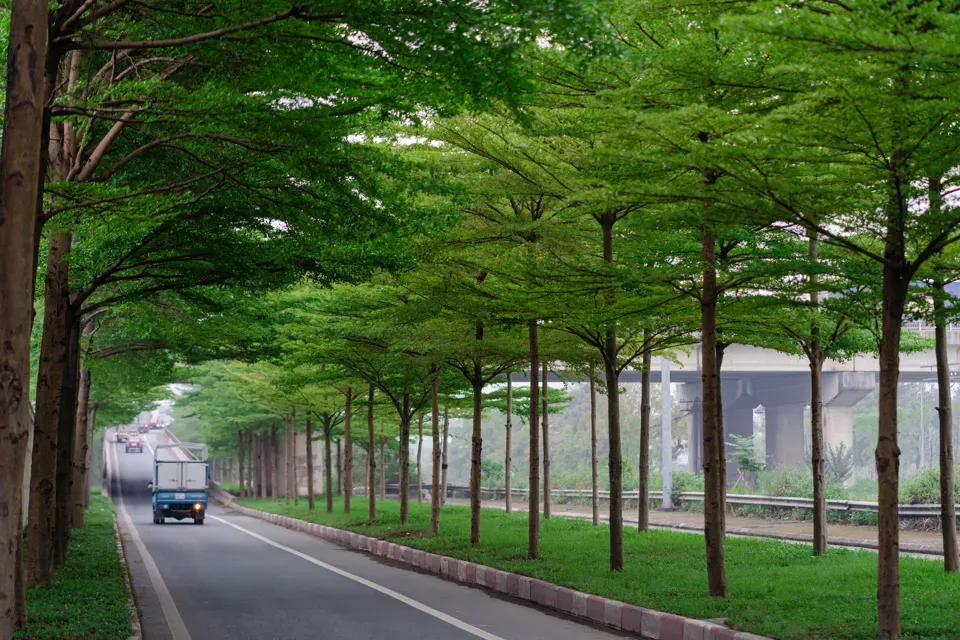
Hanoi's Ring Road 2 is lined with rows of verdant small-leaved trees that make for a lovely scene. Photo: Duy Khanh/The Hanoi Times
"In recent years, Hanoi has grown noticeably greener, with tree-lined streets reshaping the city’s landscape. Rows of vibrant trees have enhanced urban aesthetics, turning several streets into popular photo spots and venues for cultural and artistic activities," Ta Thi Mai Thanh, a resident of Tu Liem Ward, told The Hanoi Times.
Over recent years, Hanoi has planted millions of trees, steadily expanding greenery across the city.
Many streets have been upgraded and widened with green corridors on both sides. New thoroughfares such as Pham Van Dong, Pham Hung, Le Duc Tho, Hoang Quoc Viet, Vo Chi Cong and Vo Nguyen Giap now offer continuous shade for residents and visitors.
The trees selected for Hanoi’s streets are well suited to local climate conditions and are non-toxic and non-polluting, leaving a lasting impression on tourists.
Tree planting helps green the city, regulate the air and improve environmental quality, while giving each street a distinct identity, she added.
According to the Hanoi Department of Construction, the capital has about 1.8 million trees, which contribute to ecological balance and a healthier living environment.
The department has asked relevant units to develop annual plans to expand tree planting in urban areas, industrial zones and along roads on the city’s outskirts to increase canopy cover and protect the environment.