Hanoi acts to revive capital rivers and lakes
Hanoi plans activities to clean up the environment and promote environmental awareness among local communities.
Hanoi is committed to reviving the capital’s rivers and lakes as part of the city’s effort to promote a green and beautiful city.
Chairman of the Hanoi People’s Committee Tran Sy Thanh vowed this at the launch of an emulation campaign for a green, clean, and beautiful capital on December 17.
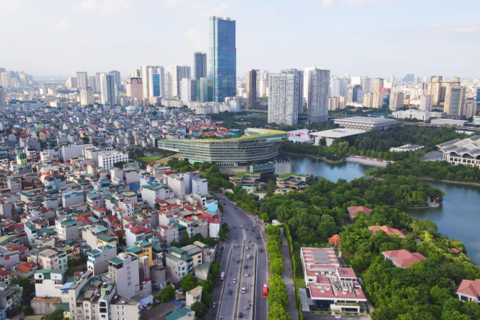
| Hanoi from above. Photo: Thanh Hai/The Hanoi Times |
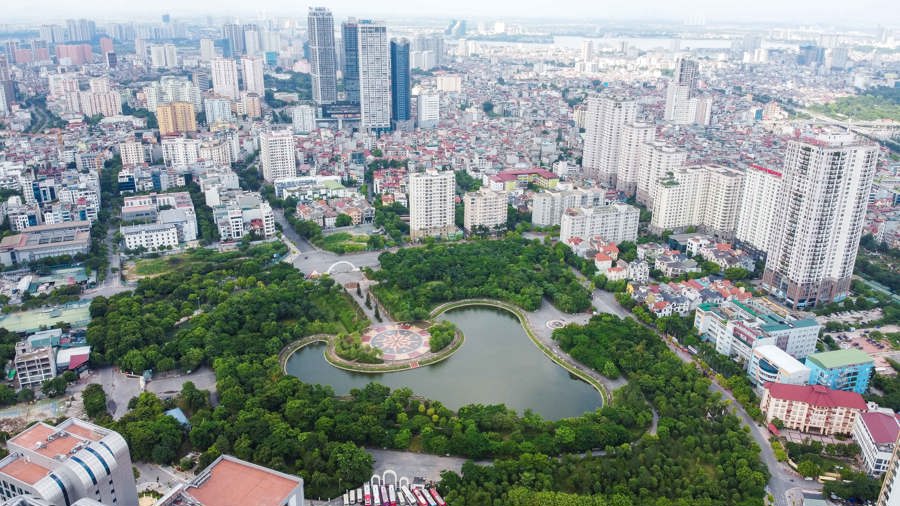
At the event, Thanh highlighted the city's significant challenges facing the city as a result of urbanization and climate change.
“Air pollution, water contamination, inefficient waste management, and the decline of green spaces are urgent issues requiring collective action by the community and citizens, ” said Thanh.
Hanoi has already launched a plan to systematically and sustainably implement the "Bright - Green - Clean - Beautiful" campaign. This initiative aims to address current environmental problems while contributing to the future development of a civilized and modern capital.
The Chairman emphasized that the success of this movement depends on the combined efforts and participation of every individual, family, organization, and community. Public involvement, he added, is not only a key factor but also the greatest strength in realizing the goal of making the capital brighter, greener, cleaner, and more beautiful.
| Hanoi Chairman Tran Sy Thanh at the event. |
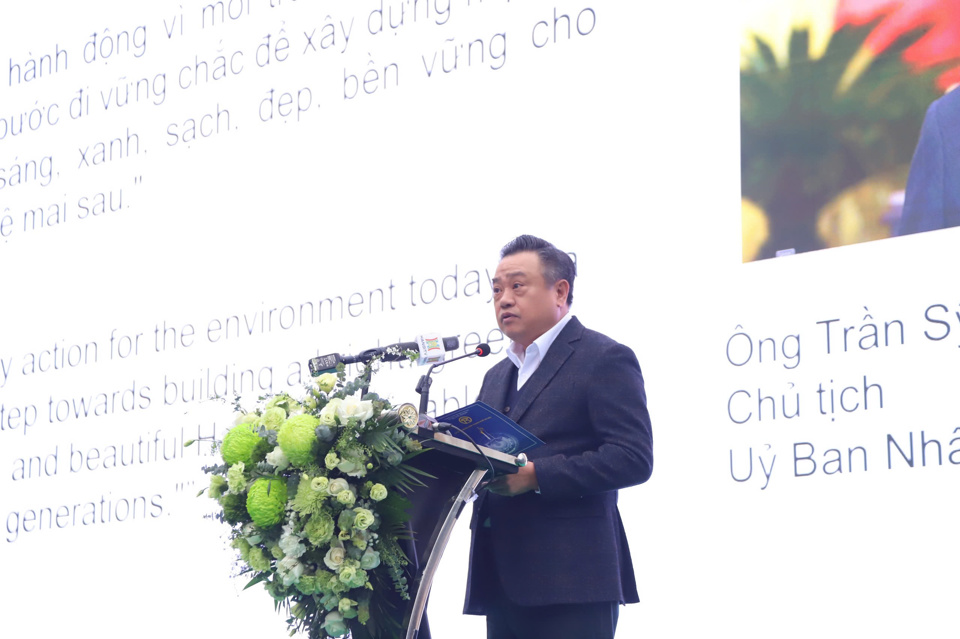
Thanh called on all citizens to adopt and maintain habits such as waste management at the source. Families and residential areas were encouraged to proactively collect, sort, and minimize waste generated from daily activities.
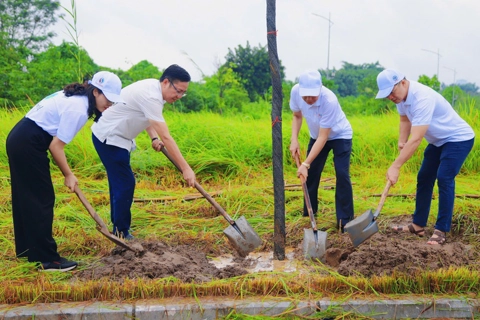
He also urged residents to protect water resources, air quality, and the living environment by conserving water, reducing harmful emissions, and safeguarding green spaces. Citizens were encouraged to actively care for and expand green spaces by planting trees and contributing to cleaner and more beautiful streetscapes, making these efforts a part of the journey towards a greener and more attractive capital.
Thanh stressed that the campaign is not merely a call to action but is backed by concrete, practical, and effective programs.
To kick off the initiative, Hanoi will launch activities to clean up the environment and promote environmental protection awareness among local communities, he said. The city will recognize outstanding organizations and individuals while strictly enforcing violations to ensure accountability and foster a shared sense of responsibility.
He further pledged Hanoi's commitment to supporting its citizens by creating favorable conditions, increasing infrastructure investments, and organizing meaningful activities to sustain the "Bright - Green - Clean - Beautiful" movement over the long term.
Le Thanh Nam, Director of Hanoi’s Department of Natural Resources and Environment, endorsed the campaign, saying that the city would prioritize measures to improve air, water, and soil quality. Hanoi will also closely monitor sources of emissions with a clear message: "Clean air, green city."
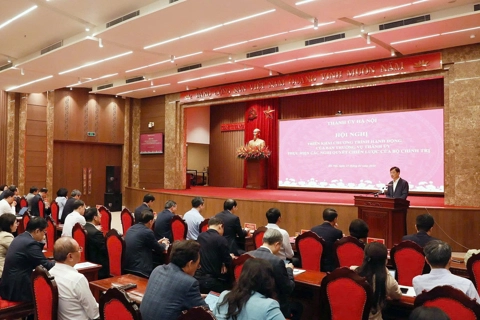
| Overview of the event. |

A major focus will be the "Revitalizing Hanoi’s Rivers and Lakes" campaign, which aims to clean, restore, and develop green public spaces along rivers and lakes, demonstrating a firm commitment to reviving urban rivers and lakes in the capital.
The city is determined to tackle environmental violations while promoting sustainable improvements. Alongside enforcement, Hanoi will strengthen inspections, work closely with relevant authorities, and strictly deal with environmental offenses to ensure thorough implementation of its regulations, Nam added.
Hanoi is a city with a dense network of rivers, canals, and lakes, with an average density of about 0.5 to 1.0 km of rivers per square kilometer of land area. Among its rivers, the Red River and the Da River are the two largest flowing through the city. These rivers hold significant socio-economic value and are deeply connected to Vietnam’s thousand-year history of nation-building and defense, as well as the cultural heritage of the Northern Delta, linking the cultures of Thang Long and Xu Doai. In addition to its river system, Hanoi is characterized by a diverse network of lakes, with approximately 115 lakes within the inner city and 12 large lakes (over 5 hectares) in suburban areas, excluding ponds. Many lakes are of critical urban landscape value and perform functions such as regulating surface water and receiving and draining rainwater, and sewage for residential areas. Water from these lakes is also utilized for agricultural production and aquaculture. However, urbanization and population pressures have led to the degradation and pollution of many rivers and lakes in Hanoi. Some lakes have been reduced in size due to land encroachment and filling for construction purposes. The direct discharge of waste and untreated domestic sewage into rivers and lakes has caused severe pollution. Many lakes suffer from sediment buildup due to natural siltation processes and a lack of regular dredging. Water resource exploitation and economic activities around lakes often lack proper planning. Sections of rivers flowing through urban areas, residential zones, and suburban production or business areas have experienced significant water quality degradation and severe pollution. This is particularly evident in rivers such as the To Lich, Kim Nguu, Lu, Set, Nhue, and Day. |