Hanoi advances toward UNESCO learning city status with Happy Schools Program
The move aims to make schools more interesting, safer, healthier, and creativity-encouraging to students.
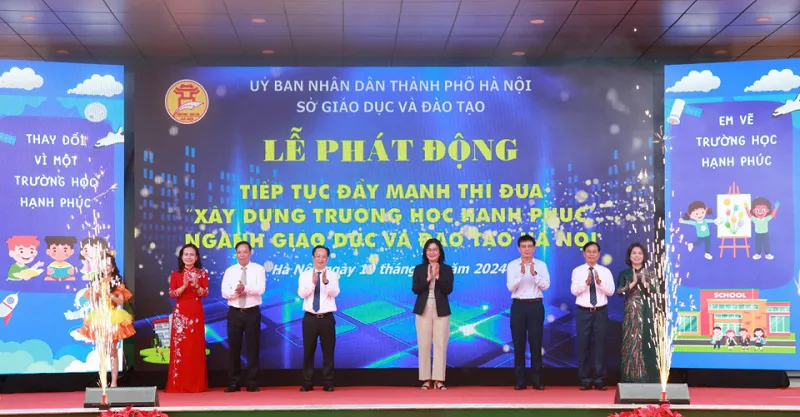
The Hanoi Department of Education and Training on October 19 launched a campaign to promote the building of "Happy Schools" for the 2024-2025 academic year.
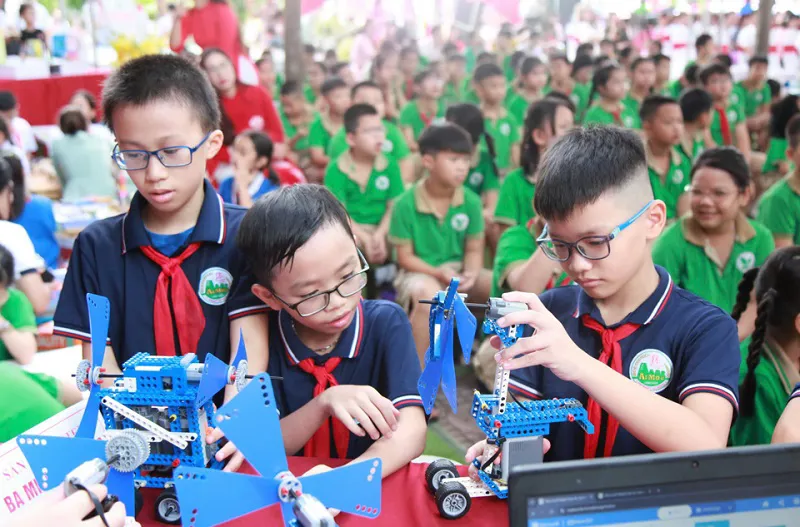
| Students enjoy playing with their creativity. Photo: The Hanoi Times |
The initiative is a significant part of Hanoi's efforts to be recognized as a member of the UNESCO Global Network of Learning Cities.
Through the campaign, the capital aims to create a safe, healthy, friendly, and happy educational environment that encourages creativity and innovation, while improving the quality of teaching and learning.
In preparation for this initiative, the department has created a set of criteria for Happy Schools, applicable to all preschools and general education institutions in the city.
A happy school is one where every student feels respected, heard, and loved by their teachers and peers.
Building such an environment involves cultivating a safe, welcoming, and positive atmosphere. This includes reducing academic pressure, encouraging creativity and exploration, and developing students' social skills.
In a happy school, teachers lecture, guide and inspire students to develop. They must design engaging lessons that allow students to gain knowledge and skills, while also freely expressing their thoughts and emotions.
For students, each day at school is not only a step in their educational journey but also an opportunity for self-discovery and the creation of lasting memories with teachers and friends.
According to the Hanoi Department of Education and Training, schools across the city have actively embraced the Happy School concept with various creative models and practical solutions.
This includes promoting green, clean, and safe environments, innovating teaching methods, providing professional development for teachers and staff, and creating opportunities for students to engage in new and creative activities.
"We hope that alongside creating green, clean, and safe environments, local schools will focus on fostering a sense of love, respect, and sharing so that every day at school is a joyful day, where both teachers and students feel happy," said Tran The Cuong, Director of the Hanoi Department of Education and Training, at the ceremony held at Long Bien Primary School in Long Bien District.
"Let's make our classes happy so that Hanoi becomes a member of the UNESCO Global Network of Learning Cities," he said.
The Happy School initiative in Hanoi aligns with UNESCO's Global Happy Schools Initiative, said Miki Nozawa, Head of Education at UNESCO Vietnam.
She added that this initiative will promote inclusive, equitable, and quality education for all, in line with the United Nations' Sustainable Development Goals (SDGs) for Education.
In addition to working with schools, the city department and schools in all 30 districts and towns will organize various activities to enhance the development of happy schools.
Luu Thi Lap, Principal of Hoang Cau High School in Dong Da District, shared that modern education must provide lasting values instead of merely focusing on grade-based academic performances.
| The ceremony kicks off the Happy Schools program on October 19. Photo: The Hanoi Times |
"Not only high scores, we want students to develop their characters, become self-learners, manage their emotions, and be able to solve real-life problems," she said.
The students will cultivate independent thinking, compassion, and teamwork, which are the key skills for both happiness and success in life, she said.
"This is the ultimate goal of the Happy School model that we have been working on to nurture students to get physically healthier, more emotionally positive, and more intellectually developed," she added.
According to Lap, the Happy School model fosters a more open and connected classroom atmosphere. Both teachers and students spend more time listening, sharing, and helping one another, which builds strong and friendly relationships. Students learn to respect differences and understand that learning is not just about competition but also about sharing and cooperation.
The Happy School initiative first began in Asia in 2014. Since then, it has evolved into a global framework.
The Happy School framework is built on four pillars: people, teaching and learning processes, the learning environment, and overarching principles. It includes 12 adaptable criteria that can be tailored to fit national and local contexts.
This framework is based on growing evidence linking happiness with learning, teaching, physical and mental well-being, and the overall adaptability of education systems.