Hanoi aims to boost availability of agricultural goods in supermarkets
Hanoi will foster the link between agricultural cooperatives and supermarkets to increase the visibility of agricultural products.
THE HANOI TIMES — Hanoi is increasing market access for its agricultural products to supermarkets by promoting standardized safe and sustainable production, building stronger supply chains by cooperating with other provinces, and supporting brand development and e-commerce training for farmers and cooperatives.
Tran Thi Phuong Lan, Vice President of Vietnam Retailers Association, said it's necessary to support farm produce stockpiling, post-harvest preservation and distribution through a modern commercial system.
"Despite huge demand, farm produce chains still meet difficulties because of the lack of stable distribution channels due to sporadic and low-scale development," said Lan.
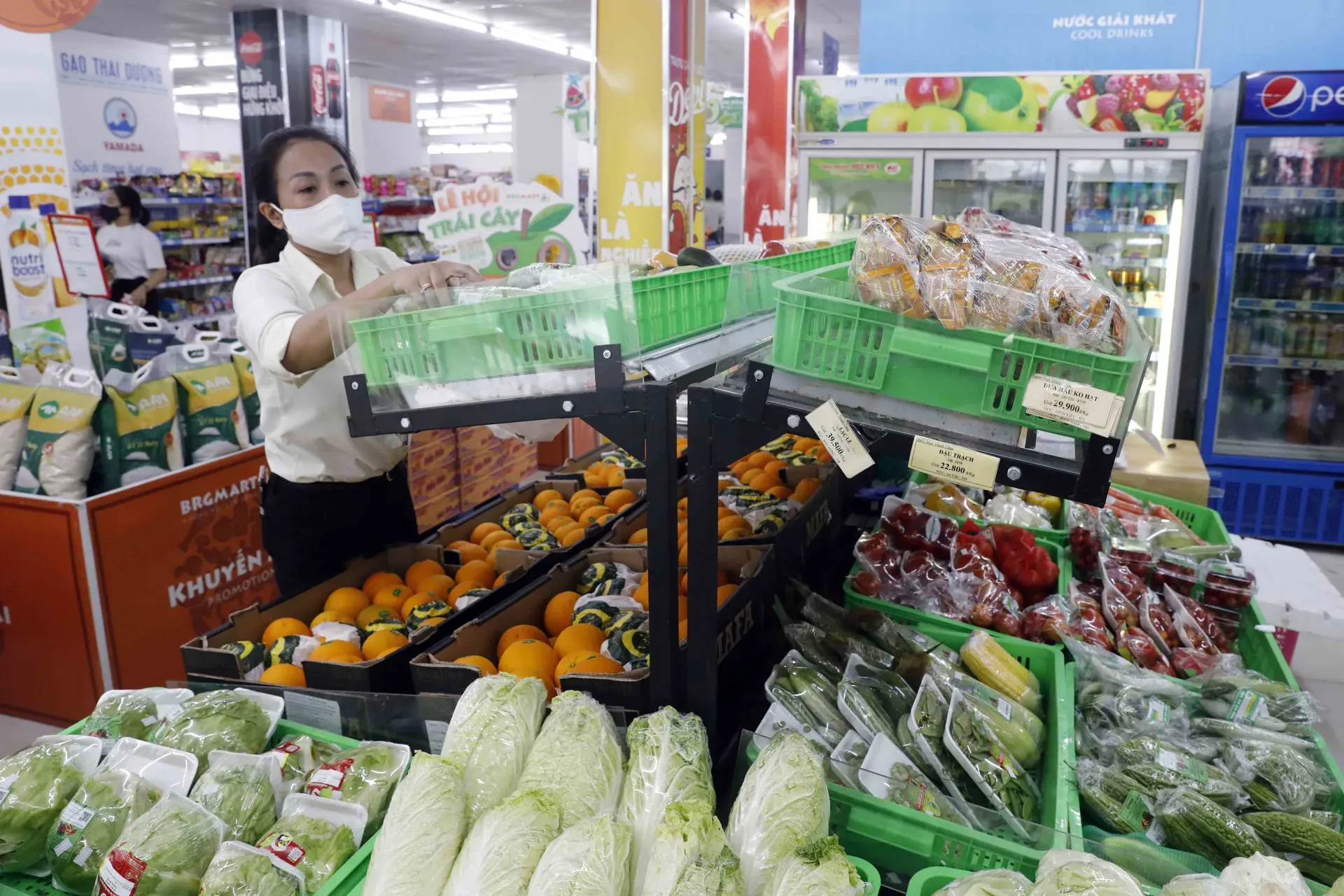
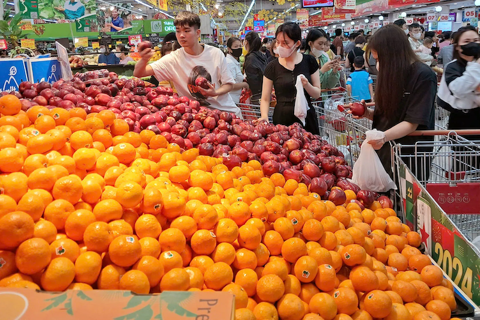
A consumer buys agricultural products at BRG Mart Thanh Cong supermarket in Hanoi’s Lang Ward. Photos: Hoai Nam/The Hanoi Times
Unstable consumption
Dam Van Dua, Director of Dong Cao Agricultural Service Cooperative in Hanoi's Me Linh Commune, said that the commune is one of the largest vegetable and fruit hubs in Hanoi. However, only 15% - 20% of its output is consumed in the modern retail system.
Dua attributed this to the lack of large-scale production models linked to consumption, consumers' little information about the origins of agricultural products, and a small-scale distribution network. In addition, farm produce sold in traditional markets is more competitive due to reasonable prices and distribution systems.
Nguyen Trong Lam, Director of Hoang Long Animal Husbandry and Services Cooperative in Hanoi’s outlying commune of Thanh Oai, introduced its production process from farming breeding animals to slaughtering, processing to ensure food hygiene and safety, but consumption remains slow.
“It is because many consumers still get it wrong when choosing safe products on the market,”said Lam.
Promoting connectivity
With a population of about 10 million, Hanoi consumes around 7,000 tons of rice, meat, poultry, and seafood each month. During holidays, demand rises 5%–21%, while local producers meet only 30%–60% of this need.
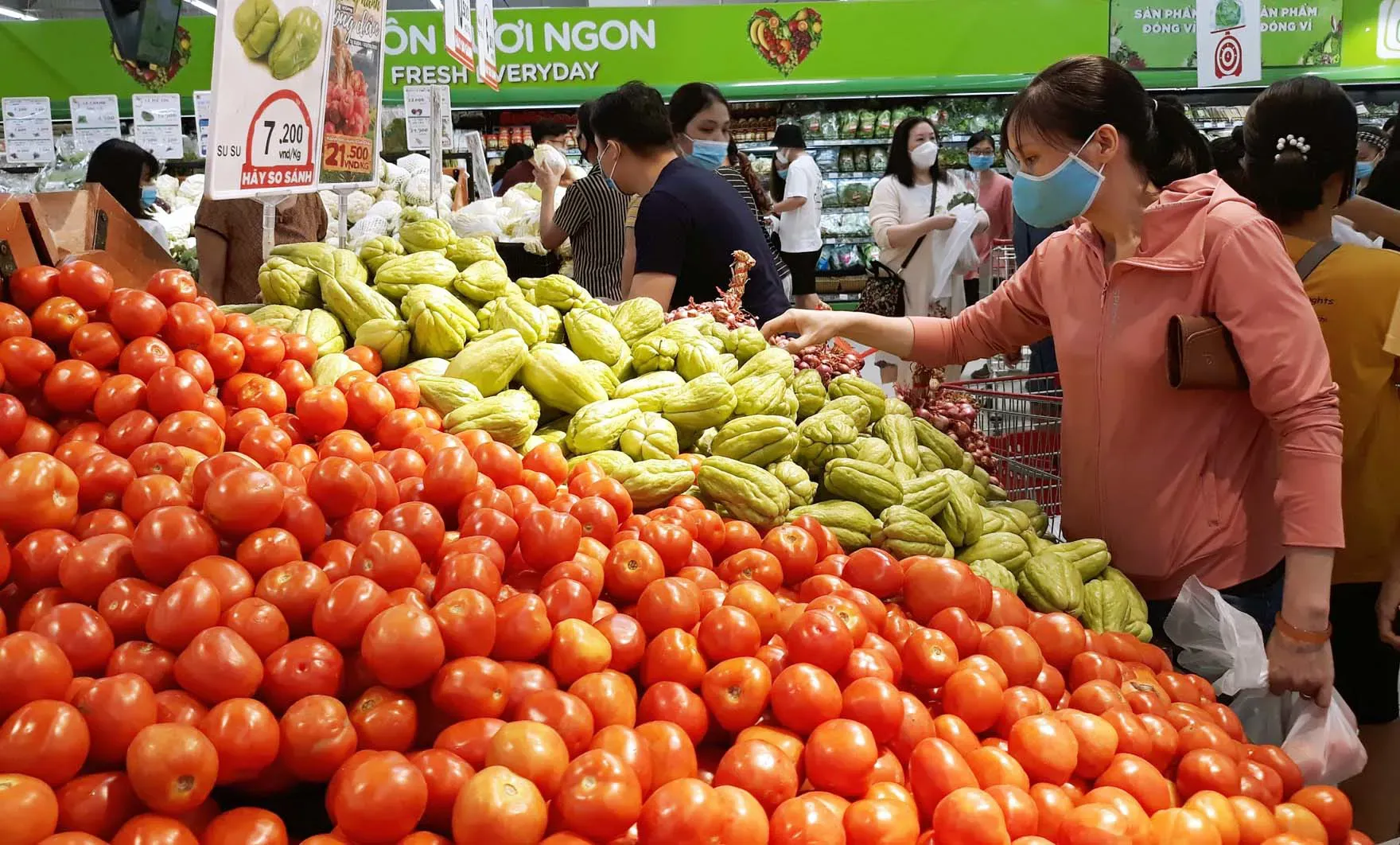
Consumers choose agricultural products at Go! Thang Long supermarket in Hanoi’s Cau Giay Ward.
"Though farm produce demand in Hanoi is quite high, only 20% of agricultural products and food are sold through supermarkets and the rest at traditional markets," said Tran Thi Phuong Lan.
She explained that many agricultural products have yet to meet supermarkets’ standards due to the lack of hygiene, packaging, bar codes, and food safety certificates.
To be placed in supermarkets and modern retail channels, goods must go through very rigorous inspection procedures. Apart from checking certificates of eligibility for safe production, supermarkets will make fact-finding trips to production facilities, then decide whether to sign contracts with them or not.
Meanwhile, Nguyen Thi Bich Van, Communications Director of Central Retail Group in Vietnam, highlighted the importance of safe production for even product quality.
She proposed building a market system and farm produce trading floor to ensure openness and transparency, creating a chain of safe production and consumption in a sustainable way. Additionally, training courses for enterprises, especially foreign-invested retailers, should be promoted, through which it will provide information about standards for goods supply.
Similarly, Nguyen Thi Kim Dung, Director of Co.op Mart Supermarket branch in Ha Dong Ward, said that in the coming time, the supermarket will continue cooperating with local suppliers to bring more diverse and quality agricultural products into the system. Besides, Co-op Mart will implement many programs to support local consumption of agricultural products, especially seasonal ones.