Hanoi's food safety management faces numerous challenges
The lack of national technical standards and regulations for various foodstuffs poses a challenge to production and business establishments regarding self-declaring their products.
Despite the Hanoi authorities' focus on food safety, its management faces numerous challenges that need to be addressed as soon as possible.
Concerns of the locality
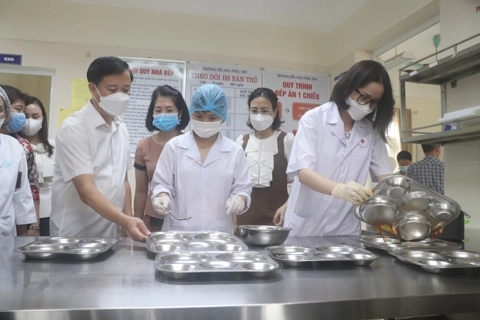
| Food safety inspection at a catering company in Hanoi. Photo: Trong Tung |
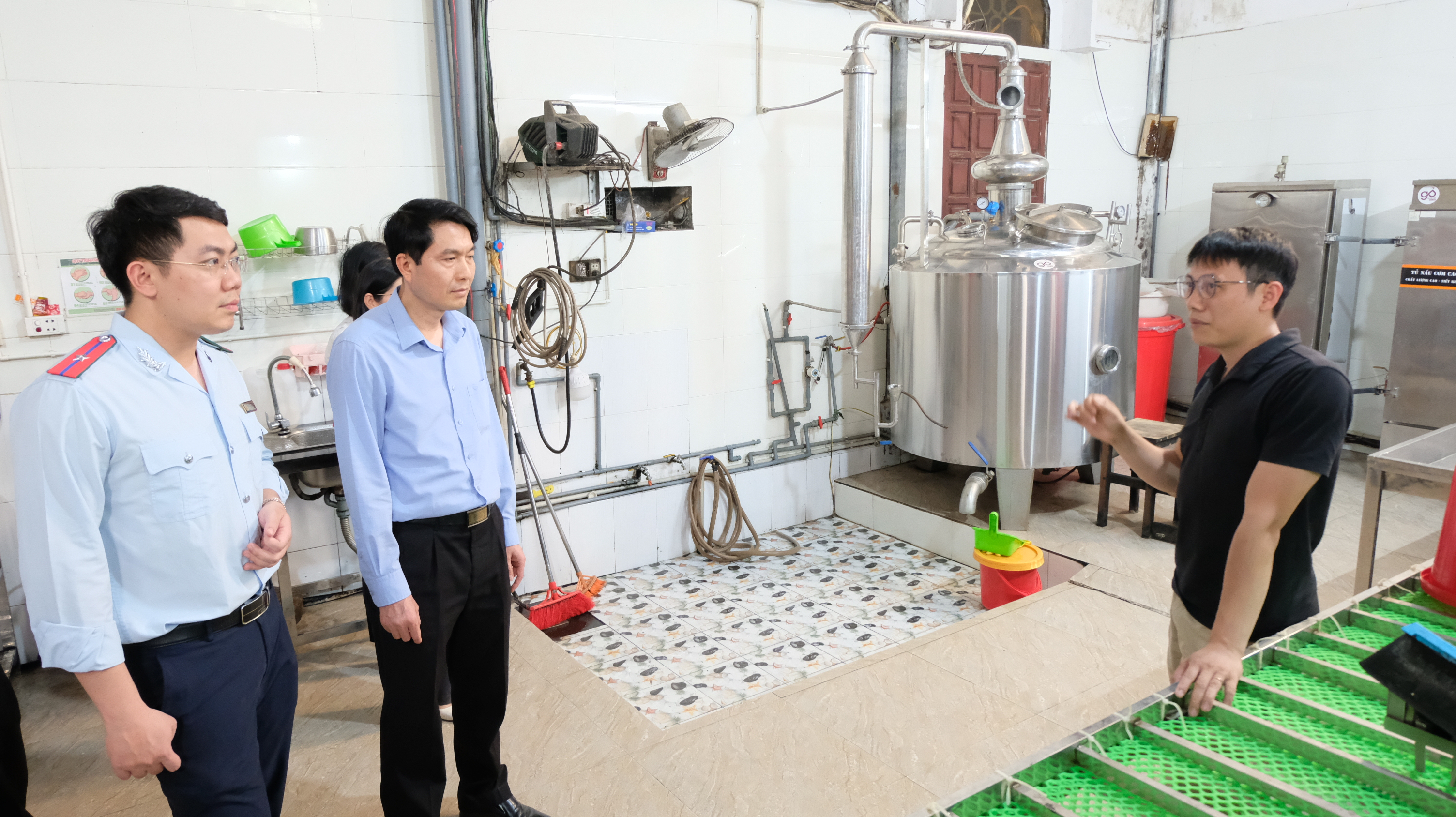
Nguyen Trong Khien, Vice Chairman of the Thanh Oai District People's Committee, said most food production and business establishments in his jurisdiction are small, household-based, and somewhat informal, making it difficult to fully implement all legal requirements.
"Some establishments operate seasonally without investing in facilities and equipment as required," Khien said.
Meanwhile, Luu Thi Hong Sen, head of the Health Department in Soc Son District, said that human resources for food safety management at the district and commune levels remain low.
This constraint has resulted in significant limitations in the implementation of management activities, especially when it comes to inspections.
He went on to say that food products are becoming more diverse in shape and style; many food products have no obvious origin, are counterfeit or copied, and low-quality goods are circulating in the market, while some food producers and enterprises continue to lack a sense of community duty. In pursuit of profit, they breach food safety regulations, endangering the health of local residents.
The lack of national technical standards and regulations for various foods poses a challenge to production and business establishments when it comes to self-declaring their products and creates barriers for regulators in monitoring, inspecting, and post-inspecting the self-declaration of products.
https://hanoitimes.vn/hanois-food-safety-management-faces-numerous-challenges-327283.html
Strengthening food safety regulations in Hanoi
According to the Hanoi Sub-Department of Quality, Processing, and Market Development under the City Department of Agriculture and Rural Development, one of the significant challenges facing food safety today is the consumption of agricultural products primarily through traditional channels, such as wholesale markets and local markets. Many consumers still prefer fresh meat without paying much attention to its origins or sourcing, the department noted.
“The current planning for livestock and poultry slaughtering in Hanoi is progressing slowly, with inadequate emphasis on establishing disease-free zones in some areas. Additionally, the quality of agricultural products varies from season to season, and the percentage of products with traceable origins remains disappointingly low,” the agency underlined.
Nguyen Dinh Hoa, Deputy Director of the Hanoi Department of Agriculture and Rural Development, emphasized that the current planning for livestock and poultry slaughtering is progressing at a sluggish pace.
He noted the lack of focus on establishing disease-free zones in certain areas, which is crucial for maintaining public health. Additionally, the quality of agricultural products tends to fluctuate with the seasons, and alarmingly, the proportion of products with traceable origins remains low.
The implementation of the 2024 National Food Safety Action Month has brought several persistent issues to light. Recent analyses of food samples collected from various districts indicate a troubling prevalence of non-compliant products. This raises significant alarms about food safety, especially given the substantial volume of food consumed daily in Hanoi. The ongoing situation underscores the urgency for improved oversight and regulatory frameworks to protect consumers.
Experts agree that enhancing legal frameworks and technical standards is essential to effectively managing food safety. By addressing existing gaps, authorities can bolster their oversight capabilities and ensure that consumers can access safe, high-quality products. This effort requires a concerted approach to shift consumer habits toward greater awareness of food origins and improve the infrastructure for monitoring food safety.
The journey towards safer food in Hanoi extends beyond regulatory improvements; it necessitates a cultural shift in how food is valued and sourced. Educating consumers about the importance of traceability and safety can empower them to make informed choices, thereby creating a demand for higher standards in food production.
In a proactive move, the agriculture sector has proposed that relevant ministries introduce additional technical standards, particularly for processed and mixed food products. This proposal is grounded in thorough research and aims to fill critical gaps in current regulations, including establishing safety limits for products that currently lack specific criteria.
Furthermore, the department recommends amending Decree 15/2018/ND-CP to enhance food safety oversight. This amendment would mandate that certification organizations regularly publish and submit monthly lists of facilities awarded certifications, such as Good Manufacturing Practices (GMP), Hazard Analysis and Critical Control Points (HACCP), ISO 22000, International Featured Standards (IFS), British Retail Consortium (BRC), and Food Safety System Certification (FSSC 22000). Such transparency would facilitate better management and monitoring of food safety compliance across the region.
Looking ahead, the Hanoi Department of Agriculture and Rural Development is committed to supporting the development of safe agricultural supply chains across its 30 districts. The department aims to promote the growth of One Commune One Product (OCOP) initiatives, which focus on enhancing production standards and quality to meet market demands and increase overall value. By fostering local products, the OCOP program not only boosts the economy but also emphasizes the importance of safety and quality in food production.
As Hanoi navigates the complexities of food safety, collaboration among government agencies, producers, and consumers is paramount. By working together, stakeholders can create a robust framework that not only protects public health but also supports sustainable agricultural practices. The commitment to improving food safety regulations is a critical step toward ensuring that all residents have access to safe, nutritious, and high-quality food.
Nguyen Dinh Hoa, Deputy Director of the Hanoi Department of Agriculture and Rural Development: According to Circular No. 11/TT-BYT issued by the Ministry of Health regarding the management of rapid food testing kits, the results obtained from these tests are preliminary and serve only as a screening tool. They are intended to guide further confirmatory testing in a laboratory setting. It is important to note that the results from rapid tests should not be used as the basis for addressing food safety violations. This regulation emphasizes the need for more comprehensive laboratory analysis to ensure accurate and reliable food safety assessments. “Regarding food safety, the role of local authorities (communes, wards, and towns) is crucial. When these local entities effectively manage food safety, it significantly eases the workload for district and municipal levels. Therefore, in addition to providing strong information dissemination, training, and awareness programs for food safety personnel, localities must enhance their inspection and monitoring efforts to ensure compliance with state management regulations on food safety. |
.