Hanoi
Hanoi and the attraction of smart city
As the Chairman of Hanoi’s People Committee Nguyen Duc Chung put it, smart cities are attractive like “a magnet for production”, the way U.S experts referred when talking about invest in new technology and generating driver for the 4th Industrial Revolution.
Heading to smart healthcare and smart transportation
Speaking at the “US-Vietnam, Smart Cities Workshop” on June 22, Chairman Nguyen Duc Chung outlined the visions and plans to build Hanoi into a smart city.

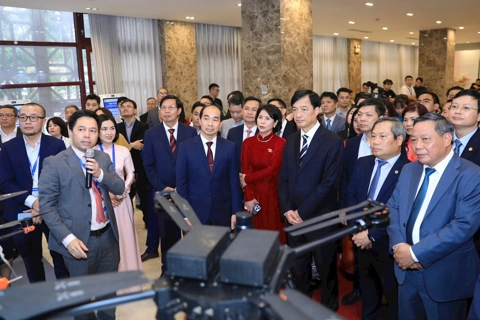
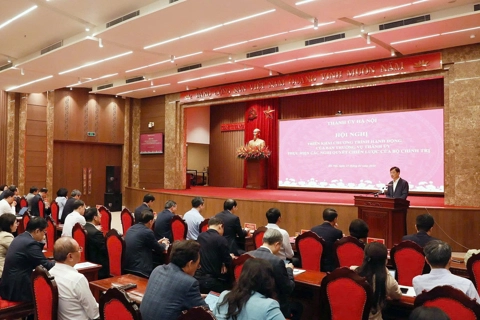
Overview of US-Vietnam Smart Cities Workshop on June 22
|
According the Chairman Nguyen Duc Chung, entering the new development phase, Hanoi has encountered with new challenges, including demographic growth and unequal demographic distribution, pollution, water treatment, traffic jam, renewable energy development. Therefore, to develop sustainably, Hanoi government sets the target to turn the capital city into a “Green-Cultural-Friendly-Modern” urban area, with identity, dynamism and high competitiveness in the region and the world, creating opportunities for investment.
Based on such visions and plans, Hanoi identifies the measures to build a smart city, including developing electronic government to facilitate people connect and communicate with the government, building infrastructure foundation for smart city with the Center of Concentrated Monitoring and Management, Internet of Things, establishing the concentrated center for technological transfer and start-up business incubators.
In 2017, Hanoi will focus on improving essential areas, developing smart applications in healthcare, transportation, tourism and energy.
Hanoi’s abundant potentials
Based on the current situation, Hanoi is focusing to develop smart city via electronic government, transportation, education, healthcare and environment, which have earned initial outcomes. At the moment, Hanoi has completed a population database for more than 7,5 million Hanoians and use the data effectively to create apps and services for residents and enterprises in the capital city as well as for the city’s administration. The Hanoi Urban Transport Management and Operation Center was launched with more than 500 on-road-cameras to monitor key routes; the city’s traffic light system covers in 179 traffic nodes. Hanoi also carries out route management app for over 100 bus lines and the operation of 1.600 buses and pilots iParking app at 17 sites in 2 streets with 286 parking lot and will apply this model in a broader scale.

Whereas, Setiaji – Head of Jakarta Smart City Management (Indonesia), thought that Indonesia and Vietnam shared many similarities concerning geographical terrain. From Jakarta experience in building smart city, Setiaji stressed on the importance of integration between central government and local agencies when building database for the city. According to him, Hanoi should concentrate on improving the traffic safety.
On the same day, Chairman of Hanoi’s People Committee Nguyen Duc Chung met with U.S Ambassador to Vietnam Ted Osius. The two sides discussed collaboration to develop smart city. According to the US Ambassador, the attendance of Chairman Chung expresses the commitment of Hanoi in building smart city. Chairman Chung’s presentation outlined the potentials as well as opportunities of Hanoi, Ted Osius said. He added that, U.S experts will actively support to nurture Hanoi’s ideas and carry out Hanoi’s vision on developing smart city.