Hanoi appeals to foreign investors with its unique edge
Hanoi offers a stable regulatory environment, a clear reform agenda, a growing pool of skilled labor and modernizing infrastructure, making it attractive to both local and international investors.
THE HANOI TIMES — As Vietnam’s economy expands and urban income rises, businesses and investors are increasingly viewing Hanoi as an attractive entry point.
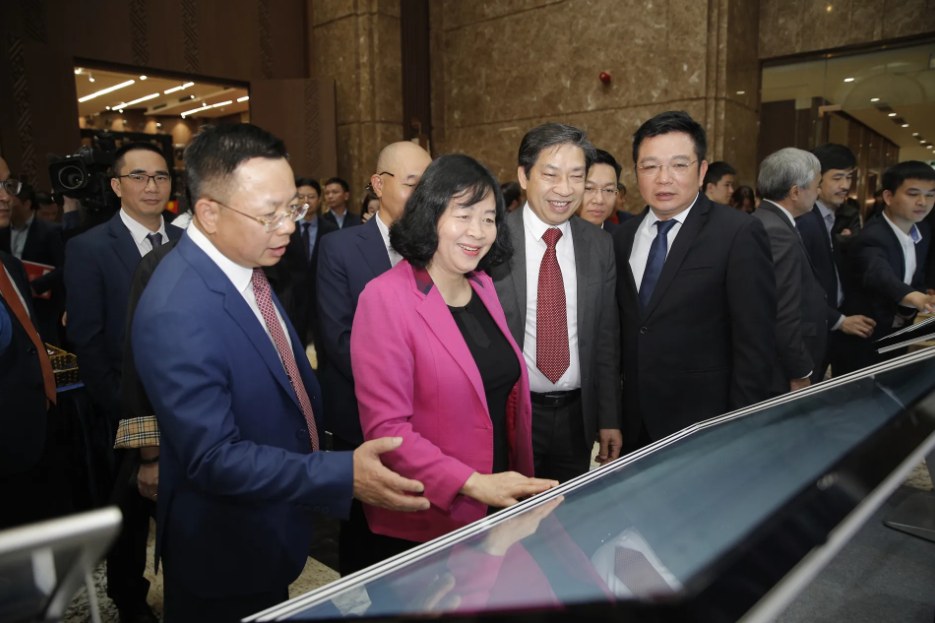
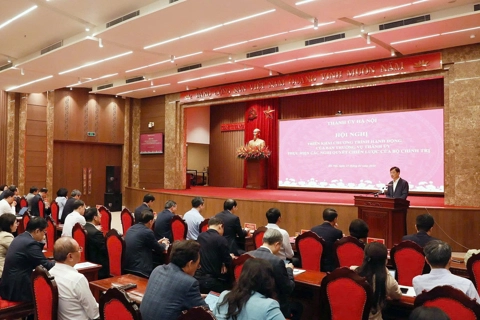
Hanoi Party Secretary Bui Thi Minh Hoai experienced the capital’s digital transformation applications in March 2025. Photo: Thanh Hai/The Hanoi Times
A report from the Hanoi Statistics Office revealed that despite challenges to the global economy, Hanoi has emerged as one of Vietnam’s most impressive destinations for foreign direct investment (FDI).
Since 1986, the city has consistently ranked among the country’s top localities for FDI attraction. Cumulative registered capital has reached about US$61.5 billion, with 7,710 valid projects, placing Hanoi second nationwide.
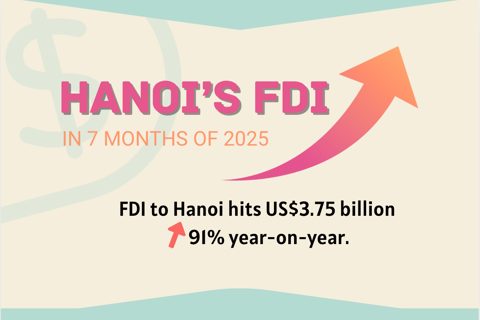
From January to July of 2025, FDI inflows to Hanoi nearly doubled last year's figure to more than $3.75 billion.
The capital has attracted investment from 117 countries and territories, with Japan, Singapore, and South Korea among the leading partners.
Several large-scale projects highlight this trend, including Gamuda Group (Malaysia) with the Yen So Park development, the C2-Gamuda Gardens Urban Area, the Nam Thang Long New Urban Area, and the Le Trong Tan–Park City Hanoi project.
Major investors during this period also included Malaysia, Singapore, Japan, China, Germany and South Korea.
According to Peter Kompalla, Chief Representative of the Delegation of German Industry and Commerce in Vietnam (AHK Vietnam), Hanoi enjoys a strategic position linking major economic hubs such as Bac Ninh, Hung Yen, and Phu Tho provinces.
As the core of a new northern economic cluster, the city forms a seamless industrial belt with shared infrastructure and labor resources, making it a true regional hub, he told The Hanoi Times.
“The expansion of the metro system, plans to upgrade the Noi Bai International Airport, and the future North–South high-speed railway will further strengthen Hanoi’s role as the main gateway to the northern industrial corridor,” Kompalla said.
He added that these advantages remain intact as Vietnam adopts the two-tier local government model, which is expected to improve efficiency and reduce administrative procedures for investors, including German enterprises.
At the same time, the growing knowledge-based economy, supported by leading universities, colleges and research institutes, helps Hanoi establish itself as a center for innovation, the German representative said.
“For German companies in engineering, renewable energy, and digitalization, Hanoi offers an ideal environment for long-term cooperation and growth,” Kompalla added.
According to the AHK representative, Hanoi combines a stable regulatory environment, a clear reform agenda, a growing pool of skilled labor, and increasingly modern infrastructure.
“Vietnam’s deep integration into the global economy through more than 15 free trade deals, including the EU–Vietnam Free Trade Agreement (EVFTA), adds to Hanoi’s attractiveness by opening access to regional supply chains and high-potential export markets,” Kompalla said.
Sharing the same view, Ozasa Haruhiko, Chief Representative of the Hanoi Office of the Japan External Trade Organization (JETRO Hanoi), described the city as a promising base for international innovation through cooperation between businesses and academic research.
Thanks to these strengths, Hanoi has recently emerged as a dynamic consumer market, fueled by strong national economic growth, he said.
He pointed to the recent opening of 7-Eleven’s first store in Hanoi and the groundbreaking of Takashimaya’s shopping center in August as examples.
“Traditionally, Japanese service companies entered Vietnam through Ho Chi Minh City before expanding north, but more are now choosing Hanoi as their first destination,” Ozasa told The Hanoi Times.
Administrative reforms: a bright spot for investors
Hanoi’s strategic location, modern transport network, and abundant skilled workforce are undeniable advantages. Equally important are the city’s efforts to improve its investment climate, according to Lam Thuy Nga, Country Head of Global Corporate and International Mid-Market at HSBC Vietnam.
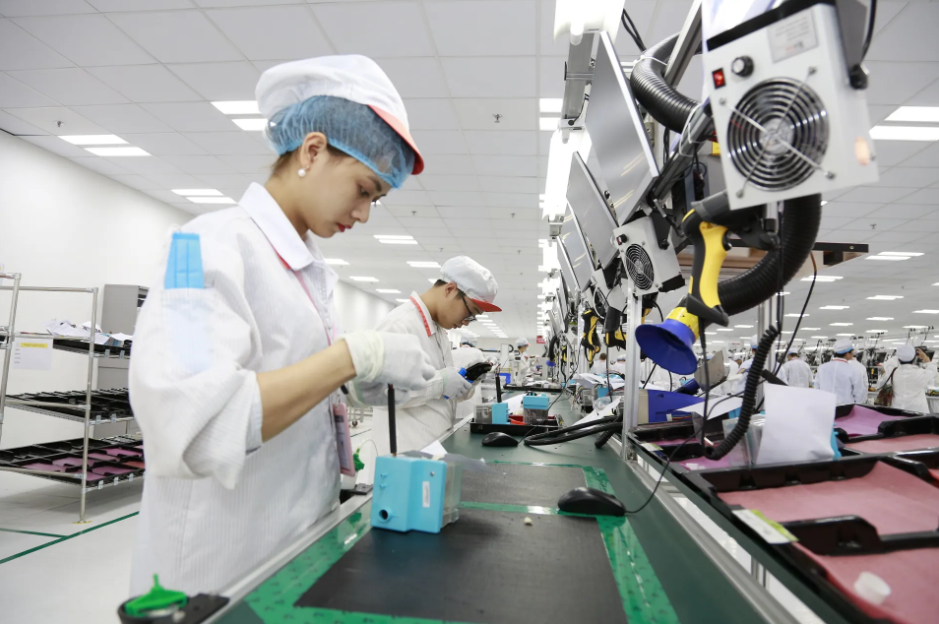
Electronic device assembly at Hoa Lac Hi-Tech Park.
She highlighted the Provincial Competitiveness Index 2024, published by VCCI in May 2025, which showed Hanoi climbing four places to 24th nationwide.
The city's scores improved across almost all indicators, including market entry, land access, dynamism, legal institutions, business support policies, and labor training.
In 2024, Hanoi also led the nation in innovation, ranking first in the Provincial Innovation Index (PII). The city excelled in 15 out of 52 sub-indices, particularly in research and development spending and human resources.
“I was especially impressed with the launch of the iHaNoi digital citizen identification app in 2024, which has quickly become a widely adopted platform connecting businesses, citizens and the city government,” Nga told The Hanoi Times.
According to JETRO’s Ozasa, attracting more international companies will require Hanoi to continue listening to foreign investors and addressing their concerns.
“With growth forecasts remaining strong, we hope Hanoi will keep balancing economic development with quality of life, reinforcing its position as a high-quality city,” he said.
In addition to further administrative reforms and stronger business support policies, investors suggest Hanoi focus on education and workforce development, particularly in high-tech and green transition sectors that are attracting new investment.
“Beyond nurturing domestic talents, Hanoi also needs competitive policies, attractive incentives, and a robust R&D ecosystem to draw foreign experts,” Nga from HSBC noted.
AHK’s Kompalla added that Hanoi could expand specialized industrial, technology and innovation parks with international-standard infrastructures and incentives for high-tech and sustainable industries.
At the same time, stronger collaboration between vocational schools, universities and businesses will help develop a workforce ready for advanced manufacturing, Industry 4.0 and digital transformation, he said.
“In fact, the combination of German knowledge and technology with Vietnam’s growth ambitions has already created many successful, mutually beneficial projects. This reflects our 50 years of diplomatic and economic partnerships,” said Kompalla.
He noted that by staying committed to these strategic priorities, Hanoi will consolidate its role as ASEAN’s northern gateway, and strengthen its position as a vital bridge for EU–Asia economic cooperation under the EVFTA framework.
“This will give German and European companies greater access to regional markets and a business environment ready for the future,” he concluded.