Hanoi, Bangkok target strengthening ties in sustainable urban development, green growth
Hanoi’s top legislative leader reaffirmed the capital’s commitment to expanding ties with Bangkok during a meeting with a visiting Thai delegation on November 19.
THE HANOI TIMES — Hanoi welcomes Thai and Bangkok businesses to invest and operate in sustainable urban development, green growth and environmental management, Chairwoman of the Hanoi People’s Council Phung Thi Hong Ha said.
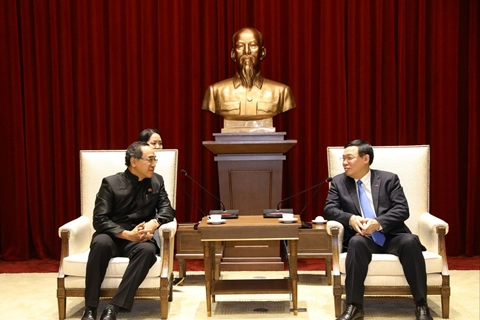
Ha made the remarks on November 19 during a meeting with Chairman of the Bangkok Metropolitan Council Viput Srivaurai and Thai Ambassador to Vietnam Urawadee Sriphiromya.

Chairwoman of the Hanoi People’s Council Phung Thi Hong Ha (second from right) delivers a gift to Chairman of the Bangkok Metropolitan Council Viput Srivaurai at their meeting on November 19. Photo: Kinh te & Do thi Newspaper
According to the Chairwoman of the Hanoi People’s Council, Bangkok and Hanoi have grown over the past two decades as dynamic and modern capitals in Southeast Asia.
The two cities share similarities in strategic location, urbanization pace, and their roles as economic and cultural centers, creating favorable conditions for exchanging experiences and addressing common challenges, especially in areas of shared strengths.
On May 19, 2001, the two capitals officially established friendly cooperation. In February 2004, the governments of Hanoi and Bangkok signed a cooperation agreement, laying a solid foundation to expand ties between the two cities.
Ha said Hanoi places priority on developing friendship and cooperation with ASEAN capitals, including Bangkok.
She noted that outstanding achievements in Vietnam–Thailand relations over nearly 50 years provide a strong basis to strengthen cooperation between localities, especially between Hanoi and Bangkok.
“Hanoi hopes to continue expanding cooperation with Bangkok in fields such as urban management, tourism, education, culture, environment and business connectivity to promote the Vietnam–Thailand comprehensive strategic partnership,” Ha said.
She added that Hanoi will create the best conditions for Thai companies and groups with strong capital and technology, especially those from Bangkok, to invest and expand operations in the city.
Ha said the visit of the Bangkok Metropolitan Council delegation contributes to advancing friendly cooperation between the two capitals, especially as Vietnam and Thailand have elevated their comprehensive strategic partnership.
During the meeting, Ha outlined Hanoi’s socio-economic achievements, including an economic scale of about US$59 billion, accounting for more than one-tenth of the national economy.
In January-October of 2025, the city’s GRDP grew an estimated 8.05% year-on-year. Foreign direct investment reached $3.9 billion, 2.4 times higher than the same period in 2024.
Hanoi has restructured its administrative units, removed the district-level structure and reduced the number of commune- and ward-level units from 526 to 126. The People’s Council will soon increase its seats to 125 members with five specialized committees and 35 full-time delegates.
Ha expected these changes would help the new administrative structure operate more effectively.
Chairman Viput Srivaurai of the Bangkok Metropolitan Council thanked Ha for the briefing and said he is honored to visit Hanoi and renew cooperation between the two councils.
He expressed appreciation for Hanoi’s warm welcome and thoughtful attention. He said he hopes the two sides will continue long-term and effective cooperation and looks forward to welcoming a Hanoi delegation to Bangkok in the near future.
Srivaurai affirmed that the visit marks an opportunity for both sides to advance cooperation and contribute to the upcoming 50th anniversary of Thailand–Vietnam diplomatic relations.