Hanoi boosts organic livestock farming for sustainable development
Hanoi needs to make full use of agricultural by-products to develop a circular economy, and organic farming is an inevitable trend for sustainable development.
Hanoi is a typical example in Vietnam of applying organic animal husbandry for sustainable development, especially following the city's administrative boundary expansion 15 years ago, according to Nguyen Ngoc Son, vice chairman of the Vietnam Livestock Association.
"The capital city's herd of livestock and poultry leads the country in number, which on the one hand raises the issue of environmental treatment and on the other hand is conducive to the development of circular economy," Son said.
Hanoi has over 197,000 hectares of agricultural land (accounting for 58.9% of the total natural land area), more than 28,000 buffaloes, 128,000 cows, 1.5 million pigs, 38.7 million poultry, and 438,000 dogs and cats. These animals produce a large amount of solid waste (4.35 million tons per year), liquid waste (2.6 billion liters per year), and waste from the slaughter of livestock and poultry.
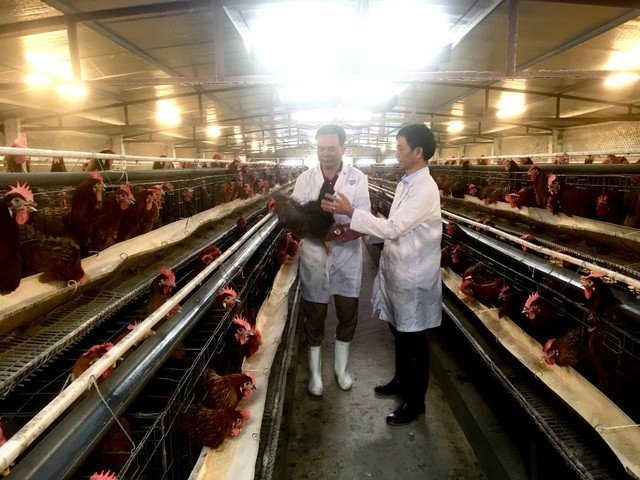
Poultry farms in the outskirts of Hanoi's Dong Anh district have addressed environmental issues. Photo: Thien Tam |
According to Son, if properly treated, livestock waste is a rich source of crop fertilizer, reducing fertilizer costs for cultivation and improving soil quality. Specific benefits not only increase crop yields but also benefit the environment.
"Therefore, Hanoi needs to develop livestock production in accordance with the overall planning of the agricultural sector to deal with environmental issues. Currently, Hanoi has applied many solutions for livestock development until 2030, with a vision until 2045. It is expected that there will be positive changes to ensure the community's health in the coming period," Son added.
He stressed that making full use of agricultural by-products to develop a circular economy and organic farming is an inevitable trend for sustainable development.
However, according to Nguyen Xuan Duong, Chairman of the Vietnam Livestock Association, the livestock industry faces many difficulties related to market price volatility and diseases. "Therefore, to develop livestock production smoothly and effectively, it is necessary to develop circular livestock production to improve the value of products and environmental protection," Duong said.
"n the agricultural sector, animal husbandry and cultivation always support each other. Nowadays, organic livestock farming is an inevitable trend, which helps protect the environment and improves farmers' living standards," Duong said.
Hanoi is prioritizing resources for organic agriculture for sustainable development, which is a key solution to ensure the efficiency and sustainability of agricultural production.
The capital has drawn up plans for the development of organic agriculture in 2022-2025 and a vision for 2030, according to which Hanoi will have more concentrated production zones using high-tech agriculture for high-quality and productive organic products.
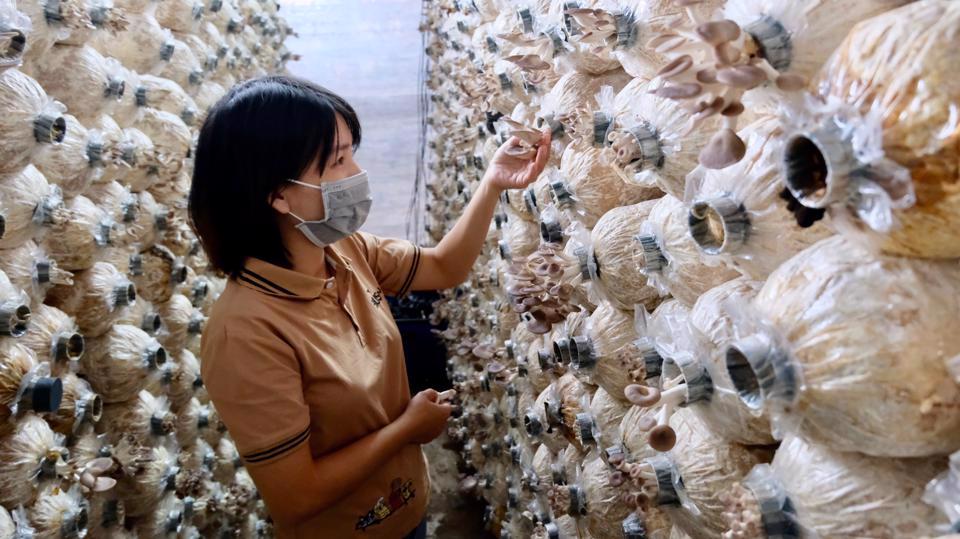
Organic mushroom production in Minh Phu commune, Soc Son district, Hanoi. Photo: Trong Tung/The Hanoi Times |
Chu Phu My, director of the Hanoi Department of Agriculture and Rural Development, said organic farming provides safe products for the community and contributes greatly to sustainable development. "In recent years, Hanoi has implemented many organic farming models, which have brought high economic value," he said.
However, organic farming in Hanoi remains on a small scale due to high costs. Another reason is the lax management of organic products, which fails to win consumers' trust.
To address these issues, city authorities have issued a strategy to develop organic agriculture in 2022-2025, focusing on 2030. Under the plan, the agricultural sector will intensify organic production with advanced technologies and certification for products that meet national and international standards.
My stressed the need for specific policies to attract all sectors of the economy to organic production, highlighting the role of a favorable legal framework for the development of organic farming models.
According to a report by the Hanoi Department of Agriculture and Rural Development, the city has formed mass concentrated cultivation areas, including a high-value crop cultivation zone with a yield 25-30% higher than the traditional production method; a safe vegetable zone with a yield of VND400 million to VND1.2 billion ($17,600 to $52,573) per hectare per year; or fruit trees generating earning of up to VND1 billion ($44,000) per hectare per year.
"Hanoi's authorities will soon complete the agricultural production planning in connection with promoting new-style rural areas. The move would serve as a legal basis for localities to call for investment in agriculture and push for high-tech agricultural development," My said.
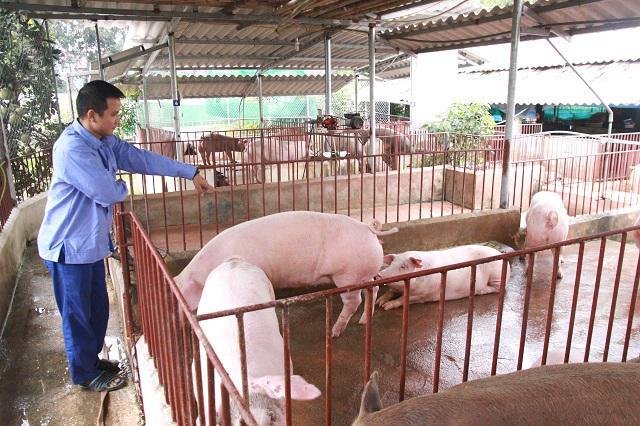
| Hanoi aims to reach 13,600 organic pigs by 2030. Photo: Lam Nguyen/The Hanoi Times |