Log in
Hanoi

Hanoi buries electrical and telecommunications cables on 140 streets

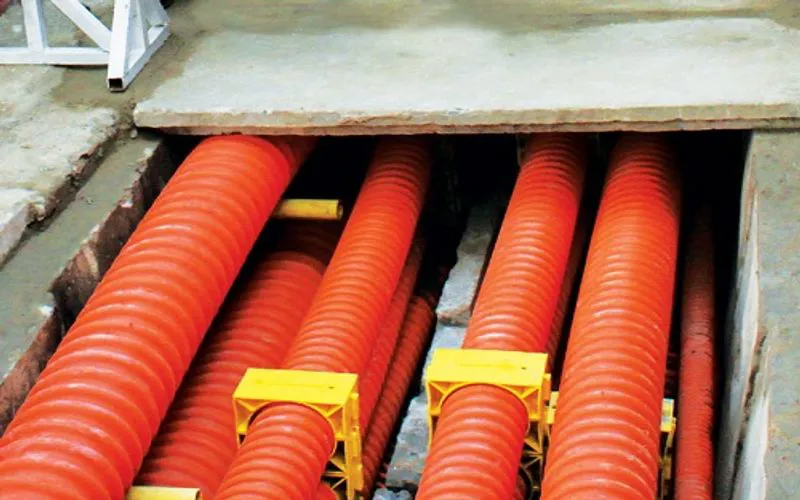
Hanoi sets target to build a city without overhead wires by synchronously burying underground electrical and telecommunications cables.

Over the past four years, Hanoi has laid electrical and telecommunications cables underground on 140 out of 255 streets, Kinhtedothi.vn reported, citing a report by the municipal Department of Construction.

In particular, Viettel Telecommunications Corporation trenched 29 of its 68 routes, VNPT Hanoi buried 50 of 58 routes while MobiFone Telecommunications Corporation and FPT Telecom Joint Stock Company undergrounded 12 of 13 routes and 38 of 60 routes, respectively.

 Hanoi sets target to build a city without overhead wires by synchronously burying underground electrical and telecommunications cables. Photo: Kinhtedothi.vn

In the first half of 2020, Hanoi dug trenches to lay power and telecommunications cables underground on 21 streets.

So far, the Department of Construction has compiled a list of 60 routes registered by businesses. It is expected that the Departments of Construction, Information and Communication will submit a list of streets where telecommunication lines will be undergrounded in July 2020 to the municipal People's Committee for approval.

The landscape of streets has been improved after trenching electrical and telecommunications cables. Electricity supply has been ensured and the number of electricity incidents has reduced.

Hanoi has set a target to build a city without overhead wires by synchronously burying underground electrical and telecommunications cables.

In order to continue the urban renewal plan, the Department of Construction has coordinated with the Department of Information and Communication and People's Committees of districts to draw up a list of streets where cables would be buried.

At present, 42 streets are in the process of consultation for undergrounding cables in 2020, according to the department.

Years ago, Hanoi’s landscape was dampened by utility poles with bunches of twisted cables and wires of cable television, electricity and internet. The municipal People's Committee had plans to bury them, getting rid of overhead lines.

The local government has invested to clear and bury these overhead lines. However, the funding source is not sufficient to do the undergrounding in many streets and alleys in districts.

In order to solve the difficulties, over the past time, the municipal government has signed investment cooperation agreements with Vietnam Post and Telecommunications Group, Army Telecommunications Group and Hanoi Power Corporation to trench cables in some streets in the city in the period 2016 - 2020.

The undergrounding will be realized with the involvement of private resources, with the target that by the end of 2020 all the overhead lines in four downtown districts (about 320 streets) will be laid underground and the work will be expanded to other outlying districts.

Reactions:
Share:
Trending
Most Viewed
Related news

International cable system gears up

01 Apr, 19:09

Hanoi Times — Vietnam and China have launched an international land cable transmission system, according to a recent news report.

Hanoi’s Hi-tech and Industrial Parks drive innovation and global investment

Hanoi’s Hi-tech and Industrial Parks drive innovation and global investment

THE HANOI TIMES — As Vietnam accelerates its shift toward a new growth model, high-tech parks and industrial zones are expected to become key drivers of innovation, technological application and deeper integration into global value chains. Le Thanh Son, Vice President of the HaNoi Hi-tech and Industrial Park Management Board, shares with The Hanoi Times about development orientations, policy mechanisms and long-term goals.

Hanoi Metro launches automated ticket-control system to boost smart mobility

Hanoi Metro launches automated ticket-control system to boost smart mobility

Hanoi Metro has introduced a fully automated fare-collection system on the Cat Linh–Ha Dong line, marking a major milestone in the capital’s transition toward smart and green public transportation.

Hanoi to roll out time-based bans on polluting vehicles near pedestrian hotspots

Hanoi to roll out time-based bans on polluting vehicles near pedestrian hotspots

These locations already have the foundations for sustainable traffic and tourism management.

Hanoi, Seoul strengthen strategic cooperation in smart urban and river development

Hanoi, Seoul strengthen strategic cooperation in smart urban and river development

Both sides highlighted the strong foundation of their three-decade partnership and emphasized the need to deepen collaboration in innovation, urban planning and people-to-people exchanges.

Hanoi looks to Seoul’s Han River revival for Red River transformation

Hanoi looks to Seoul’s Han River revival for Red River transformation

The revival of the Han River transformed Seoul’s urban landscape, improved residents’ quality of life and supported South Korea’s broader growth, the possible transformation for the Red River.

Hanoi set for special measures to unlock mega projects

Hanoi set for special measures to unlock mega projects

Such a move would help Hanoi launch major infrastructure projects and advance the city’s long-term development.

Hong Van Commune rises as Hanoi’s emerging model for community-based tourism

Hong Van Commune rises as Hanoi’s emerging model for community-based tourism

Blessed with natural beauty, strengthened by deep cultural heritage and supported by its residents, Hong Van Village is emerging as one of Hanoi’s most distinctive tourism destinations. From ecology and agriculture to handicrafts and festivals, this Red River village is shaping a dynamic vision of sustainable community tourism for the capital.

Hanoi unveils digital heritage journeys to connect tradition with modern urban life

Hanoi unveils digital heritage journeys to connect tradition with modern urban life

Hanoi has launched a new digital heritage program that brings centuries-old cultural assets into a modern, interactive format. By mapping key monuments and creating themed journeys, the city aims to help residents and visitors explore its deep-rooted identity through fresh, engaging experiences.