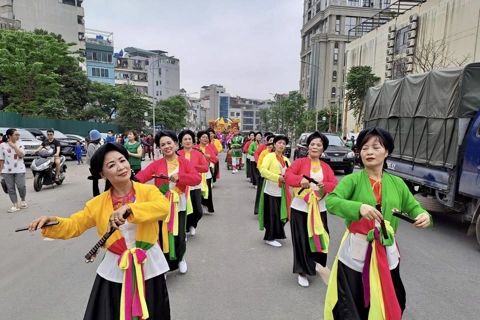
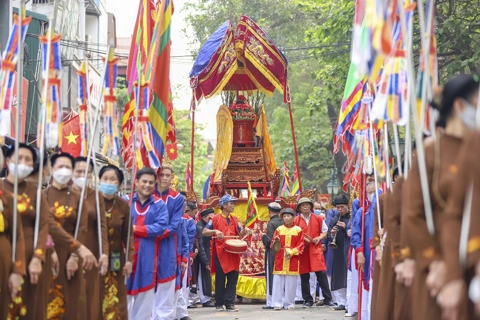
Hanoi celebrates pledge ritual dated 1,000 years ago
Dong Co Temple, linked to the nation's patriotic tradition, has historical, cultural and unique architectural values.
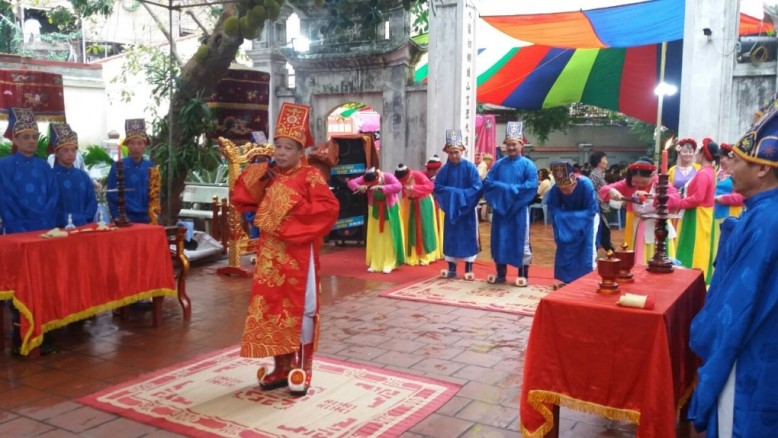
In the middle of the courtyard of Dong Co Temple, Tay Ho District, Hanoi, an incense burner was lit. People gathered in a solemn atmosphere and recited the oath: "The unfilial children, the disloyal servants, God will destroy them."
That's the main rite of the Loyalty Oath Festival of Dong Co Temple, which has been maintained in the capital for nearly 1,000 years. Thanks to its historical and cultural values, the festival has been recognized as a national intangible cultural heritage.
The festival is the only one that provides a place for mandarins of the past and Party members of the present to take an oath of loyalty to the country. It's also an opportunity for the people to show gratitude to their ancestors and pray for national peace and prosperity.
Dong Co Temple is located on Thuy Khue Street, about 300 meters from the southwestern shore of the West Lake.
Legend has it that in 1020, Crown Prince Phat Ma (later enthroned as King Ly Thai Tong) led a troop south to fight the invaders on his father's orders, King Ly Thai To. One night he dreamed that the god of the mountain Dong Co, where he was camped, appeared and promised to help him defeat the enemy.
Phat Ma's army won a spectacular victory. Upon his return, the Crown Prince ordered that the Dong Co Temple be repaired as a token of gratitude to the deity and that the tablet of the god's name be brought to the capital for worship.
When the prince arrived in the capital city of Thang Long (now Hanoi), the god appeared again in his dream and told him to build a temple in his honor to the right of the royal citadel.
Then, in 1028, Dong Co Temple was built at the confluence of the Thien Phu and To Lich Rivers in Dong Xa Village, now 353 Thuy Khue Street, Tay Ho District, Hanoi.
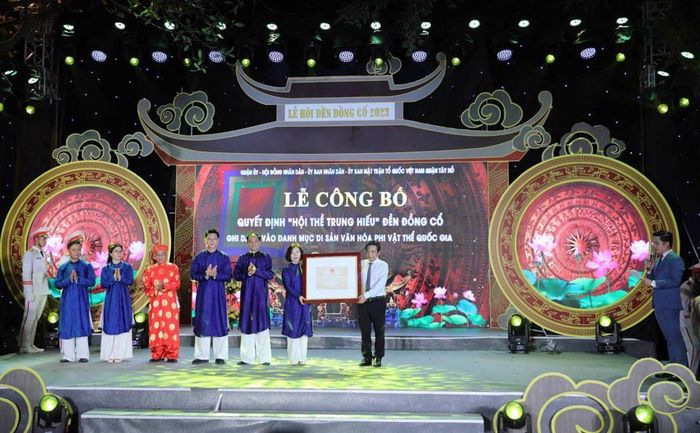
| Deputy Minister of Culture, Sports and Tourism Hoang Dao Cuong handed over the Decision to recognize the Dong Co Temple Loyalty Oath Festival as a National Intangible Cultural Heritage. Photo: Thanh Tung/The Hanoi Times |
Upon the death of King Ly Thai To, the heir prince had to fight his three brothers who rebelled to oust him. Thanks to the god of Dong Co, who reappeared to warn Phat Ma of the revolt, the heir prince gained the upper hand, defeated the three princes, and was enthroned as King Ly Thai Tong.
Since then, he ordered the Festival of Loyalty Oath to be held annually at Dong Co Temple, where all court dignitaries, without exception, had to swear allegiance to the king and the country. The festival is held on the fourth day of the fourth lunar month, which falls on May 22 this year.
Although 995 years have passed, along with many upheavals, the cultural identity of the Dong Co Temple festival has remained intact.
The Loyalty Oath Festival has been recognized as a national intangible cultural heritage by the Ministry of Culture, Sports and Tourism.
| A traditional ritual at Dong Co Temple. Photo: VNA |
According to Do Dinh Hong, director of Hanoi's Department of Culture and Sports, the Dong Co Temple Festival was the court's festival.
"The national oath-taking festival has a special significance, so the King and the court took great care of it. Most of the court dignitaries and the people of Thang Long Citadel attended the festival with a spirit of loyalty and filial piety, praying for the nation's peace and prosperity. In the Tran Dynasty, the festival upheld the integrity of court officials," Hong said.
What about the festival is the harmony between royal and popular rituals. This festival is unique because, according to scholars, it is one of only two swearing festivals in the North - one in Thuan Thien Commune, Kien Thuy District, Haiphong City, and the other at Dong Co Temple, Hanoi.