Hanoi consumers on edge over food contamination
Addressing current food safety issues requires a coordinated approach involving policy, socio-economic strategies, scientific advances and the active participation of governments, producers and consumers alike.
Food poisoning is still shockingly rampant, despite recent improvements in food safety management. Each year there are numerous outbreaks of food poisoning, leading to the seizure of hundreds of tonnes of unsafe food and fines for thousands of businesses. This situation highlights a major concern in the community.
A rising tide of food poisoning cases
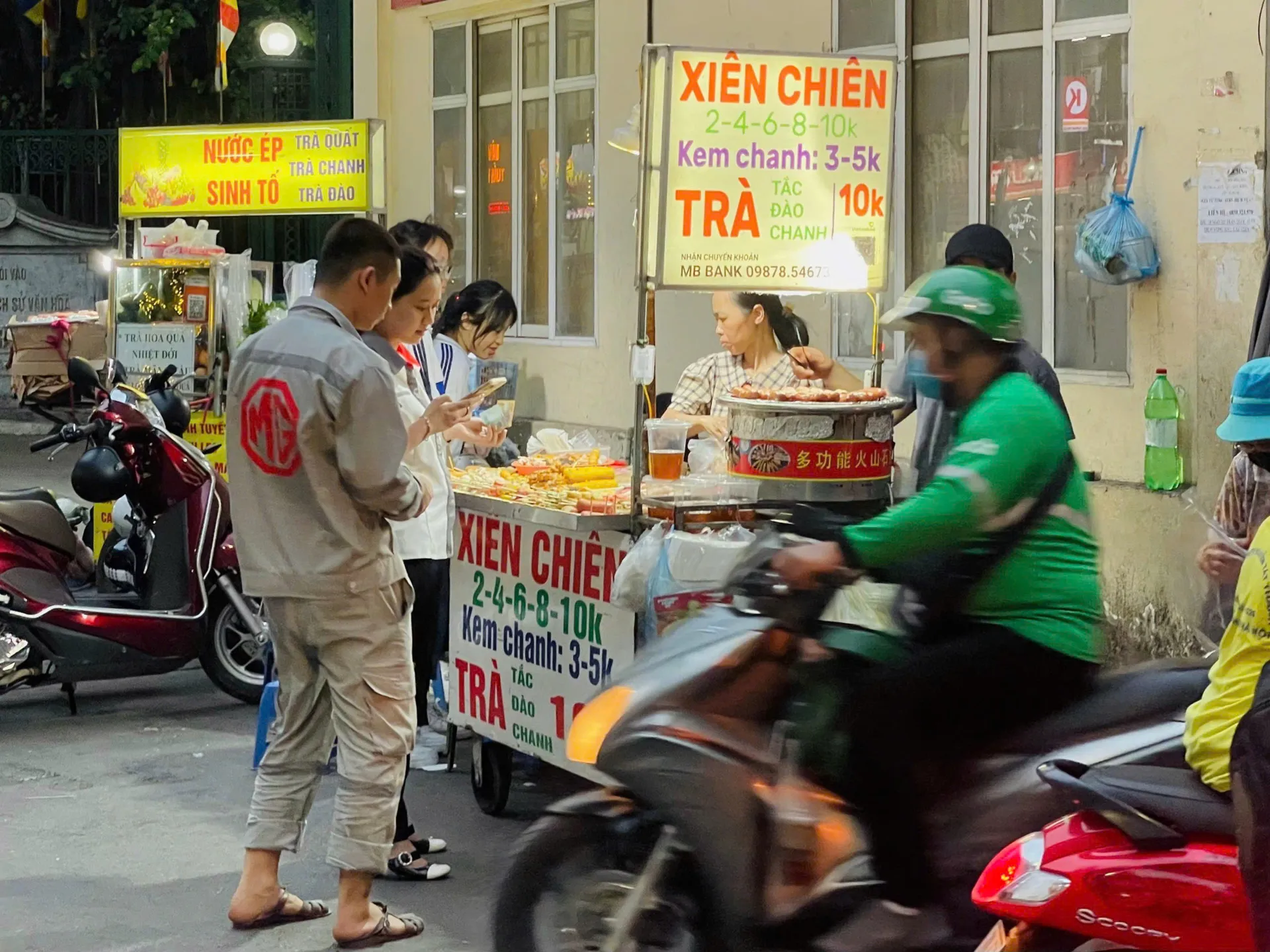
| Food safety risks posed by street food. Photos: Nhat Nguyen |
The Ministry of Health's Food Safety Department recently ordered the Vinh Long Health Department to investigate a suspected food poisoning incident at the Hoa Phu Industrial Park, where more than 215 people fell ill and had to be hospitalized. The authorities have also recommended that the catering service linked to the outbreak be suspended.
There have been several mass poisoning incidents across the country, causing public concern and fear. Recently, a food poisoning case involving bread in Long Khanh City resulted in 600 hospitalizations. Tragically, a five-year-old child died after being in critical condition for a month. Tests on food samples, including pâté, processed pork, and pickled vegetables, revealed the presence of salmonella bacteria.
Just a month earlier, the beach city of Nha Trang in the southern province of Khanh Hoa suffered four cases of food poisoning, affecting more than 400 people. A fifth-grade girl from Vinh Truong Ward was confirmed dead after eating sushi and chicken rice from an outside vendor.
This tragic event is reminiscent of the previous year, when 665 students were sickened by chicken rice and a first-grader at iSchool Nha Trang died, with the source of the poison still unconfirmed. Investigations into these cases are ongoing.
Statistics from the Ministry of Health show that in the first six months of 2024, Vietnam recorded 36 food poisoning incidents, affecting 2,138 people and resulting in six deaths. Despite the authorities' efforts to control food safety, the number of cases has risen by 202% compared to the same period last year.
The ministry's analysis shows that while cases of food poisoning from home kitchens, weddings, and gatherings have decreased, incidents in restaurants, hotels, and especially street stalls are on the rise, with notable cases in Khanh Hoa, Dong Nai, and Soc Trang provinces.
Many cases of poisoning have occurred in large company canteens in Vinh Phuc and Dong Nai provinces, and in school canteens and food stalls at school gates in Khanh Hoa province and Ho Chi Minh City.
In response to these outbreaks, the Ministry of Health has immediately instructed health facilities to treat affected patients and local authorities to immediately suspend operations of unsafe food suppliers. They are also tracing the sources of the food and investigating the causes of the poisoning.
After working with the Ministry of Agriculture and Rural Development, the Ministry of Health found that some certified food safety facilities were collecting unsafe ingredients from dubious sources to make food.
Widespread poisoning: a systemic issue
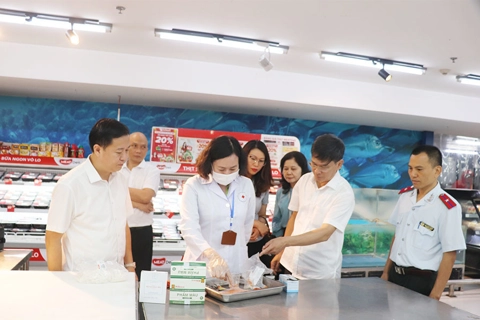
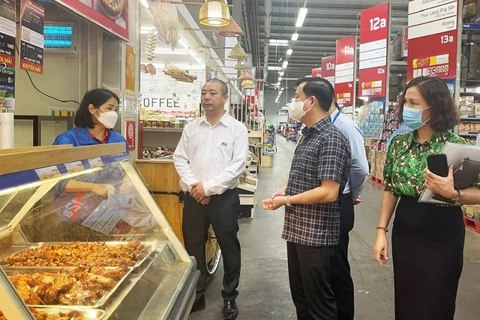
| Inter-agency delegation inspects food safety at a supermarket in Hoang Mai district. |
There has been recently a spate of alarming food safety incidents that have left the public feeling worried and concerned. Hanoi Police have stepped in and uncovered significant problems with unsafe food.
In the first six months of 2024, the Ministry of Public Security's environmental crime squad identified more than 3,700 violations of food safety regulations, a staggering 44% increase over the same period in 2023. These cases highlight serious violations, particularly among small food vendors and street food establishments.
Of particular concern is the prevalence of unsafe food sales at school gates, industrial parks, and tourist areas, where the main consumers are students, workers, and low-income earners. The preparation and provision of food in these areas are not adequately monitored or regulated, posing significant health risks.
Recently, the Market Management Team No. 13 of the Hanoi Market Surveillance Department and the Cau Giay District Police seized thousands of food packages, including chicken feet and sausages of unknown origin. The joint task force identified 900 packages of sausages and 5,400 packages of instant chicken wings that had been purchased on the black market.
Additionally, the seizure of four tons of untraceable sausages and chicken wings from a warehouse on Dong Tien Street in La Phu Commune sent shockwaves through the community.
Many children would have been at risk if these products had been sold in grocery stores and kiosks at school gates. The implications of such widespread contamination are staggering and raise critical questions about food safety and consumer protection.
A call for collective action
According to Dang Thanh Phong, Head of the Hanoi Department of Food Safety and Hygiene, addressing current food safety issues requires a coordinated approach involving policies, socio-economic strategies, scientific advances, and active participation from the government, producers, and consumers alike.
Phong stresses the need to review legal texts and laws to make them more relevant to the current context. He supports laws that keep unhealthy foods off the market and protect the public's health.
"We need to step up inspections and oversight of food production and business operations," he says, adding, "We need to impose severe penalties on violators to deter future offenders."
Phong also said that ethics must be a priority for producers. They should put consumer safety and social welfare before profit. This ethical commitment is crucial to rebuilding trust with consumers who are increasingly wary of food safety.
Consumers are also crucial when it comes to food safety. Phong urges people to be cautious when choosing food and to avoid buying anything with an unclear provenance, especially those sold on the underground market.
“Consumer vigilance is essential in navigating today’s complex food landscape,” he said.
Educating the community about safe food practices can empower consumers to make informed choices. Simple steps, such as checking for certifications, scrutinizing food packaging, and understanding sourcing practices, can significantly reduce the risk of foodborne illness.
Ongoing food safety challenges highlight the urgent need for greater vigilance and cooperation among all stakeholders - governments, producers, and consumers. As the community grapples with the consequences of unsafe food, a unified approach will be critical to reducing risks and ensuring a healthier future for all.
By fostering a culture of accountability and transparency in the sourcing and preparation of food, the goal of a safer food supply can be achieved. Through proactive measures and community engagement, the public can work together to address the widespread problem of unhealthy food and improve overall public health.