Hanoi determined to enrich English learning for suburbs, rural students
Students are required to spend at least 30 minutes a day studying English on their own, with support from their teachers.
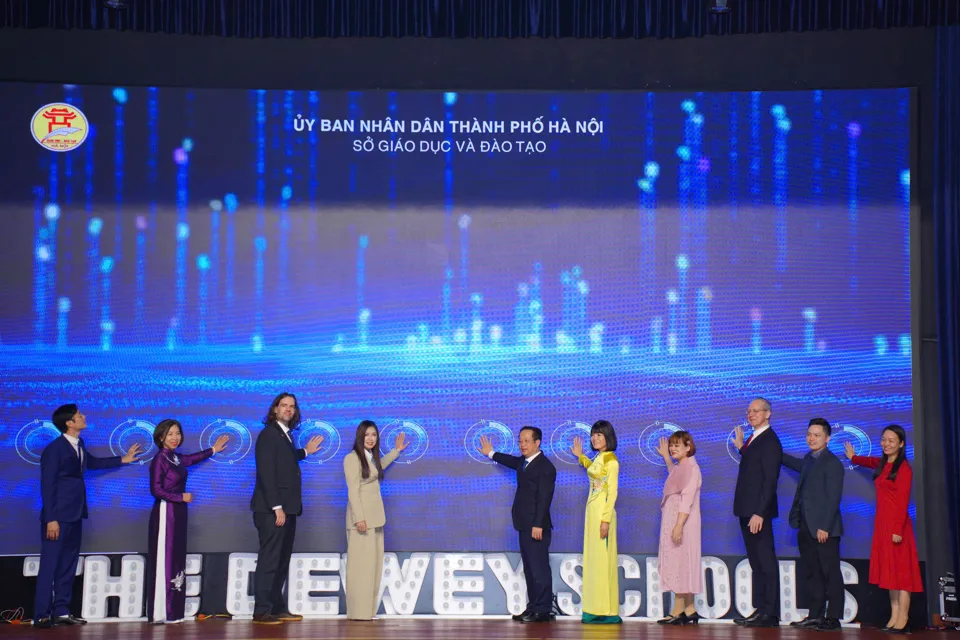
This week's launch of a citywide campaign called "Self-Study Month" is a move that shows Hanoi's striving spirit to nurture the passion for learning foreign languages and to embrace self-study for students in rural areas.
| The launch of the "Self-Study Month" campaign. Photo: The Hanoi Times |
Students will be required to spend at least 30 minutes a day on self-study of foreign languages. Teachers will prepare self-study materials and organize language clubs, while language teaching centers will provide free classes, workshops and materials for rural students.
Through this program, Hanoi seeks to enhance the quality of foreign language education by involving students, teachers, and language centers. The ultimate goal is to narrow the educational gap between urban and rural students in foreign language proficiency.
The program is part of a broader strategy to position English as a second language in schools, in line with the Politburo Conclusion No. 91-KL/TW of 12 August 2024, which states that in the future Vietnam aims to train 100% of foreign language teachers in modern teaching methods, encourage schools and vocational centres to integrate technology into the classroom, and encourage twinning of schools in advanced regions with those in backward regions to support foreign language teaching.
Foreign languages, particularly English, are crucial tools for global integration, unlocking knowledge, and expanding opportunities for students, said Tran The Cuong, Director of the Hanoi Department of Education and Training.
The current disparities in foreign language teaching between urban and rural areas remain significant, he said.
"Urban students benefit from better socio-economic conditions, advanced training programs, experienced teachers, and abundant learning resources," Cuong said.
"Meanwhile, rural students have limited facilities, fewer qualified teachers, and poor access to learning materials, which reduces their competitiveness and opportunities for integration."
The effort to close this gap, Cuong said, is a long-term responsibility of the city’s education sector.
"It's also an opportunity to realize the city's vision of 'leaving no one behind' and pursuing inclusive, equitable, and sustainable education for all."
Positive changes in challenging areas
Ba Vi District, known for its geographical challenges and socio-economic difficulties, has made remarkable progress in English education in recent years. Average English scores in high school entrance exams have improved, and local students have won top awards in various English competitions.
The district's progress can be attributed to its "Improving Foreign Language Education" project, which includes professional development for English teachers, said Phung Ngoc Oanh, Director of the Ba Vi District Education and Training Office.
| Delegates participate in the launching ceremony. Photo: The Hanoi Times |

The district also maintains partnerships with schools in the metropolitan area, such as the Foreign Language Secondary School (an affiliate of the University of Languages and International Studies) and Nguyen Tat Thanh Secondary and High School (an affiliate of the Hanoi National University of Education), she said.
"These partnerships have helped our students engage with English through creative activities such as drawing contests, slogans, and English-themed competitions," Oanh said.
"Schools should adopt flipped classrooms, project-based learning, and interactive activities such as English presentations and cultural exchanges," said Pham Quoc Toan, Deputy Director of the Hanoi Department of Education and Training.
Toan also encouraged schools to use advanced learning software, AI-powered self-learning tools, and online classes with native speakers.
"The Self-Study Month campaign will encourage technology-based learning and foster creativity and independent learning skills among students," he added.
"Urban and rural teachers can collaborate and share their materials and experiences, while schools need to invest in modern facilities, advanced equipment and software to give rural students equal access to self-study," Toan added.
According to Toan, the initiative will be rolled out in two phases: starting in January 2025, pilot projects, including school twinning and model classes, will be carried out. From June 2025, the program will be scaled up citywide to ensure that rural students have access to the same quality of education as their urban peers.
He called for close cooperation between education authorities, schools, teachers, parents and the community, with schools being creative in developing their action plans.
"Teachers should inspire and support students in self-learning and skill development. Students need to take charge of their learning journey," he said.
During the campaign's launch event, several organizations, including Five Star E-Learning, EMG Education, Microsoft, and Language Link Vietnam, proposed solutions to reduce the education gap. These included promoting digital transformation and providing self-learning platforms tailored for rural students.
In addition, companies and language centers donated one million online learning accounts, 300 practice exams, 500 surveys, and 2,000 sets of online learning materials to Hanoi's education sector.