Hanoi doubles foreign investment in 2025 as confidence grows in business environment
Strong reforms, targeted investment promotion and a shift toward high technology helped Hanoi post a major surge in foreign investment, reinforcing its position as one of Vietnam’s most attractive destinations for global capital.
THE HANOI TIMES — Hanoi saw foreign direct investment (FDI) double after a year to nearly US$4.4 billion during 2025, reflecting growing investor confidence in the capital’s economic prospects and improved business environment, according to statistics from the Hanoi Department of Finance.
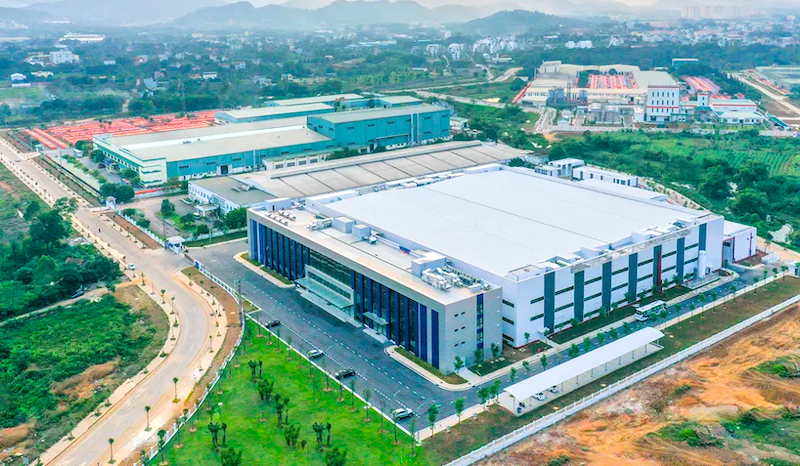
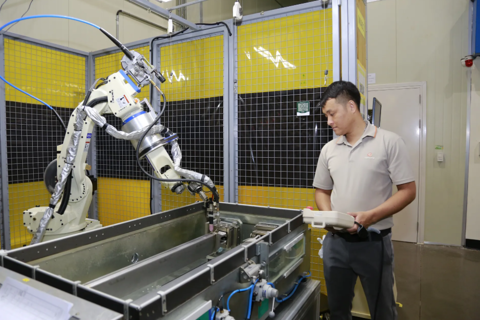
A facility at the Hoa Lac Hi-Tech Park, Hanoi. Photo: Lam Thanh/The Hanoi Times
The total included 443 newly licensed projects with registered capital of $370 million, while 148 existing projects expanded investment by $3.5 billion. Foreign investors also carried out 375 capital contributions and share acquisitions worth a combined $511 million.
A major contributor was Gamuda Land Vietnam, a Malaysian investor, which added about $1.1 billion to its Yen So Park project. In December alone, Hanoi drew $76.9 million in FDI, including new licenses, capital increases and share purchases.
Local authorities attributed the surge to sustained policy reforms and administrative modernization. Hanoi has fully digitized investment licensing procedures and is moving toward issuing investment registration certificates entirely online within five working days.
The city has also applied artificial intelligence to help investors quickly access legal and regulatory information.
Le Trung Hieu, Deputy Director of the Hanoi Department of Finance, said the city will prioritize FDI in advanced and clean technologies through 2030, focusing on projects with strong spillover effects for global production and supply chains.
Hanoi has intensified targeted investment promotion, directly engaging major corporations from Japan, South Korea, Singapore, Malaysia and China.
“FDI partners are becoming more diverse, spanning high technology, manufacturing, finance and urban development, which highlights Hanoi’s expanding market appeal,” Hieu said.
Experts said the capital still has significant room to attract high-quality investment, especially in high value-added sectors.
Hanoi is shifting toward technology-driven industries such as semiconductors, artificial intelligence, chip design and the Internet of Things, aligning FDI quality with its long-term development goals.
Economist Nguyen Minh Phong noted that Hanoi has leveraged its skilled workforce, large consumer base and international connectivity to attract investors.
He said an expanding urban scale and a more modern living and working environment will help draw high-quality talent for advanced technology and service projects.
To prepare for the next investment wave, Hanoi is developing clean land reserves in industrial parks, strengthening cooperation in workforce training and introducing policies to develop supporting industries, enabling domestic firms to integrate more deeply into global supply chains.
The Hanoi Hi-Tech and Industrial Parks Management Board said it will submit proposals to the municipal People’s Committee to launch new industrial parks, with total registered investment expected to reach $710 million this year, exceeding the annual target by 134%.
The Hoa Lac Hi-Tech Park, covering 1,586 hectares, has prepared about 700 hectares of cleared land for investors.
Hanoi aims to develop Hoa Lac into Vietnam’s “Silicon Valley,” with a focus on advanced semiconductor packaging and testing, artificial intelligence research, chip design and IoT applications in high-tech agriculture.
By 2030, the Hoa Lac Hi-Tech Park is expected to attract $10 billion in investment, with roughly 30% coming from FDI in the semiconductor sector.
Large-scale projects such as Ciputra Hanoi and ParkCity Hanoi have also recorded significant additional investment, signaling a strong long-term commitment from major investors.
Nguyen Thuong Lang of the National Economics University said Hanoi’s clear strategic direction and decisive policies have strengthened investor confidence, though faster infrastructure development and stronger environmental protection remain crucial for sustainable growth.