Hanoi shifts toward attracting green FDI
Japan, South Korea and Singapore remain the top investors, contributing more than 70% of total foreign direct investment (FDI) in Hanoi.
THE HANOI TIMES — Hanoi has attracted more than US$15.6 billion in FDI from 2020 to 2025 and is now shifting its focus to green, high-tech and sustainable capital for the 2026–2030 period.
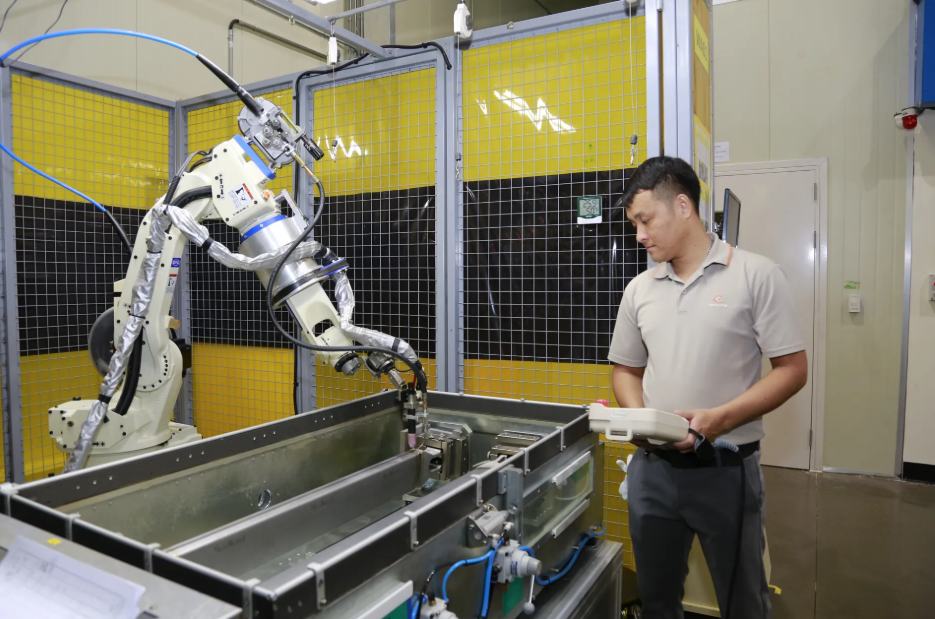
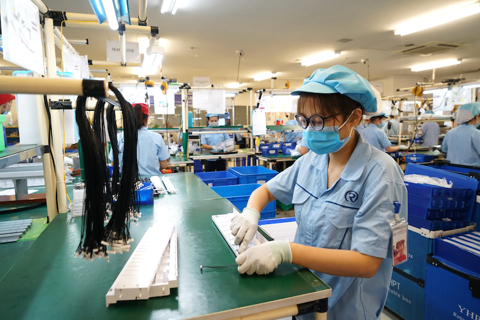
Robots in operation at the Hanwha Aero Engines plant in Hoa Lac Hi-Tech Park. Photo: Thanh Hai/The Hanoi Times
The Hanoi Department of Finance said the figures highlight the city’s competitive investment environment and continued administrative reforms.
A total of 1,007 projects raised their registered capital by $10.8 billion, accounting for 69.2% of total FDI and underscoring long-term investor confidence.
In the first ten months of 2025, FDI reached $3.85 billion, nearly tripling the same period last year and surpassing the annual target. Additional capital injections from 115 projects accounted for more than 83%, signaling that businesses are expanding operations and strengthening supply chains in Vietnam.
Recent investment trends show a clear shift from pure real estate to high technology, services and innovation. Real estate still ranks first with $1.35 billion, focusing on smart urban areas, commercial centers and office space in Cau Giay, Tay Ho, Hoang Mai and Dong Anh.
Manufacturing ranks second with almost $570 million, playing a key role in job creation and technology transfer. More than 400 projects involve scientific and technological activities, reflecting growing interest in digital technology, research and innovation.
Japan, South Korea and Singapore remain the top investors, contributing more than 70% of total FDI in Hanoi.
Among them, Japanese investment is concentrated in electronics, precision engineering and smart urban development. South Korean companies are active in electronics components, software and e-commerce, while Singaporean and Hong Kong (China) investors stand out in finance, logistics and real estate.
There is also growing interest from Germany, the Netherlands and France in renewable energy, education and high-quality healthcare, expanding flows of green FDI.
Key industrial parks such as Thang Long, Bac Thang Long, Quang Minh, Phu Nghia and Sai Dong B remain major FDI destinations.
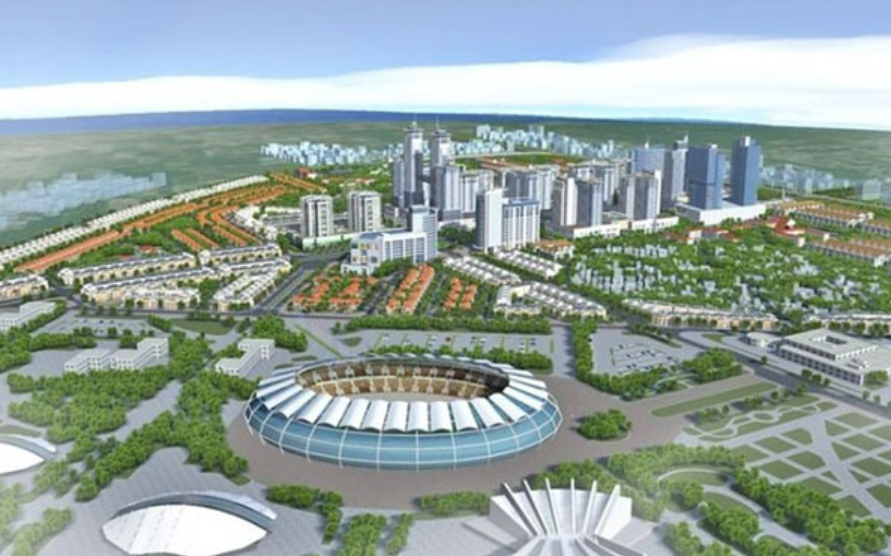
The design of Hoa Lac Hi-tech Park.
Thang Long Industrial Park in Dong Anh and Quang Minh in Me Linh have high occupancy rates and modern production facilities.
The city is accelerating the expansion of Phu Nghia 2, Dong Anh and Bac Thang Long to welcome new investment waves. Hanoi’s total accumulated FDI has reached $71.1 billion, placing it among the leading provinces and cities nationwide after Ho Chi Minh City.
Administrative reform, digital transformation and selective investment promotion have contributed to higher investor satisfaction. Faster licensing, greater transparency and online public services have improved the business environment.
At the same time, major investments in transport, urban infrastructure and logistics, including Ring Roads 3.5 and 4, metro lines and satellite urban areas, are creating new growth space and improving regional connectivity.
For the 2026–2030 period, Hanoi aims to shift from growth in quantity to growth in quality. Priority sectors include green FDI, high technology, clean energy, data centers, semiconductors, smart urban development and digital finance.
The city is shaping three main growth pillars, namely industry and logistics in Dong Anh, Soc Son and Me Linh; commerce and services in Gia Lam and Long Bien; and finance and technology in Ha Dong and Hoai Duc.
Hanoi is also promoting transit-oriented development to integrate infrastructure, investment and residential planning while balancing economic development and environmental protection.
Le Trung Hieu, Deputy Director of the Hanoi Department of Finance, said the city is entering a phase of high-tech, sustainable FDI supported by a strong foundation and clear strategic direction. FDI brings capital, technology transfer, expertise and modern management practices that will enhance Hanoi’s competitiveness.
“These investments are expected to drive Hanoi’s ambition to become a leading regional center for economy, finance, science and technology, contributing to a modern, dynamic and livable capital,” said Hieu.