Hanoi plans to restore local relics with US$593.6 million
Restoring relics and heritage sites is one of Hanoi's goals and is part of the city's efforts to boost its tourism sector.
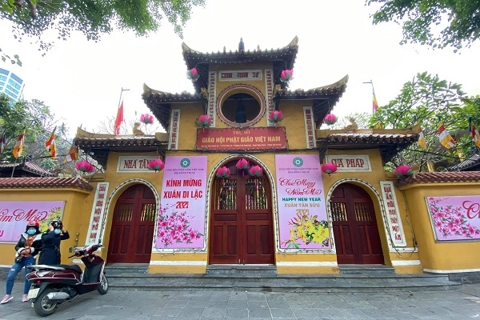
Hanoi plans to allocate VND14 trillion ($593.6 million) to renovate about 580 relics in the city, especially those that have suffered severe deterioration and have been on the verge of collapse, Hanoi Party chief Dinh Tien Dung said on March 21.
| The ancient Temple of Phu Nhieu Village in Phu Xuyen District's Quang Trung Commune. Photo: The Hanoi Times |
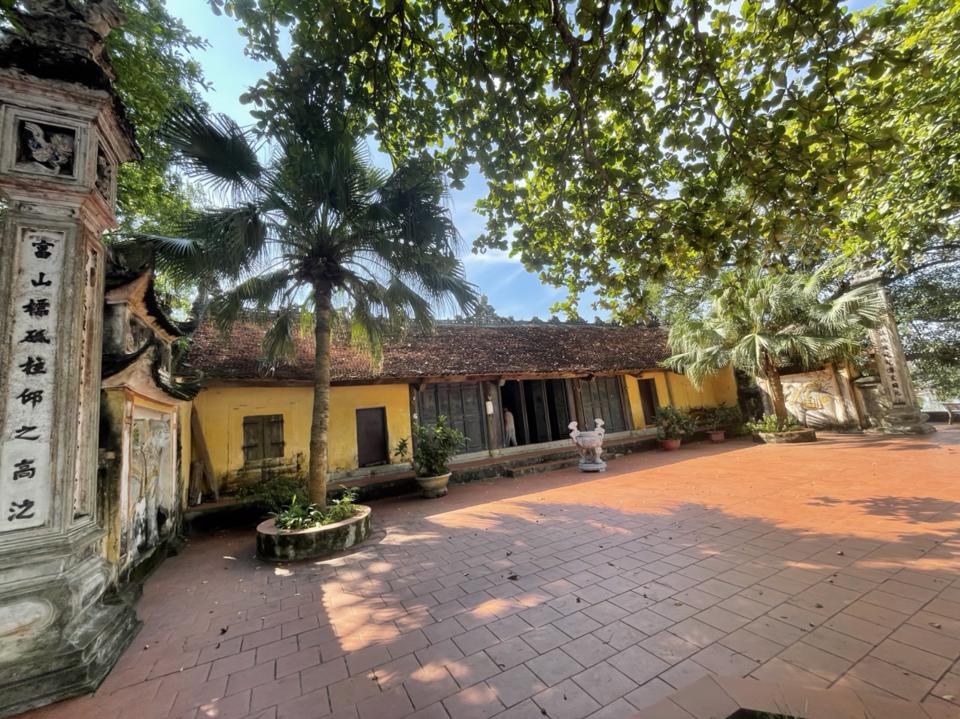
The plan aims to restore the relics and their ancient structures, thus strengthening the tourism sector and enhancing Hanoi's cultural values, as well as increasing revenue for the state coffers from tourism, said the secretary of the Hanoi Party Committee.
According to the Hanoi Party Committee secretary, Hanoi plans to allocate VND49.2 trillion (about US$2.1 billion) for developing health, education, and culture as of 2022. In 2021-2022, the capital renovated 181 relics, including four national-level special relics and 114 national- and 63 municipal-level relics.
The renovation of historical and cultural relics is one of the key tasks Hanoi hopes to accomplish in the near future.
"In 2023, Hanoi expects to complete the amendment of the Capital Law, the modification of the Master Plan on the Construction of Hanoi to 2050, and the Capital Development Plan," Dung said.
In recent years, Hanoi's authorities have shown greater commitment to preserving Hanoi's cultural values, and culture is one of the key drivers of the capital's socio-economic development, Dung said.
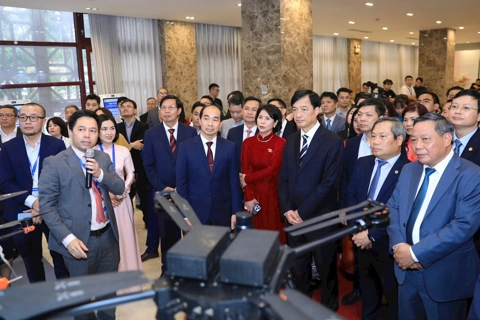
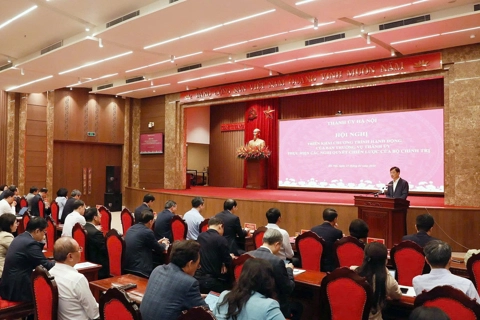
The Hanoi Party Committee has developed many policies to cultivate Hanoi's culture and people, the Party chief said at the conference on designing a modern, cultured, and civilized capital.
"We must evaluate all scientific and practical evidence to develop policies, define cultural spaces and explore cultural sources for a cultured, modern and civilized capital," the Hanoi Secretary said.
Pham Thi Thu Huong, Rector of Hanoi University of Culture, suggested that authorities fund the development of creative spaces within local relics.
"Hanoi may be the only city to spend VND14 trillion ($593.6 million) on heritage restoration, which shows the city authorities' attention to preserving local tangible and intangible heritage," he said. He claimed.
She said that the Thang Long Imperial Citadel and the Temple of Literature are good examples of how history and modernity can come together.
"Each heritage site would become a creative space, as this could be an effective solution to utilize Hanoi's resources."
The university rector urged municipal authorities to study and soon issue regulations on the development of creative industries and creative spaces.
"Hanoi needs to prioritize creative products that preserve and promote Hanoi's thousands of years of history," she said. "We also need to create things that have high artistic and philosophical values."
Convergence of intellects, skills and elites
Dang Canh Khanh, former director of the Youth Studies Institute, said Hanoi's culture is not only made up of material and immaterial things but also its intellectuals and craftsmen.
| An old mansion in Hanoi. Photo: Pham Hung/The Hanoi Times |
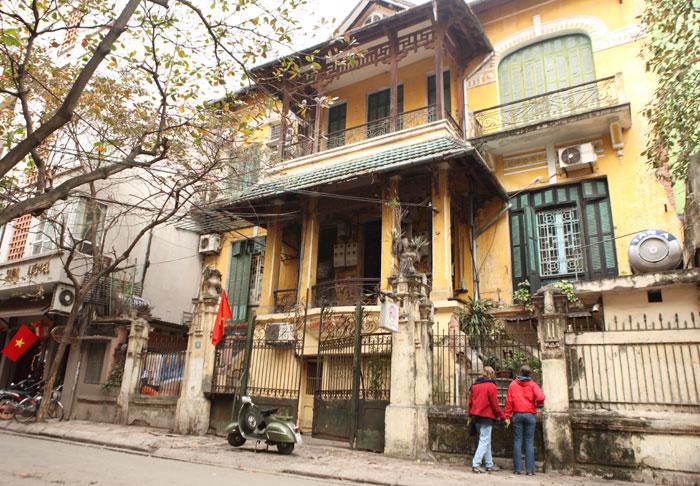
"The quality of education and the number of talents are decisive factors for a cultured nation," he said.
With a history of more than 1,000 years, Thang Long-Hanoi has been the city that connects different regions, Khanh said.
The city remained the capital of ancient Vietnam from the fall of 1010 under the Ly dynasty until late 1788, when Quang Trung-Nguyen Hue proclaimed himself the new king of the Tay Son dynasty. The city was not the political center of Vietnam until 1945, when the Democratic Republic of Vietnam was founded on September 2, 1945.
Throughout its long history, despite 157 years of interruption, Thang Long-Hanoi has remained the destination that attracts people from other localities, such as scholars, artisans, and business people, to come and settle their lives. Khanh said.
"Not all of them have great talents. It takes work and effort for them to establish themselves in Thang Long-Hanoi. Many of them manage to make their names and fortunes here," he said.
"Thang Long-Hanoi provides them with favorable mental and physical conditions to realize their goals and achievements," Khanh added.
"The capital is the place where the best cultural traits are collected and sent to other regions of the country, which greatly impacts the socio-economic growth of these regions."
Under the impact of the Fourth Industrial Revolution and rapid urbanization, Hanoi will experience societal changes, according to Nguyen Chi My, former head of the Hanoi Propaganda and Education Committee.
For example, he said the work structure would be classified, and there would be differences between social classes regarding culture, art, income, style, and living standards.
"Hanoi authorities must promote their local cultures and develop new features that suit the development of the economy, society and people to meet the standards of a cultured, modern, and civilized city," My said.
The expert called on Hanoi authorities to improve regulations on modernity and civilization so that they are adopted by all officials and the people, especially leaders of organizations and Party members.
The city should also embody the traits and norms to become a civilized Hanoi in its political and administrative systems, encouraging people and state officials to "speak well, do well and act well," he added.
In addition, My urged Hanoi's municipal and local authorities to improve the preservation and management of historical and cultural relics, which can strengthen the education sector and attract foreign visitors.