Hanoi exhibition delves into lives of post-Doi Moi migrants in Central Highlands
Decades after immigrants from Hanoi and the Red River Delta transformed Lam Dong's red basalt soil into thriving orchards, their compelling story has come to light through a series of evocative artworks.
THE HANOI TIMES — Vietnamese artist Le D. Chunh unveiled powerful stories of post-war life through a special summer exhibition held earlier this week at the Manzi Exhibition Space in Hanoi.
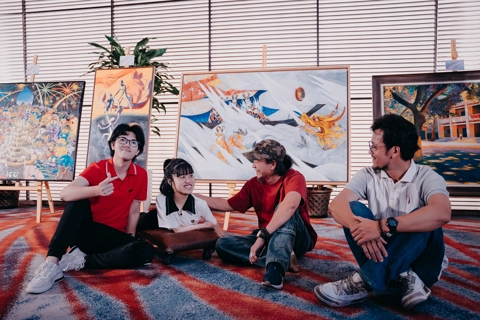
The exhibition offers a personal and historical look at life in post-war resettlement zones. It serves as a preview of his ongoing multimedia project, which he started in 2017.
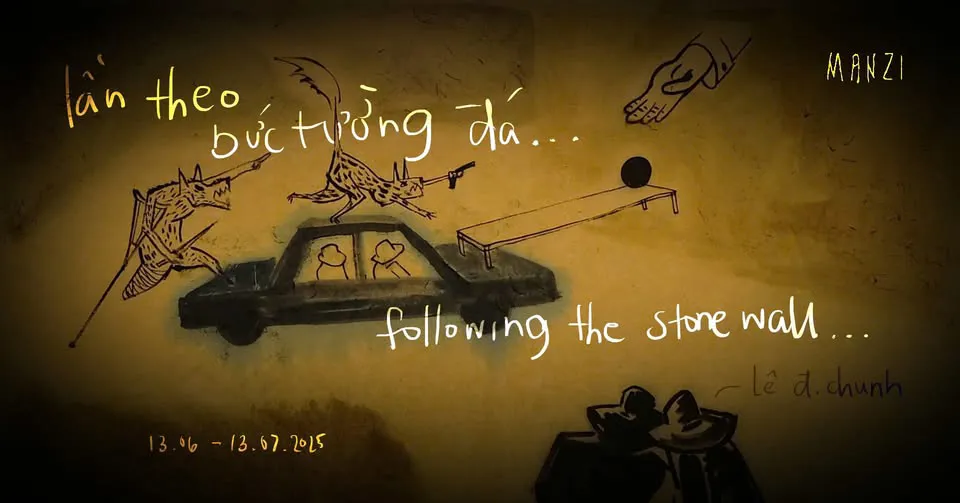
The poster of the exhibition.
The exhibition, following the Stone Wall and We Found an Electric Generator, focuses on a migrant community in Di Linh District, the central highland province of Lam Dong Province, also the hometown of the author.
This area was once part of Vietnam’s New Economic Zones, which were established during the Doi Moi (Renewal) process from the mid-1980s to the early 1990s. The government created these zones as part of a program that relocated people from lowland and urban areas to rural highlands in an effort to rebuild the nation’s economy after the war.
Le D.Chunh’s artwork reflects how these settlers rebuilt their lives among the remnants of colonial infrastructure, transforming abandoned plantations, old factories, and irrigation systems into homes and electricity plants.
"My paintings, created on do paper, use fragments and collage techniques to represent personal memories and community struggles," he stated.
See more stories about Hanoians in Lam Dong here: Hanoi youth who built Lam Dong from scratch
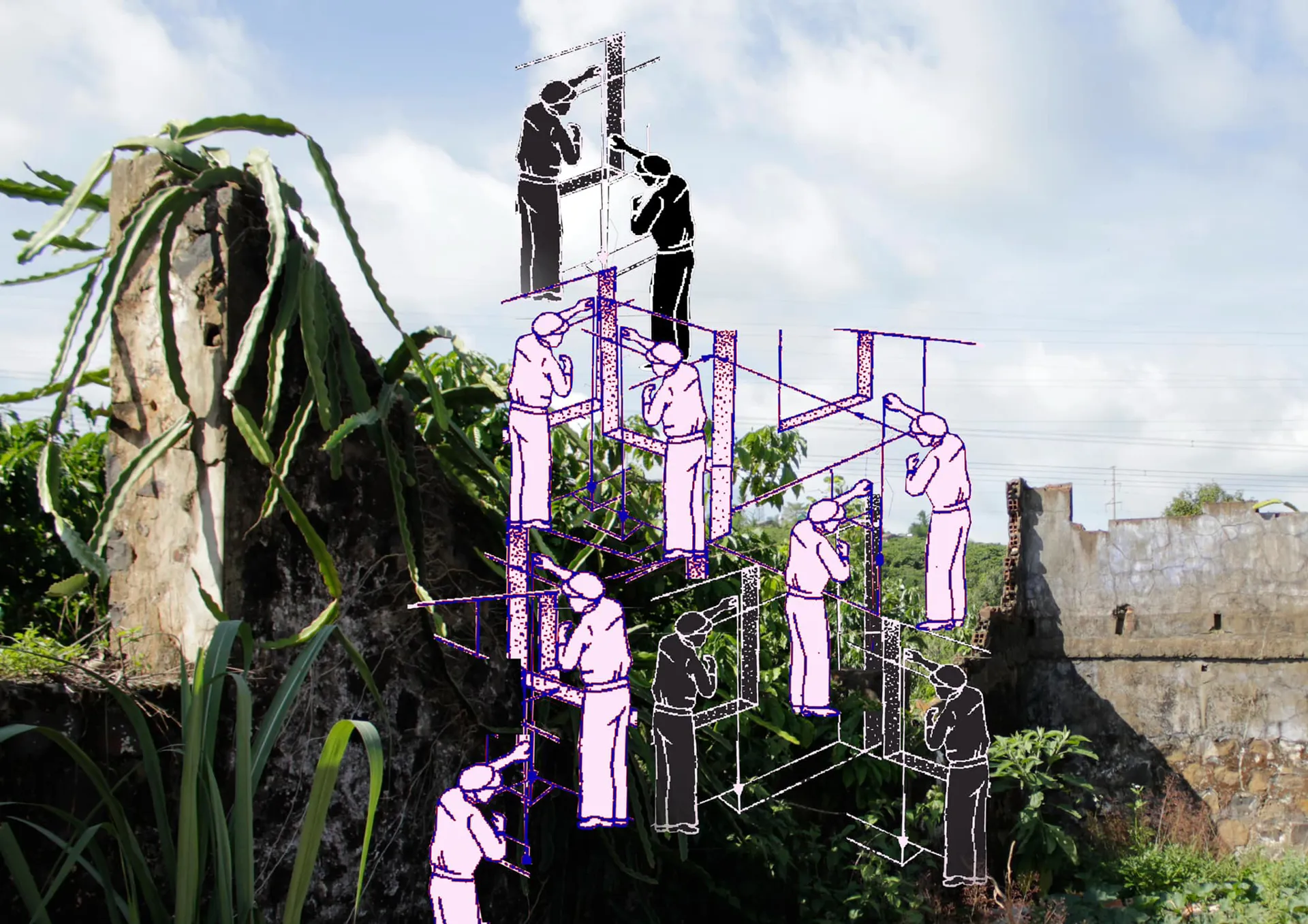
An artwork by Le D.Chunh. Photo courtesy of the artist
The open studio format of the show highlights the emotional and historical layers of these forced migrations. Through quiet imagery and personal storytelling, Chunh invites viewers to reflect on survival, memory, and identity in places shaped by hardship and hope.
According to a curator from Manzi Art Space, the series of paintings on do paper by Le D.Chunh presented in this open studio reflect personal recollections and direct observations formed by cutting, assembling, and accumulating fragments.
Despite the ravages of war and the relentless passage of time, the stubborn and still stone wall never yielded, never crumbled, and never broke. From its silence, a roof was raised, a well was dug, and a childhood quietly unfolded.
For D. Chunh, "following the stone wall" is no longer merely an act of personal remembrance; it has become a journey through layered memories and historical fractures - a quiet path that winds through the past and opens onto a blank space filled with infinite possibilities and imagined futures.
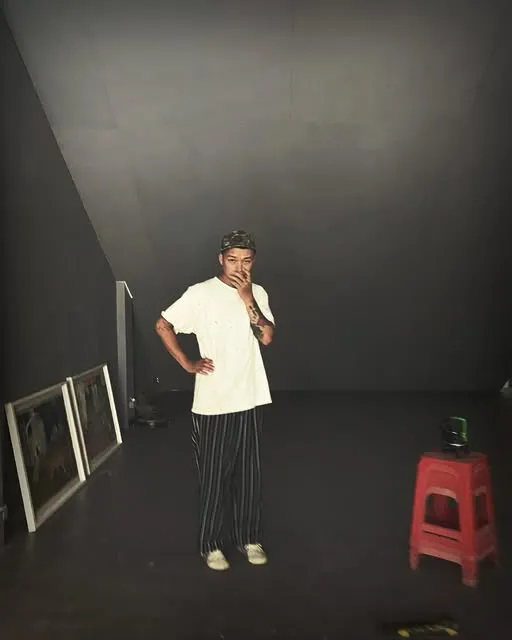
A portrait of the artist, Le D. Chunh. Photo courtesy of Manzi Exhibition Space