Hanoi identifies two driving forces in 2021-2030
The goal for Hanoi by 2030 is to become a "civilized – modern - cultured" city, serving as the center and driving force for the development of the Red River Delta and the whole country.
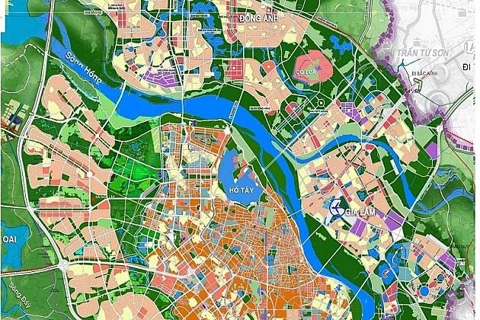
Hanoi has identified two strategic regions that will drive growth from 2021 to 2030, including the Northern Red River City, which focuses on high-quality services, and the Western City, as a center for science, technology, innovation, and digital transformation.
| Overview of the meeting. Photos: Thanh Hai/The Hanoi Times |
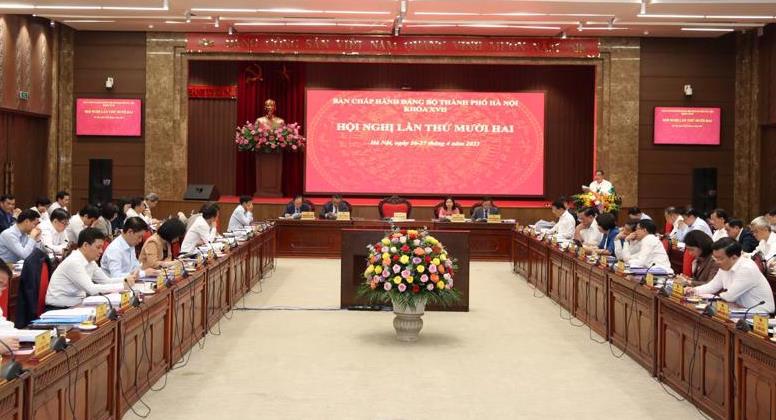
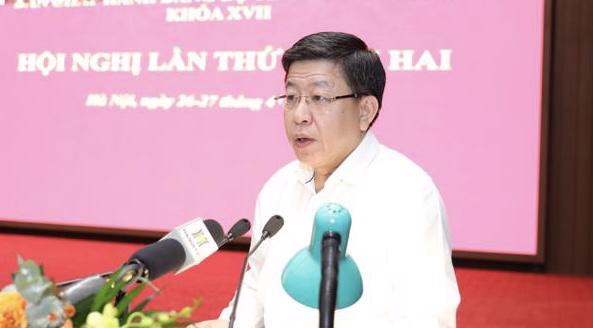
Vice Chairman of the Hanoi People’s Committee Duong Duc Tuan presented the orientation for capital planning in the 2021-2030 period, with a vision to 2050, at the 12th meeting of the municipal Party Committee today [Apil 26].
“Such an orientation would serve as a basis for the city leaders to guide local units in carrying out their respective planning,” Tuan said.
The vice chairman noted that the orientation emphasizes three key breakthroughs and two driving forces for Hanoi’s development.
Regarding institutional development, it is crucial to study and establish models for urban and rural governance and extraordinary policies that align with the vision of a "civilized-modern-cultured" capital.
“This includes enhancing mechanisms and policies to ensure sustainable and smart development, with a priority given to reviewing and amending the Capital Law,” Tuan said.
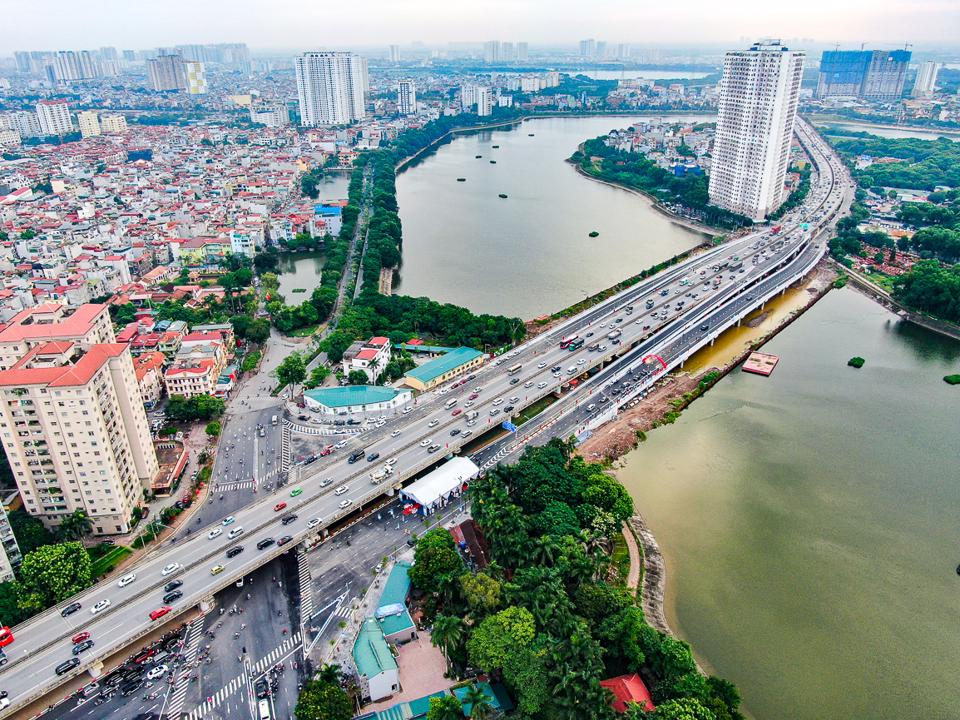
Tuan also expects the rapid development of transport, digital, and science and technology infrastructure to be prioritized.
This entails conducting cutting-edge research in digital infrastructure to foster a digital economy, government, and society, he continued, noting that accelerating traffic infrastructure construction to enhance attractiveness and accessibility for development is essential.
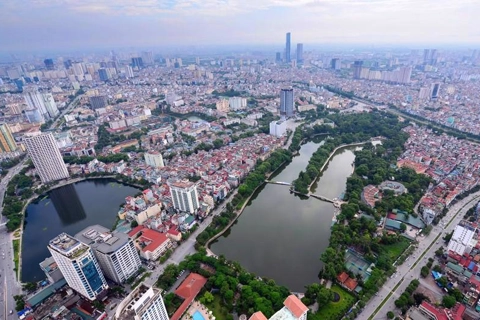
| Hanoi from above. Photo: Trung Nguyen/The Hanoi Times |
Meanwhile, Tuan said human resources are considered the most fundamental and effective resources for breakthroughs. "High-quality talents and labor force are crucial. The city would focus on attracting talents from other countries to support the capital's development process," Tuan added.
Tuan referred to expert opinions that have identified two potential driving forces for Hanoi's development in the coming period.
The first driver is envisioned in the Red River North City, which aims to become a high-quality service center for finance, banking, education, and tourism.
This region would also focus on developing logistics and supporting industries to serve the industrial production chains of neighboring provinces such as Bac Giang, Bac Ninh, and Vinh Phuc.
Tuan noted that the plan includes the development of the urban chain north of the Red River, stretching from Vinh Phuc to Hanoi (Me Linh, Soc Son, Dong Anh, Gia Lam), in parallel with the dynamic belt of Phu Tho - Thai Nguyen - Bac Giang in the northern Highlands and Mountains region.
"This would serve as a driving force to connect and link the northern urban area with the rest of the country," Tuan said.
The second driving force would be the Western City, which is planned to be a hub for science, technology, innovation, and digital transformation, focusing on education and training. The Hoa Lac Hi-Tech Park would be the city's core, driving advances in research, technology, and innovation.
| Vice Chairman of the Hanoi People's Committee Duong Duc Tuan. |
Empowering the city’s decision-making process
To realize the plan, Tuan stressed the importance of developing institutions and policies, especially by amending the Capital Law, to ensure synchronized and unified mechanisms for Hanoi's construction and development.
"The Capital Law should only include extraordinary policies and mechanisms to support Hanoi's development process," Tuan said.
He suggested the pilot implementation of several mechanisms and policies to give the capital more authority and responsibility in handling various aspects such as investment, finance, planning, land, construction contract management, transportation, environment, population and organizational structure.
In this regard, Hanoi should have the authority to decide on planning adjustments and urban management design based on specific standards and regulations for smart city construction and development.
Tuan also expected Hanoi to be able to make decisions on streamlining the local apparatus for greater efficiency and to meet the growth requirements in the next period.
The goal for Hanoi by 2030 is to become a "civilized - modern - cultured" city, serving as the center and driving force for the development of the Red River Delta, the northern key economic region, and the whole country. It aims to achieve a high level of international integration and competitiveness in the region and the world and maintain a development level on par with the capitals of regional developed countries.
The average growth rate of Gross Regional Domestic Product (GRDP) in 2021-2025 is expected to be higher than the national average, and the GRDP in 2026-2030 is expected to increase by 8.0 - 8.5% per year. The per capita GRDP is expected to reach US$12,000 - 13,000.
With a vision to 2050, Hanoi aims to become a globally connected city with a high standard of living and quality of life and a GRDP per capita of US$36,000 - 40,000.
Hanoi's economic, cultural, and social development should be comprehensive, unique, and harmonious, setting an example for the country. The city aims to achieve a level of development on par with the capitals of developed countries in the region and the world.