Hanoi, Ile-de-France Region share vision for promoting green urbanism
Hanoi is focusing on promoting international cooperation with countries with extensive experience in tackling urban issues.
Hanoi and the Ile-de-France Region share the same vision for promoting green urbanism, putting priorities on environmental protection and high quality of urban life.
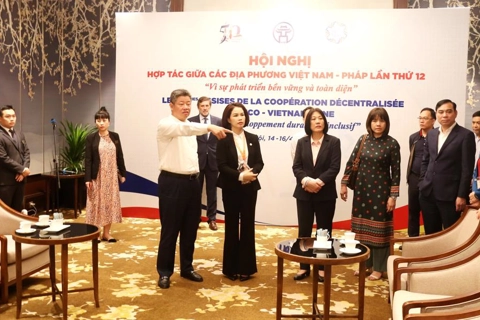
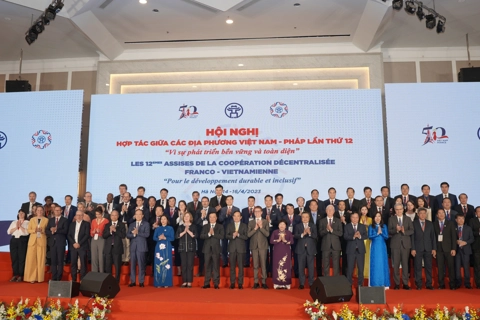
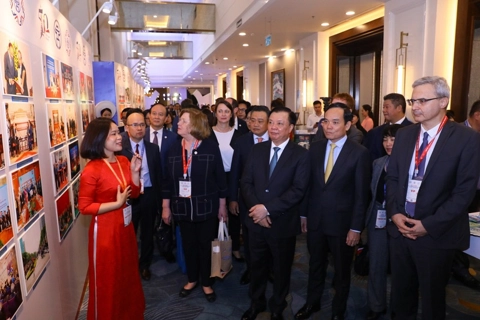
| Overview of the conference. Photos: Khanh Huy/ The Hanoi Times |
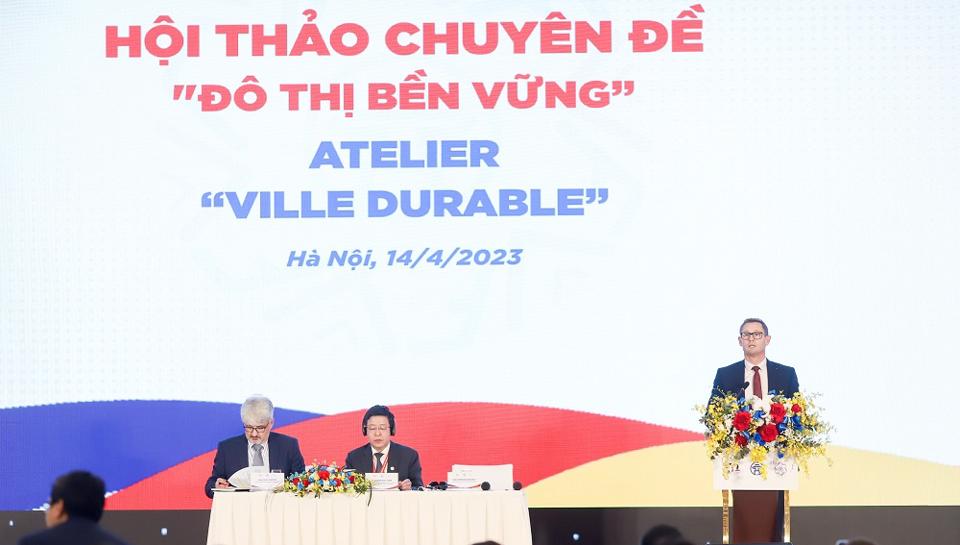
The view was shared among experts at a conference titled “Sustainable urban development” today [April 14], which is part of the 12th Vietnam-France Decentralize Cooperation Conference in Hanoi.
At the conference, Vice President of the Ile-de-France Region Beaudet Stephane suggested that for a city to be sustainable, it should prioritize the development of green public transport, ensure accessibility to green spaces and energy, and optimize resource usage.
“These factors are especially important for Vietnam, where urban residents mainly reside in deltas that are vulnerable to the impacts of climate change,” said Stephane.
He added that the Ile-de-France shares this goal and has several pilot and typical projects in place to combat climate change and promote sustainability, including establishing a group of experts on climate change and biology, supporting agro-economic actors, protecting forests, and promoting innovation.
The region is also advocating for the construction of 200km of additional subway lines to serve commercial areas, as well as doubling the existing transport network, which is currently the second largest in the world after Tokyo, he noted.
In this regard, Stephane added the region aims to have all buses running on 100% clean energy by 2030 and has plans to support small businesses in purchasing clean vehicles.
“Starting from 2021, the regional government has initiated a EUR200-million project to develop smart roads to reduce traffic congestion,” he informed.
Regarding Hanoi, the vice president noted that both Hanoi and the Ile-de-France prioritize reducing waste and plastic usage in construction projects to improve the quality of life for their citizens.
“Ile-de-France is planning to collaborate with Hanoi to study sustainable development, implement waste treatment policies for specific projects, and establish "zero-waste markets" with the participation of the French startup business community,” he said.
For the time being, the French side has been providing assistance for Hanoi in measuring air quality and welcomed the creation of pedestrian streets around Hoan Kiem Lake as a model for the surrounding area.
“Both France and Hanoi prioritize green spaces in urban planning, aiming to harmonize traditional and modern elements with the environment and the economy.”
He stressed that green spaces not only enhance the quality of life but also contribute to the heritage, culture, and aesthetics of Hanoi, which is also a concern for Ile-de-France.
In this regard, Hanoi and Ile-de-France have collaborated on a project to renovate the Dien Hong Park or Vuon hoa Con Coc (Toad Flower Garden), as both cities strive to replicate natural spaces in the urban environment.
| Vice Chairman of the Hanoi People's Committee Duong Duc Tuan. |

Green urban planning is a top priority for Hanoi
Echoing Stephane’s view, Vice Chairman of the Hano People’s Committee Duong Duc Tuan said urban planning and development have been a top priority for Hanoi for many years.
“The city has implemented various programs at different levels to tackle the challenges of urbanization while reconciling modernity with tradition, environmental protection, economic development, cultural preservation, and improving the overall livability of the city,” he said.
Data from the UN revealed the percentage of the global population living in urban areas has increased from 25% in 1950 to 50% in 2020. In Vietnam, urbanization has contributed to improved socio-economic technical infrastructure, and living standards, with 88 urban centers estimated to contribute to 75% of the country's GDP by the end of 2022.
However, the Covid-19 pandemic has exposed limitations in urban infrastructure, transportation, healthcare, and overload.
“Hanoi, as a cultural-economic-political center with a large and complex workload, faces particular challenges in urban development,” Tuan said.
To address these challenges, Hanoi prioritizes synchronous and strategic urban planning and development, with a focus on promoting international cooperation with countries with extensive experience in this field, including the Ile-de-France and many French localities with world-leading public transport systems, Tuan said.
Deputy Director General of the Urban Development Agency under the Ministry of Construction Tran Quoc Thai added that Hanoi and other major cities in Vietnam face significant challenges in their development process.
“Sustainable management of the country's urban system, with an estimated 10 million people living in urban areas, is a difficult task,” Thai said.
Thai referred to the resolution 06-NQ/TW, issued by the Politburo on November 24, 2022, which emphasizes the need to put people at the center of development, improve the quality of planning and planning management, and invest in developing a modern, interconnected urban infrastructure system that can adapt to climate change.
The resolution also stresses the importance of developing mechanisms, policies, and legal documents to create a clear legal framework for urban development, he said.
At a conference, Aloïs GABORIT, Vice President of Grand Poitiers Urban Communities in charge of energy transformation, shared three energy principles for ensuring a green, clean, environmentally friendly, and sustainable urban adjustment process.
He said the first principle is to save the land and encourage smart urban density growth while protecting agricultural production near the city.
The second is to save on resource use by increasing the use of natural materials, promoting innovation in the circular economy, and reusing materials. The third principle is to ensure cities are resilient and can adapt to climate change by promoting the optimal energy efficiency of buildings, integrating plantations into urban projects, and optimizing water resources management.
To ensure these principles are followed, the process of urbanization must take into account the need for social inclusion.
“Policymakers should consider people's needs during the urban planning process, and seek compromises through a transparent information mechanism,” he said.