Hanoi island commune first to launch universal health checkups
Minh Chau, Hanoi’s only island commune, is aiming to complete digital health records for all 6,600 residents by September 2, marking a major milestone in grassroots healthcare reform.
THE HANOI TIMES — Minh Chau, about 65 kilometers far from downtown Hanoi, is making a transformative move in public health as all 6,600 residents are expected to have their electronic health records completed by September 2, marking a groundbreaking step in grassroots healthcare digitization.
The goal is part of Vietnam’s 2025 People’s Healthcare Journey, but for this remote commune nestled at the confluence of the Red and Da Rivers, the shift carries even greater significance.
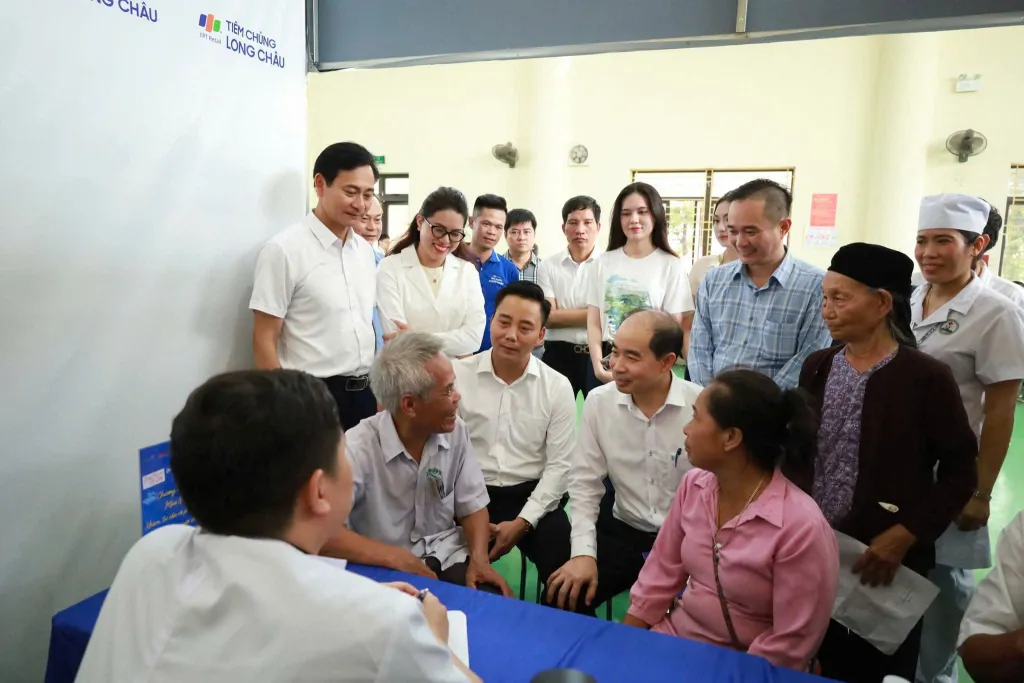
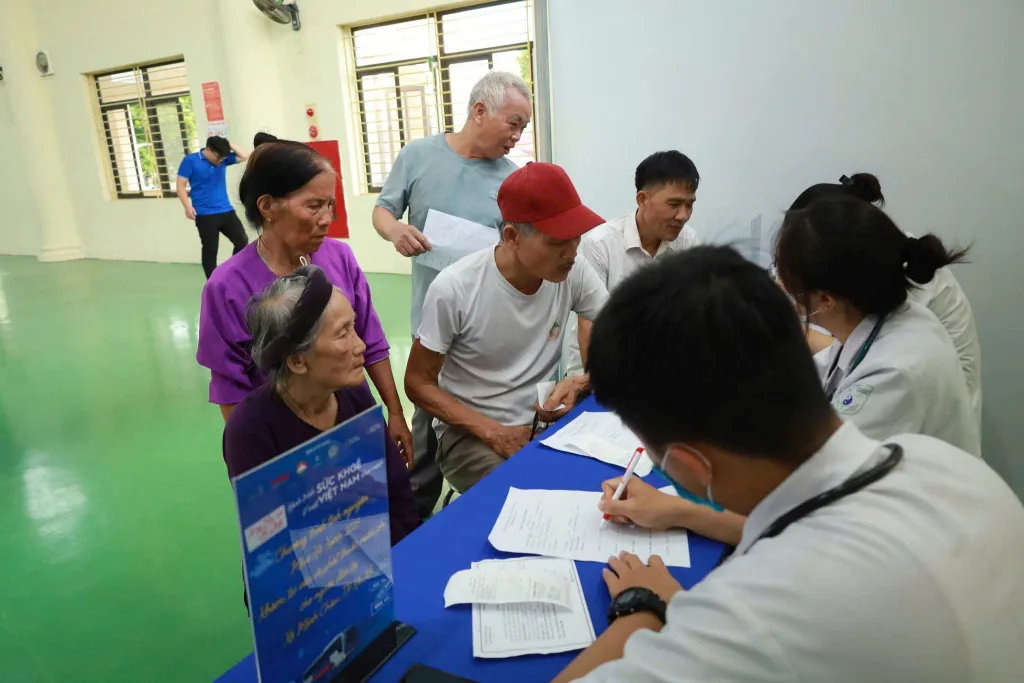
The community on July 19 witnessed an event unlike any before. From early morning, crowds filled the schoolyard of Minh Chau Primary School, not for classes but for free health checks. More than 1,200 people, including elderly citizens, low-income families, and policy beneficiaries, took part in the first round of examinations.
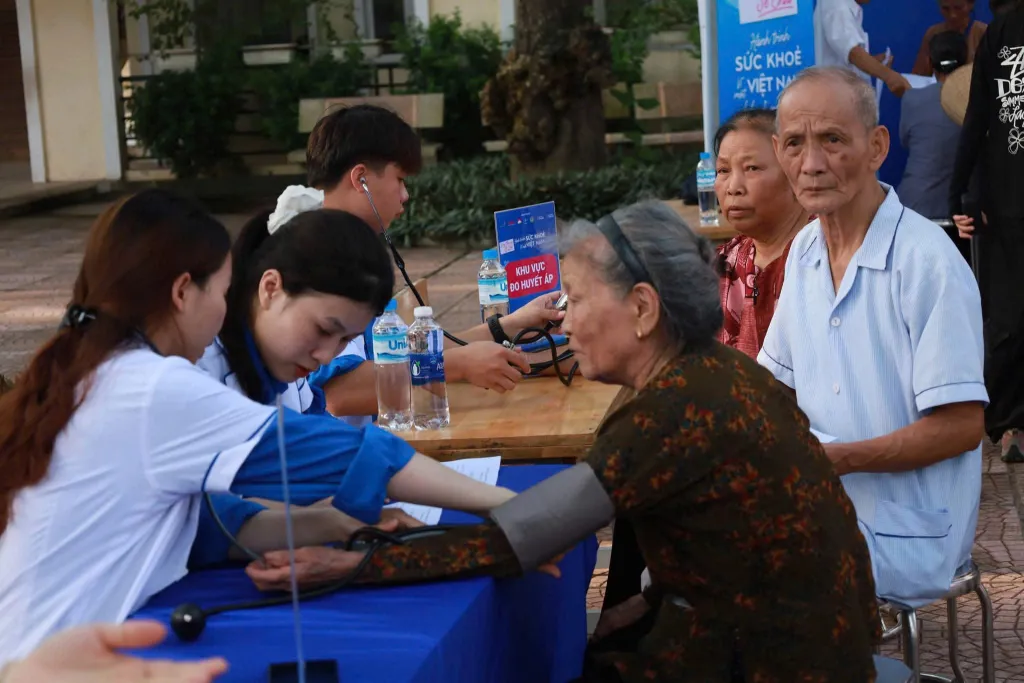
Around 1,200 residents of Minh Chau island commune received free medical check-ups on July 19. Photo: Dieu Thu
General health checkups, blood pressure tests, ultrasounds, blood sampling, and consultations were offered completely free of charge.
For locals like 78-year-old Hoang Thi Mit, a war widow who lives alone and rarely travels, the experience was deeply emotional. “This is the first time I’ve been treated with such care, right here in my village,” she told Hanoimoi Newspaper with tears in her eyes.
Across the yard, Nguyen Hoang Vinh, a 72-year-old farmer, echoed that feeling: “I’ve never gone to a hospital in the city. I just take whatever medicine I can find. But today, doctors from Hanoi came to see me. It’s incredible.”
However, the effort goes far beyond one-off medical visits. What sets this program apart is its emphasis on long-term, digital health tracking. Every test result and medical consultation is being entered into each person’s individual electronic health record.
With this data, local doctors will be better equipped to manage chronic conditions, detect early signs of illness, and reduce hospital overcrowding through remote care.
Dr. Le Thi Loc, head of the commune’s health station, has watched Minh Chau struggle for years with limited access to care.
“Back in 2018, we were chosen for a pilot family doctor program. However, we lacked equipment, space, and personnel. Just one flood-proof house and not much else. Now, this health check program is a lifeline for our residents,” said Loc.
This year’s program is a shift in public health philosophy. Organizers have planned five rounds of checkups that will stretch through September 2025, covering every household in the commune. Rather than asking residents to travel long distances, each phase is held within local neighborhood clusters to make it easy for everyone, especially seniors and those with disabilities, to attend.
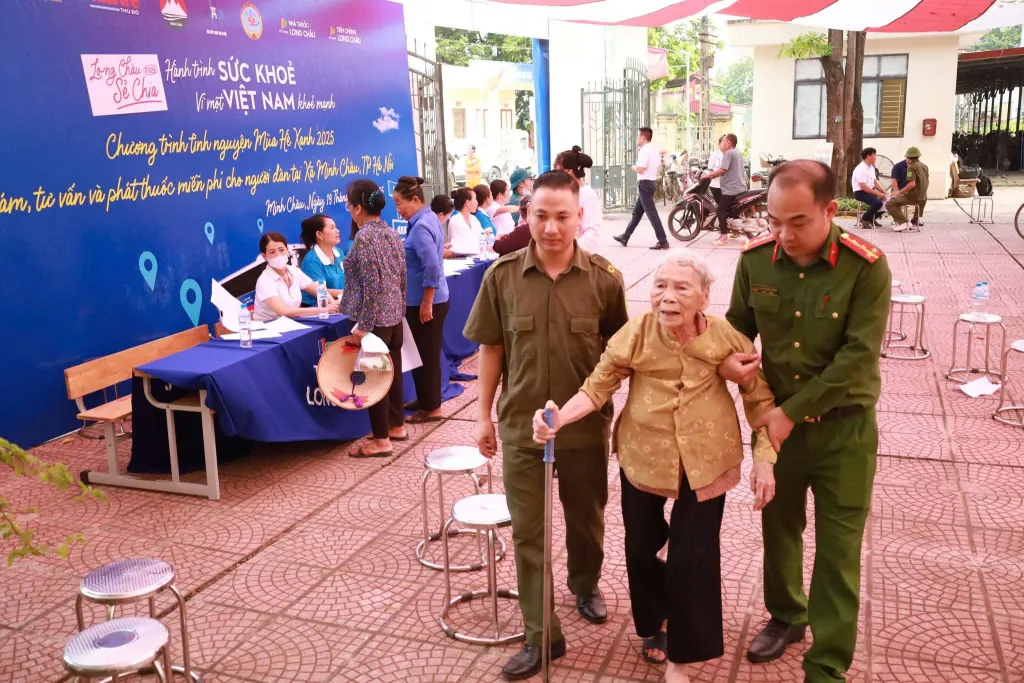
Minh Chau has long faced disadvantages in public service access. It was once among the most underserved areas of the former Ba Vi District, with just one community health station handling thousands of residents. When people needed more advanced care, they had to travel across rivers and dozens of kilometers inland. That kind of journey is no longer necessary, at least not for preventive care.
The digital health record project is the result of collaboration between the Minh Chau Commune Party Committee and local government, the Hanoi Department of Health, central-level hospitals, and private-sector and nonprofit partners.
More than 60 medical professionals from hospitals such as Bach Mai, the Central Lung Hospital, Hospital K, and Military Hospital 105 volunteered to conduct the exams.
The program is also part of the nationwide “Health Journey for a Stronger Vietnam” program, organized by Long Chau Pharmacy with support from the Vietnam Youth Physicians Association and several corporate sponsors. Their presence has not only brought free healthcare to a remote community, but also boosted public awareness of disease prevention and the importance of regular checkups.
Deputy Director of the Hanoi Department of Health, Nguyen Dinh Hung, praised the effort as both practical and symbolic, saying that this is a deeply humane program showing the real commitment of local authorities to care for the health of every citizen, especially those in disadvantaged areas like Minh Chau.
“We will stand with them until every resident has a completed health record,” said Hung.
For Minh Chau’s local leaders, the mission is clear. Party Secretary and Chairman of the commune People’s Council Nguyen Duc Tien sees the program as a message from a government that listens and serves.
“This isn’t just about medicine but building trust. We want a Minh Chau that is green, civilized, and happy and health is the foundation of that vision,” said Tien.
What’s unfolding in Minh Chau may seem like a small, local effort. However, in a country where universal healthcare is still a work in progress, this island commune is showing what’s possible when policy, technology and compassion come together.
By September 2, when every resident is expected to have a digitized medical file, Minh Chau will not only make history for Hanoi, but also set a new standard for healthcare in Vietnam’s most remote corners.