Hanoi joins UNESCO’s global learning cities network
The Vietnamese capital joins UNESCO’s Global Learning Cities Network, leveraging its deep cultural heritage and growing digital ambitions to position itself as a regional hub for lifelong learning, innovation, and sustainable development.
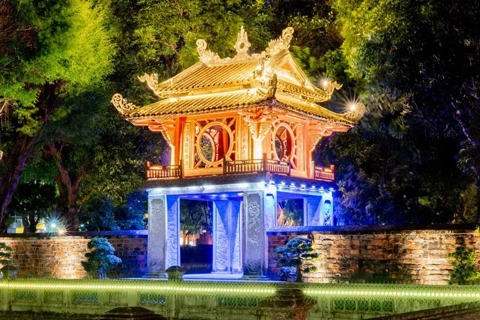
THE HANOI TIMES — Hanoi has added another international accolade to its cultural and educational profile, formally receiving the title of member of UNESCO’s Global Learning Cities Network at a ceremony held on the evening of January 29 at the historic Temple of Literature.
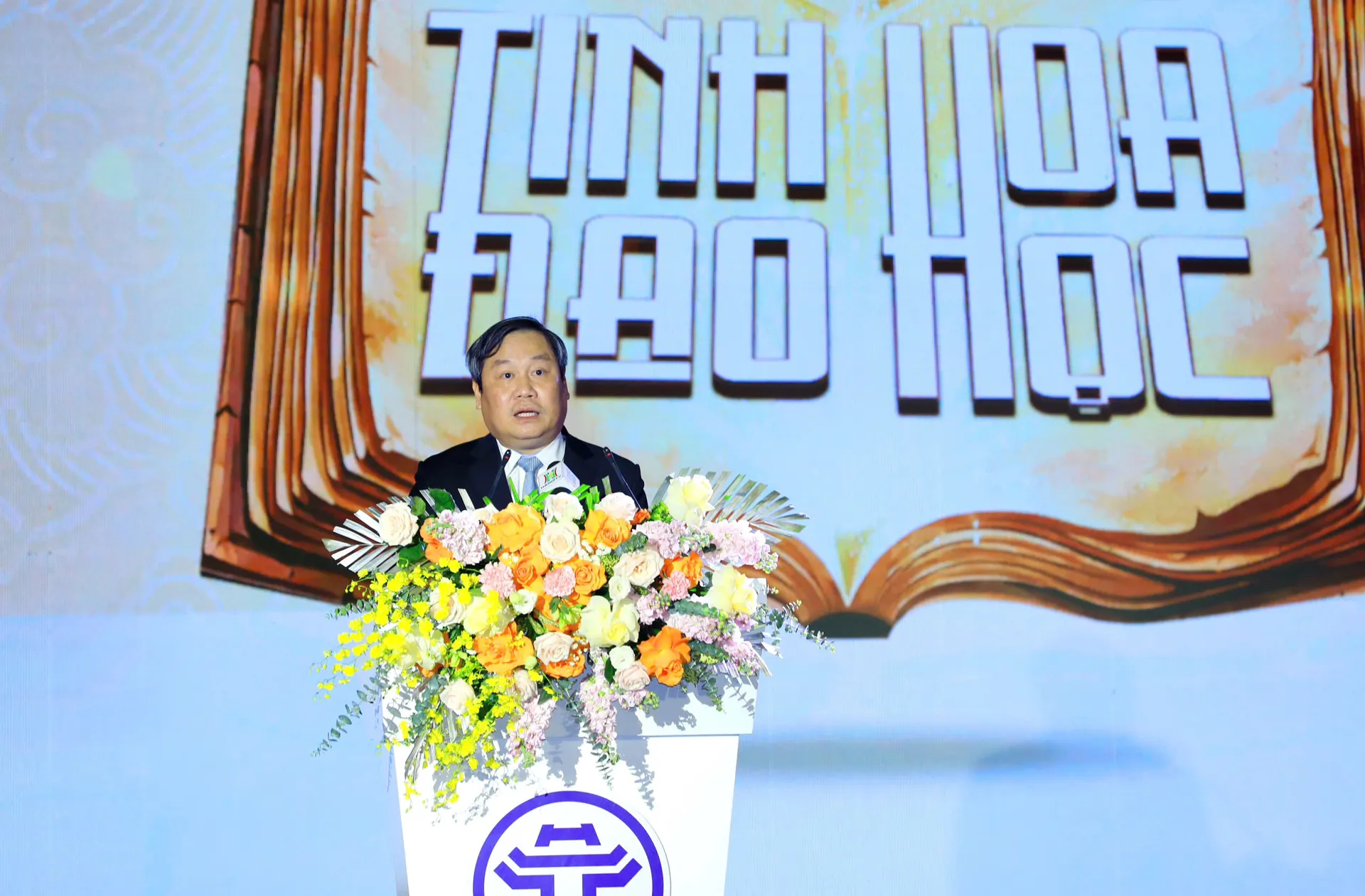
Vu Dai Thang, Chairman of the Hanoi People’s Committee, addresses the ceremony marking Hanoi’s official admission to UNESCO’s Global Learning Cities Network. Photo: Hanoi Department of Culture & Sports
The designation follows Hanoi’s official recognition on December 4, 2025, after a rigorous and selective evaluation process by UNESCO. With this admission, the Vietnamese capital joins a network of 425 cities in 91 countries, placing Hanoi within a global platform for cooperation, policy exchange and innovation in lifelong learning.
Membership in the network is expected to open new avenues for international collaboration, encourage the sharing of knowledge and best practices and create favorable conditions to attract investment in education and human capital.
It also supports the development of diverse and flexible learning models, reinforcing Hanoi’s ambition to emerge as a regional center for knowledge and lifelong learning.
Speaking at the ceremony, Chairman of the Hanoi People’s Committee Vu Dai Thang said the “Global Learning City” title adds a new layer of meaning to a legacy of honors already conferred on the capital by UNESCO.
These include Hanoi’s designation as a “City for Peace” in 1999 and a “Creative City” in 2019, alongside world-recognized heritage assets such as the Thang Long Imperial Citadel, the 82 Doctoral Steles at the Temple of Literature and intangible cultural heritages including Ca Tru singing, the Giong Festival and the Mother Goddess worship tradition.
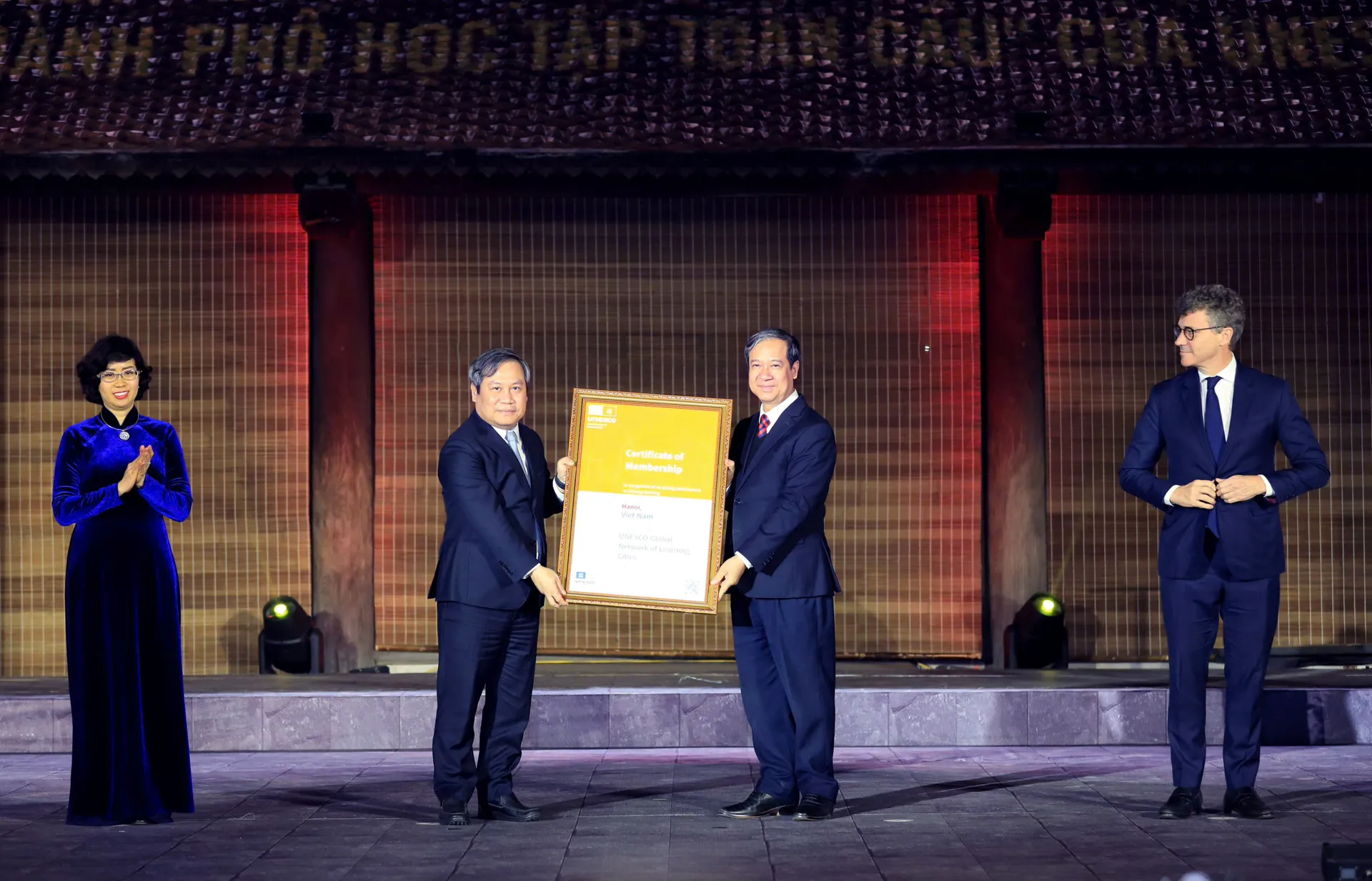
Hanoi is honored as it joins UNESCO’s Global Learning Cities Network.
Taken together, these recognitions, Thang said, reflect Hanoi’s sustained and comprehensive efforts to build an educational environment grounded in peace, equity, and sustainable development- the core values underpinning its identity as both a City for Peace and a Creative City.
He reaffirmed Hanoi’s commitment to actively engage with other members of the network, promote education and training, embrace digital technology and digital transformation, and mobilize resources from across society to invest in education and lifelong learning.
Beyond policy and infrastructure, Thang also addressed the role of the younger generation, calling on young people to lead the knowledge revolution, learning to understand, to work, to live together and to assert Vietnamese identity on the international stage.
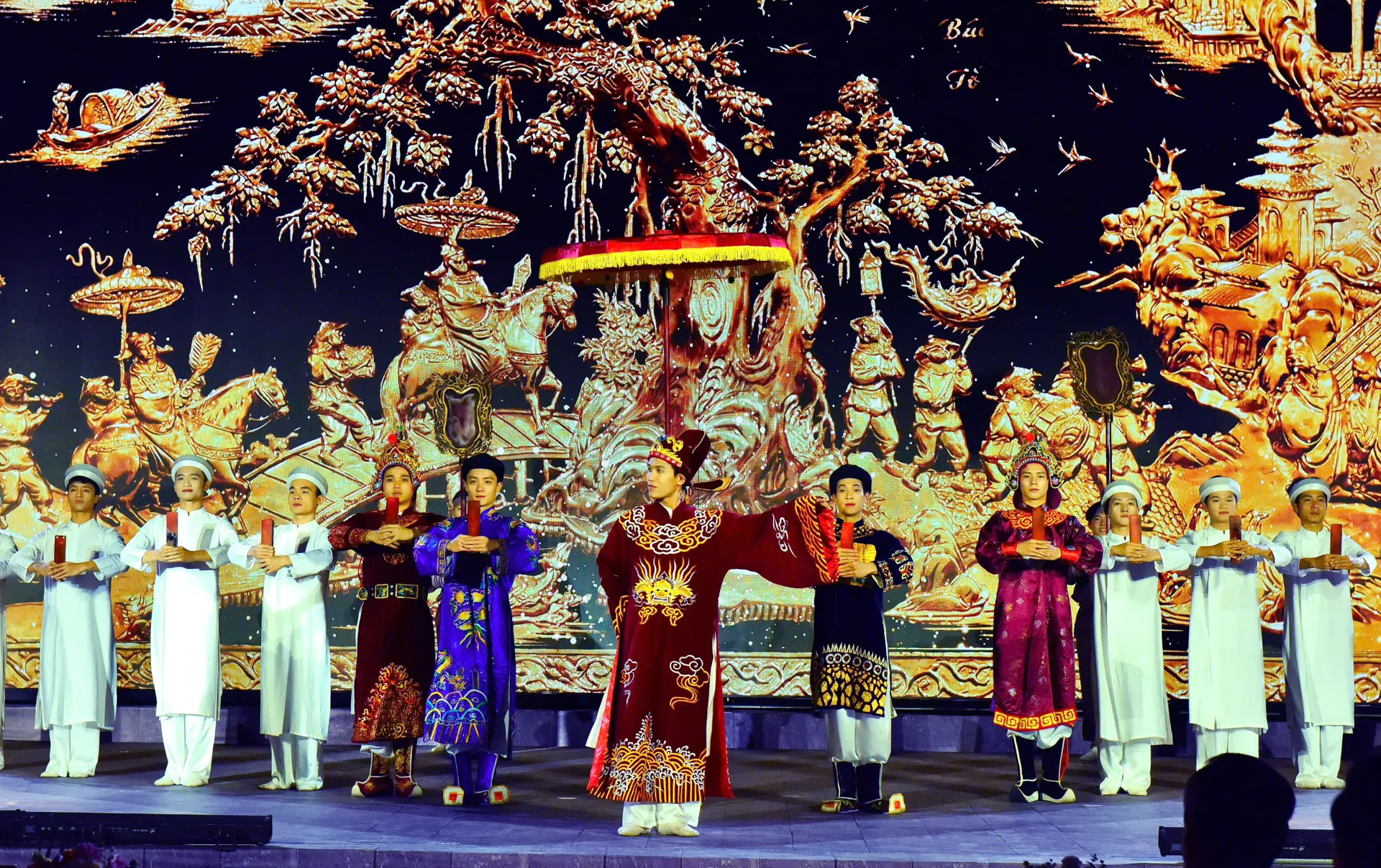
Hanoi, long regarded as the cultural capital of Vietnam, is now recognized by UNESCO as a "Learning City".
From UNESCO’s perspective, Hanoi’s approach has earned strong endorsement. Jonathan Wallace Baker, Head of the UNESCO Representative Office in Vietnam, praised the city’s clear vision and its commitment to placing people and learning at the center of development.
UNESCO, he said, stands ready to continue accompanying Hanoi to ensure that learning empowers individuals, strengthens communities, and contributes to a more peaceful, inclusive, and sustainable future.
The choice of venue underscored the symbolism of the moment. The Temple of Literature, the first-ever national university of Vietnam, long regarded as a cradle of Vietnamese scholarship and wisdom, provided a setting that linked a thousand-year-old tradition of learning with Hanoi’s aspirations in the digital and global era.
More than a ceremonial milestone, the event served as a statement of intent. Hanoi used the occasion to reaffirm to UNESCO and the international community its determination to continue innovating policies, developing high-quality human resources, and shaping the capital into a Learning City, a Creative City and a Sustainable City that is built for and driven by its people.
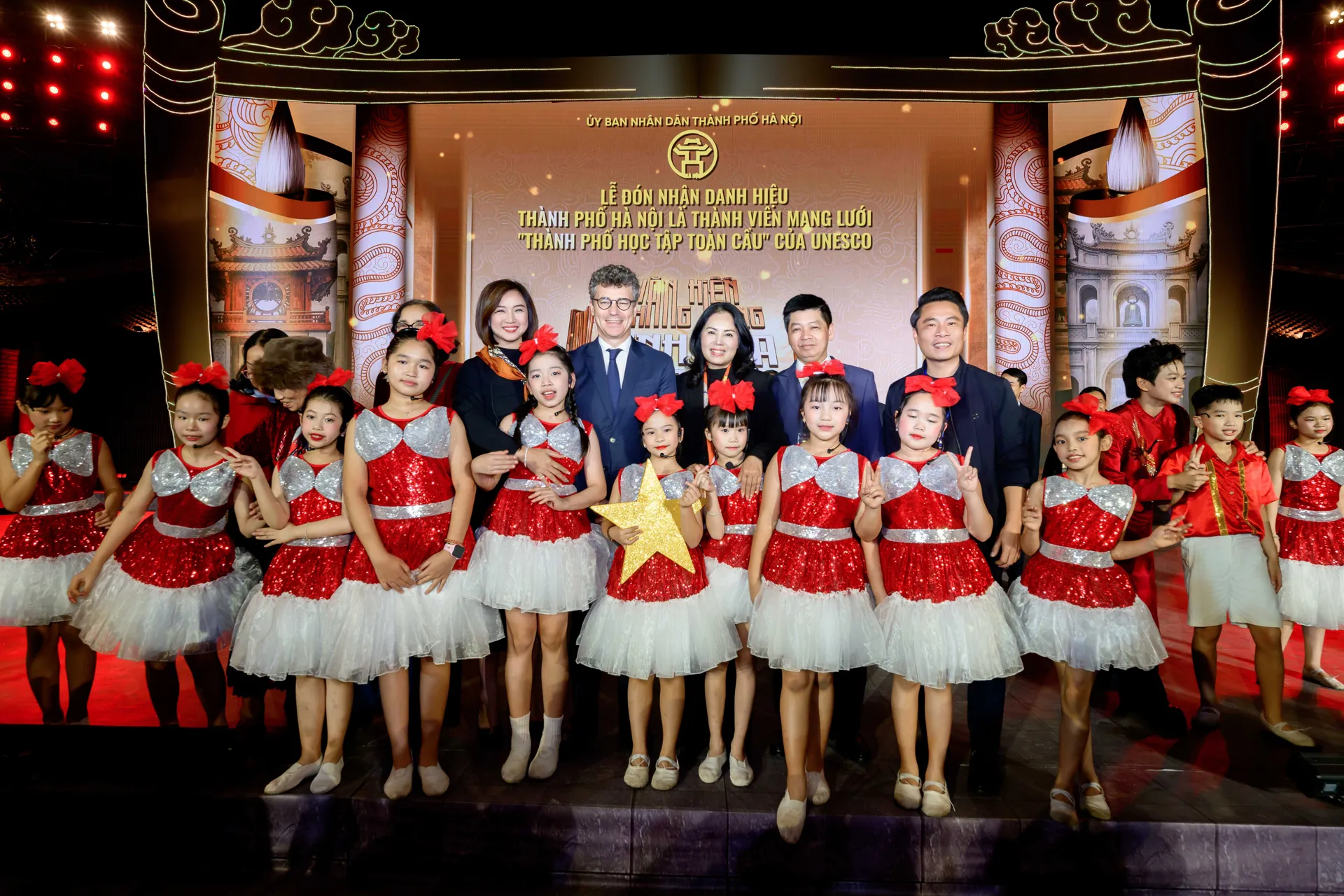
Vietnam’s capital continues its long-standing efforts to nurture and educate the younger generation.