Hanoi
Hanoi makes effort to be green, civilized and modern city
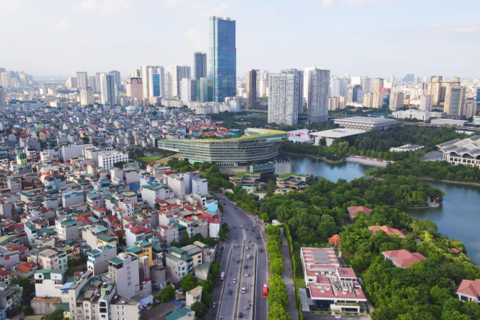
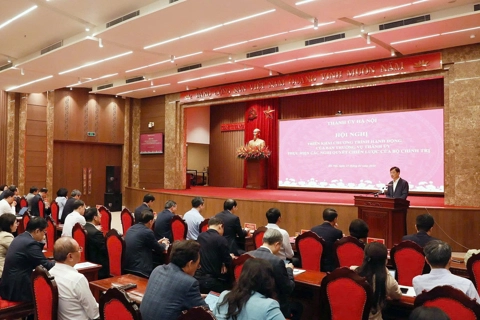
Under the plan of the Municipal Party Committee, Hanoi will take different measures comprehensively and make effort to build a green, civilized and modern city with unique identity based on sustainable development.
According to assessment of the Hanoi Party Committee, leadership is increased to realize Resolution 11-NQ/TW dated January 6, 2012 of the Politburo (tenure 11) on orientation and mission for development in the 2011-2020 period. So far, the city witnesses significant progress in the field of planning, construction, urban management and development.

Hanoi proactively directs making of programs and projects to implement strategies, general planning scheme on socio-economic development, general planning on construction to 2030 and vision to 2050. The city also pays attention to planning and planning management, issues regulations on architecture and planning management, improves urban landscape, enhances investment and urban infrastructure, handles environmental pollution, and increases effort to complete a number of planning schemes for different sectors and zoning schemes. Hanoi also basically completes general planning of districts, towns and satellite towns, and makes further effort to finish detailed schemes for important areas of the city; urban planning and management is implemented in accordance with the Captail Region, and successfully connects transport in the region.
The city proactively cooperates with ministries and sectors to suggest solutions and roadmaps, and makes policies to encourage central agencies and units to move out of urban area. Investment is increased for traffic utilities like ring roads and main routes in Hanoi. Important and modern works are built, such as T2 Terminal in Noi Bai International Airport, Ring Road 3, Nhat Tan-Noi Bai Road, Nhat Tan Bridge, Vinh Tuy Bridge, Dong Tru Bridge, eight overpasses in urban area, and Bus Rapid Transit (BRT) system. Socio-economic infrastructure in rural area is improved; quality of urban services is further enhanced. Clean water is provided to 98.5% of people in urban area, and 38% of residents in rural area.

Hanoi also enhances effort to renovate old apartment buildings, review and supplement planning schemes, recommend land fund for comprehensive and large-scale social apartment buildings, underground parking area, hospitals, hotels, parks and playgrounds. Investment of private sector is increased in the fields of industrial zones and clusters, commercial services, parking lots, parks, construction and renovation of old apartment buildings; Public Private Partnership (PPP) investment increased in infrastructure (traffic, waste and wastewater storage and treatment plants, rural water supply) and health. Construction management and urban order are enhanced; as a result, there are significant progresses. Four regulations on architecture management are issued and put into practice; 28 regulations on planning management are built, aiming to develop Hanoi sustainably in harmony with economic growth and cultural, historical value preservation. Inspection and supervision are intensified; severe punishment is applied for violations to deter further one. Drastic measures are taken comprehensively to ensure urban order, handle violations like encroachment upon roadsides, unlicensed advertisement, thus contributing to improving urban landscape and order.
However, planning and construction management does not meet requirement yet; there are still construction violation and encroachment upon agricultural land; planning schemes and planning on satellite town are made with slow progress. Land clearance face a number of difficulties; there are lack of policies to attract investment of private sector, and inconsistent policies on site clearance in several localities and units. Renovation of old apartment buildings in urban area encounter problems in policies and mechanism.

The Party Committee pointed out reasons of the shortcomings. Accordingly, Hanoi is in rapid urbanization; there is large area of land to be cleared, whereas policies and mechanisms are inconsistent. Furthermore, the city faces complicated origin of land, insufficient data of land, and lack of proper policy to mobilize resources for technical, social infrastructure of resettlement urban areas.
In the future, Hanoi aims to enhances planning, infrastructure construction, urban management and development. Special attention is paid to development planning, in particular city's general planning on socio-economic development to 2020, vision to 2030, planning management according to the law, planning on urban architecture space, and preservation, promotion of cultural values, landscape, architect, old quarter, ancient villages and citadels.
The city also increases investment in traffic infrastructure for urban development, improves public transport, and prepares condition to stop the use of motorbikes in urban districts in 2030 in order to ease traffic jam. Hanoi expects to complete two urban railway lines (Ha Dong-Cat Linh, Nhon- Hanoi Station) and put them into operation soon, build Nam Thang Long-Tran Hung Dao line, call for investment in other routes, open Ring Road 4, and extend main routes to the city center. Further effort will be made to build and modernize traffic management system and network, plan and develop traffic infrastructure in suburban areas comprehensively for industrial establishments, universities, centers, institutes and hospitals.
Hanoi proactively directs making of programs and projects to implement strategies, general planning scheme on socio-economic development, general planning on construction to 2030 and vision to 2050. The city also pays attention to planning and planning management, issues regulations on architecture and planning management, improves urban landscape, enhances investment and urban infrastructure, handles environmental pollution, and increases effort to complete a number of planning schemes for different sectors and zoning schemes. Hanoi also basically completes general planning of districts, towns and satellite towns, and makes further effort to finish detailed schemes for important areas of the city; urban planning and management is implemented in accordance with the Captail Region, and successfully connects transport in the region.
However, planning and construction management does not meet requirement yet; there are still construction violation and encroachment upon agricultural land; planning schemes and planning on satellite town are made with slow progress. Land clearance face a number of difficulties; there are lack of policies to attract investment of private sector, and inconsistent policies on site clearance in several localities and units. Renovation of old apartment buildings in urban area encounter problems in policies and mechanism.
In the future, Hanoi aims to enhances planning, infrastructure construction, urban management and development. Special attention is paid to development planning, in particular city's general planning on socio-economic development to 2020, vision to 2030, planning management according to the law, planning on urban architecture space, and preservation, promotion of cultural values, landscape, architect, old quarter, ancient villages and citadels.
The city also increases investment in traffic infrastructure for urban development, improves public transport, and prepares condition to stop the use of motorbikes in urban districts in 2030 in order to ease traffic jam. Hanoi expects to complete two urban railway lines (Ha Dong-Cat Linh, Nhon- Hanoi Station) and put them into operation soon, build Nam Thang Long-Tran Hung Dao line, call for investment in other routes, open Ring Road 4, and extend main routes to the city center. Further effort will be made to build and modernize traffic management system and network, plan and develop traffic infrastructure in suburban areas comprehensively for industrial establishments, universities, centers, institutes and hospitals.