Hanoi Mayor shares experiences in bridging urban-rural divide with ASEAN
Chairman of Hanoi People's Committee Tran Sy Thanh underscores that rural residents are central to agricultural development, rural economy, and building new rural areas.
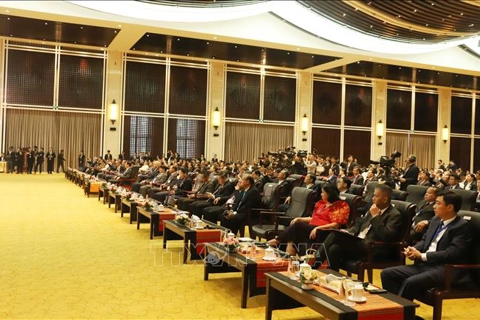
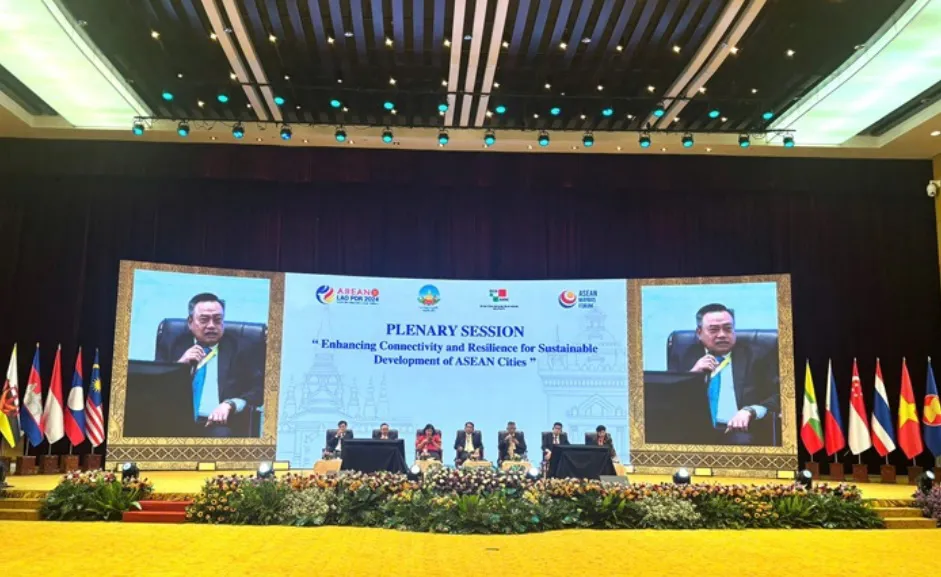
Chairman of the Hanoi People's Committee Tran Sy Thanh on September 19 delivered a presentation on "Some experiences in narrowing the gap of living conditions between urban and rural residents" at the plenary session of the Meeting of Governors and Mayors of ASEAN Capitals (MGMAC) and ASEAN Mayors Forum (AMF) held in Vientiane, Lao.
At the session entitled Enhancing Connectivity and Resilience for Sustainable Development of ASEAN Cities, Thanh highlighted the Vietnamese Party and Government's commitment to investing in agriculture, farmers, and rural development. He underscored that closing the gap between urban and rural areas is one of the country's vital strategies for achieving comprehensive and sustainable growth.
Five key lessons learned
| Chairman of Hanoi People's Committee Tran Sy Thanh speaks at the plenary session of the Meeting of Governors and Mayors of ASEAN Capitals (MGMAC) and ASEAN Mayors Forum (AMF) held in Vientiane, Lao. |
Achieving these significant milestones, Chairman of the Hanoi People's Committee Tran Sy Thanh shared several key lessons with the conference participants:
First, Hanoi focuses on integrated infrastructure development, with significant investment in transportation, especially roads connecting urban and rural areas. Currently, over 10% of land is dedicated to transportation, with a target of 12-15% by 2025. This includes improvements in irrigation, agricultural infrastructure, and industrial zones, all of which enhance trade, logistics, and market access for rural residents.
Second, Hanoi is advancing its rural economy through green and circular initiatives. The city promotes high-tech agriculture and the OCOP (One Commune, One Product) program, featuring nearly 2,000 products. These efforts create jobs and income for farmers while protecting the environment and maintaining ecological balance, contributing to sustainable development. The average income in rural Hanoi is approximately $3,000 per person.
Third, Hanoi prioritizes investment in healthcare, education, and culture in rural areas to ensure equitable access to comprehensive education and training. This focus enhances farmers' skills and competencies, setting the stage for increased productivity and competitiveness. The city emphasizes career-oriented education policies and integrates STEM subjects into curricula, aligning with broader development trends and the demands of the Fourth Industrial Revolution.
Fourth, Hanoi utilizes digital technology to bridge the urban-rural divide, promoting digital transformation in governance and public services. This initiative enhances residents' access to information and services in administration, healthcare, and education while fostering innovation and entrepreneurship. Currently, 80% of households own at least one smartphone, and all villages have mobile coverage or broadband internet, ensuring minimal disparity in access between rural and urban areas.
Fifth, Hanoi prioritizes social welfare and residents' quality of life, accentuating healthcare and the use of information technology in medical services and preventive health measures. The city closely monitors community health and maintains strong social assistance programs, with over 7.8 million people enrolled in health insurance (95% coverage) and 99.9% of children in needy circumstances receiving support. As a result, no households are classified as poor according to national standards.
Six key tasks and solutions
Chairman of the Hanoi People's Committee Tran Sy Thanh envisions Hanoi as a "Cultural, Civilized, Modern" capital that is green, smart, and globally competitive. Moving forward, the city aims to develop an "Ecological Agriculture, Modern Rural Areas, and Civilized Farmers" framework, focusing on several tasks and solutions, as follows:
Empower rural residents: Improve the material and non-material well-being of rural farmers and residents by innovating training and communication efforts. Ensure their rights through the principle of "People know, discuss, implement, monitor, and benefit."
Advance Sustainable Agriculture: Develop a sustainable, ecological agricultural sector using advanced technologies. Restructure agriculture to leverage tropical advantages, integrate it with industry and services, and encourage green and organic practices. Invest in the OCOP program, prioritizing projects for agricultural restructuring and climate change adaptation.
Promote Ecological Farming: Focus on ecological agriculture in the Red River and Day River floodplains, emphasizing organic production of clean, high-quality products. Prioritize investment in circular livestock farming for environmental protection and disease safety and develop concentrated livestock zones with integrated farming chains.
Build Sustainable Rural Communities: Create comprehensive, sustainable rural development connected to urbanization, ensuring effectiveness and benefiting residents. Plan residential and infrastructure development harmoniously with local culture, environmental conditions, and adaptation to climate change.
Manage Resources Efficiently: Focus on sustainable management of resources while preserving biodiversity and adopting a green growth model. Utilize water bodies wisely, convert low-lying areas for aquaculture to improve urban landscapes, and protect natural fishery resources in the Da and Red River regions. Leverage unique ecological and climatic features to develop tourism.
Encourage Community Engagement: To sustainably bridge the urban-rural divide, Hanoi promotes active participation of rural communities in local development, emphasizing that "rural residents are central to agricultural development, rural economy, and building new rural areas."
In line with Government directives, Hanoi has invested significantly over the past decade in developing "New Rural Areas," prioritizing infrastructure for agriculture and rural communities. Key advancements include improved transportation and irrigation, the establishment of industrial zones, specialized production areas, and renowned traditional crafts. High-quality OCOP products are now successfully entering demanding markets like Europe and the US, leading to a remarkable transformation in the rural areas' economic and cultural landscape. After its administrative expansion in 2008, Hanoi spans over 3,300 square kilometers and consists of 30 administrative units (12 districts, 17 rural districts, and one town). At that time, it boasted a significant agricultural area of approximately 200,000 hectares, accounting for 59% of its total land. The rural population exceeded 4.2 million, representing over 50% of the city's total population, with around 2.3 million people employed in rural sectors, making up more than 56% of the workforce. The rural outskirts were recognized as economically disadvantaged, facing severe infrastructure challenges, especially in agriculture, where production remained small-scale and fragmented. |