Hanoi men keep flame of traditional craftsmanship alive
With a passionate love for their ancestors' crafts, many Hanoi craftsmen are dedicated to preserving and promoting the quintessence of craft villages.
Hanoi's folk artisans are also the ones passing on the torch to the younger generation, spreading village products with traditional Vietnamese cultural flair far and wide.
Vivid embroidery trade of Dong Cuu Village
| The village of Dong Cuu, on the outskirts of Hanoi, has been famous for its embroidery for centuries. Photo: Chuyen cua Ha Noi Group |
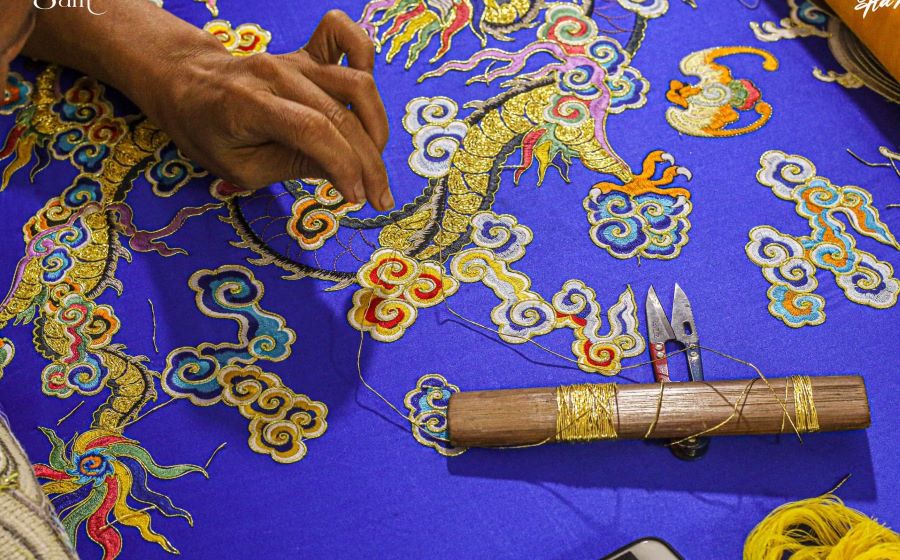
Since she was a little girl, Nguyen Thi Thanh Hoa, from Co Chat Hamlet in Hanoi's Thuong Tin District, has been taught by her parents and grandparents how to embroider every little detail. With time, her passion for the traditional craft has grown day by day, enabling her to create beautifully embroidered ao dai - Vietnam's traditional long tunic.
Her hamlet is recognized as the birthplace of embroidery in Hanoi, which began almost 400 years ago. Since then, the craft has evolved and spread throughout the S-shaped country. Today, embroidered products are an essential part of everyday life, adding a romantic charm to Vietnamese culture.
Hoa, like other embroiderers in her village, has infused vivid artwork with the essence of the country's spirit in her deft handiwork. After drawing the designs with chalk on the fabric, she could easily embroider them with a needle.
As well as being a skilled hand embroiderer, Hoa is also an active businesswoman, using technology in production. She has invested in embroidery machines and set up large workshops, helping to create jobs and increase income for a large number of workers. Her family's workshop always has four full-time workers, while the others mostly work at home.
| The exquisite embroidery products of Dong Cuu village artisans. Photo: Chuyen cua Ha Noi Group |
"Since I was seven or eight years old, my grandparents and parents have taught me how to embroider. This handing down has contributed to the development of embroidery in the community. Today, my family's products are sold all over the country, helping to preserve and promote the quintessence of the craft village," said Hoa.
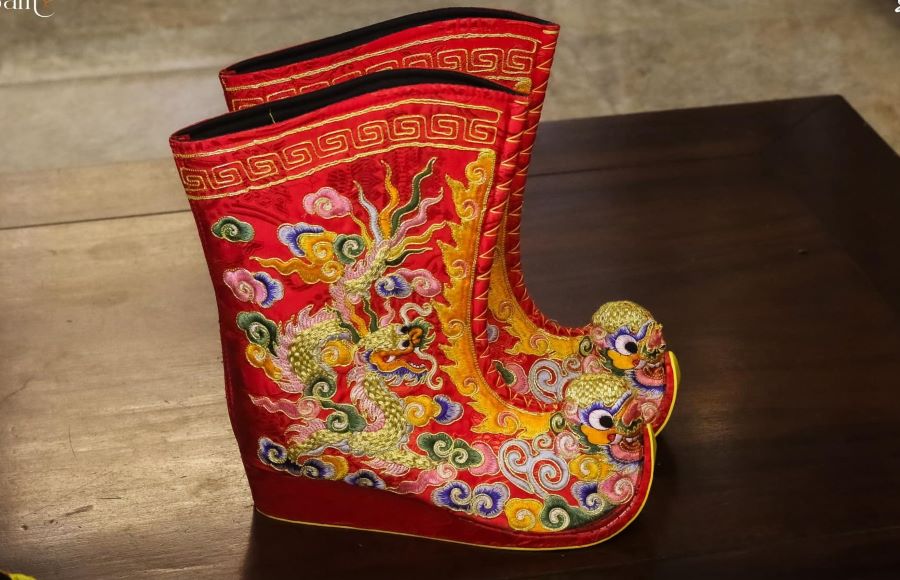
Hoa's family workshop offers a wide range of embroidered clothing, including both modern and traditional ao dai. With different designs and styles, customers have countless options to choose from.
Three of the household's products have been awarded four-star OCOP certificates by the Hanoi People's Committee, including the round-necked ao dai embroidered with cotton roses, the ao dai embroidered with a pair of mandarin ducks, and the men's ao dai embroidered with motifs.
Taking horn combs everywhere
| Artisan Nguyen Van Su and his horn handicrafts. Photo: Jenna Duong |
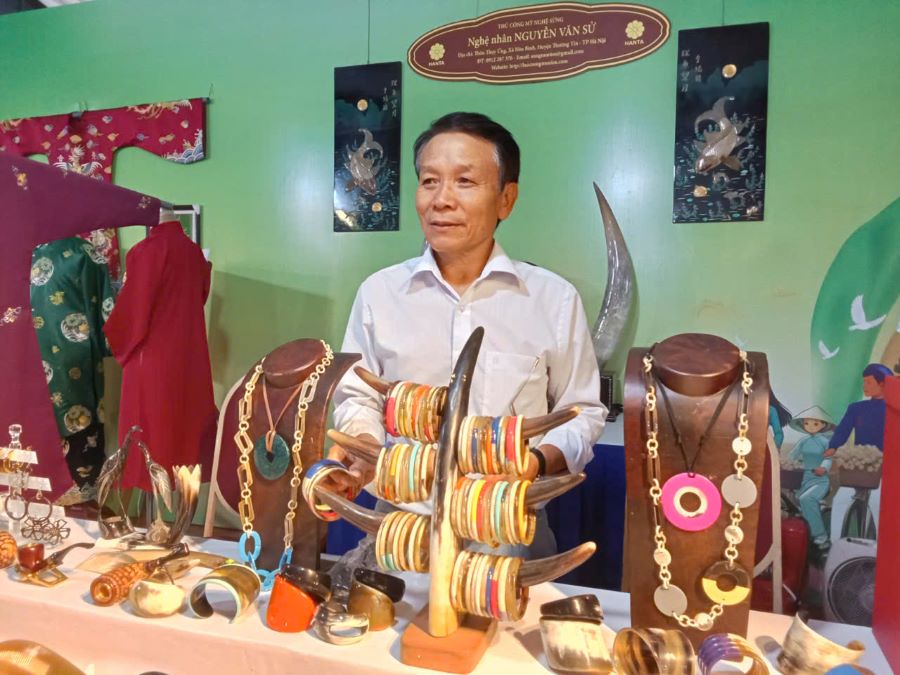
Thuy Ung is one of four villages in Hoa Binh commune, Thuong Tin district, Hanoi. The village is known throughout the country for its horn comb-making craft, which has been featured in Vietnamese folk songs. The craft originated in the village some four centuries ago and is still carried on by many local families, including Nguyen Van Su's.
Su started as a street vendor, selling horn combs in provinces from north to south. At that time, Thuy Ung's horn products were limited to hair combs, and they were simple - not carved with elaborate, aesthetic patterns as they are today.
According to him, in the era of international integration, Vietnam's unique craft village products became popular among foreigners. As a rolling stone who understood this demand, Su returned to the village and expanded the scale of production to meet customers' tastes. In addition to hair combs, a number of other horn products were made.
"At present, my family supplies horn products to commercial centers and tourist attractions in Hanoi and other provinces," he told The Hanoi Times.
"Since domestic sources of horn are not sufficient for production, we import raw horns from Laos, Thailand, Cambodia, and African countries, including antelope horns," he added.
| Nguyen Van Su's stand selling handicrafts from Thuy Ung craft village at the 2024 Hanoi Tourism Ao Dai Festival, recently held at the Thang Long Imperial Citadel. Photo: Jenna Duong |
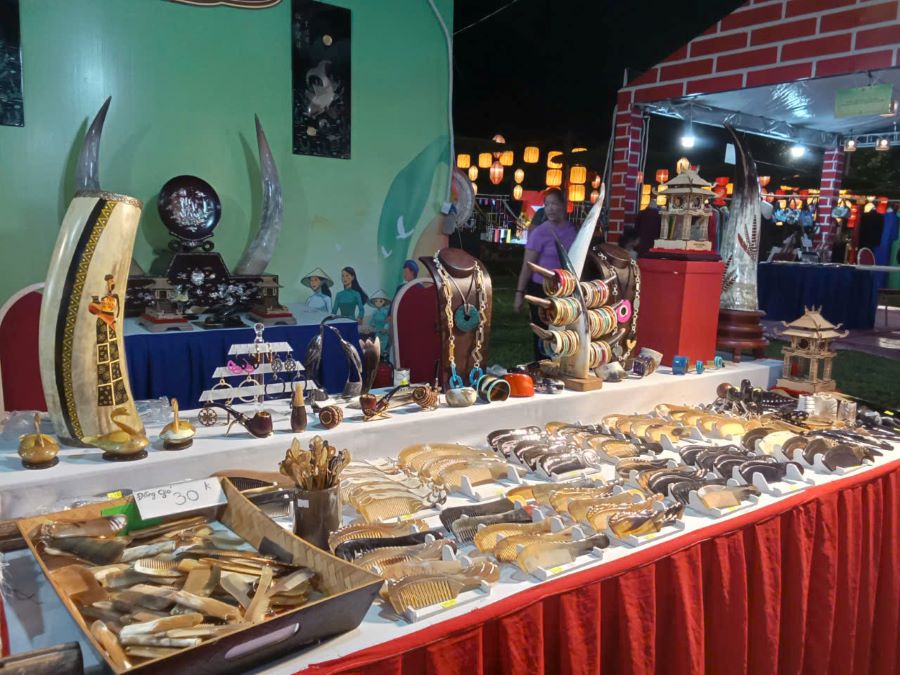
"Raw horns cost only a few dollars per kilo, but through the talented hands of craftsmen from Thuy Ung village, they can be worth thousands. The craftsmanship has added value to them. Horn handicrafts are particularly popular in countries such as South Korea, Japan, Thailand, the UK, and the US because they are completely handmade," Su revealed.
Determined to take the village's products around the world, craftsman Nguyen Van Su plans to create his own brand. He is also expanding into new markets to bring his distinctive products to more consumers.
This is also the reason why he participated in the "One Commune, One Product" program. His family's products have been certified by the Hanoi People's Committee as meeting the four-star OCOP standard, most notably the horn vase with a Vietnamese ethnic girl motif, a horn fashion jewelry set, a European-style horn comb, a horn comb with a fish-shaped handle and a horn comb in the shape of a Vietnamese woman.
With such creativity, more and more people are learning about the unique products of Thuy Ung Handicraft Village and Nguyen Van Su's family.