

Hanoi Metro displays digital ticketing technologies at major international railway exhibition
Hanoi Metro presented new digital ticketing and payment technologies at VRT & CONS 2025, highlighting its goal to build a modern, safe and smart public transport system for the capital.
THE HANOI TIMES — The Hanoi Railways Company Limited (Hanoi Metro) has unveiled a package of technology-driven solutions, including biometric-based automatic ticketing, cashless payment systems, at the International Exhibition & Conference on Modern Railway Technology and Infrastructure Supply Chain (VRT & CONS 2025).
These solutions mark Hanoi Metro’s push toward sustainable development and its plan to build a smart, safe and environmentally friendly public transport network.
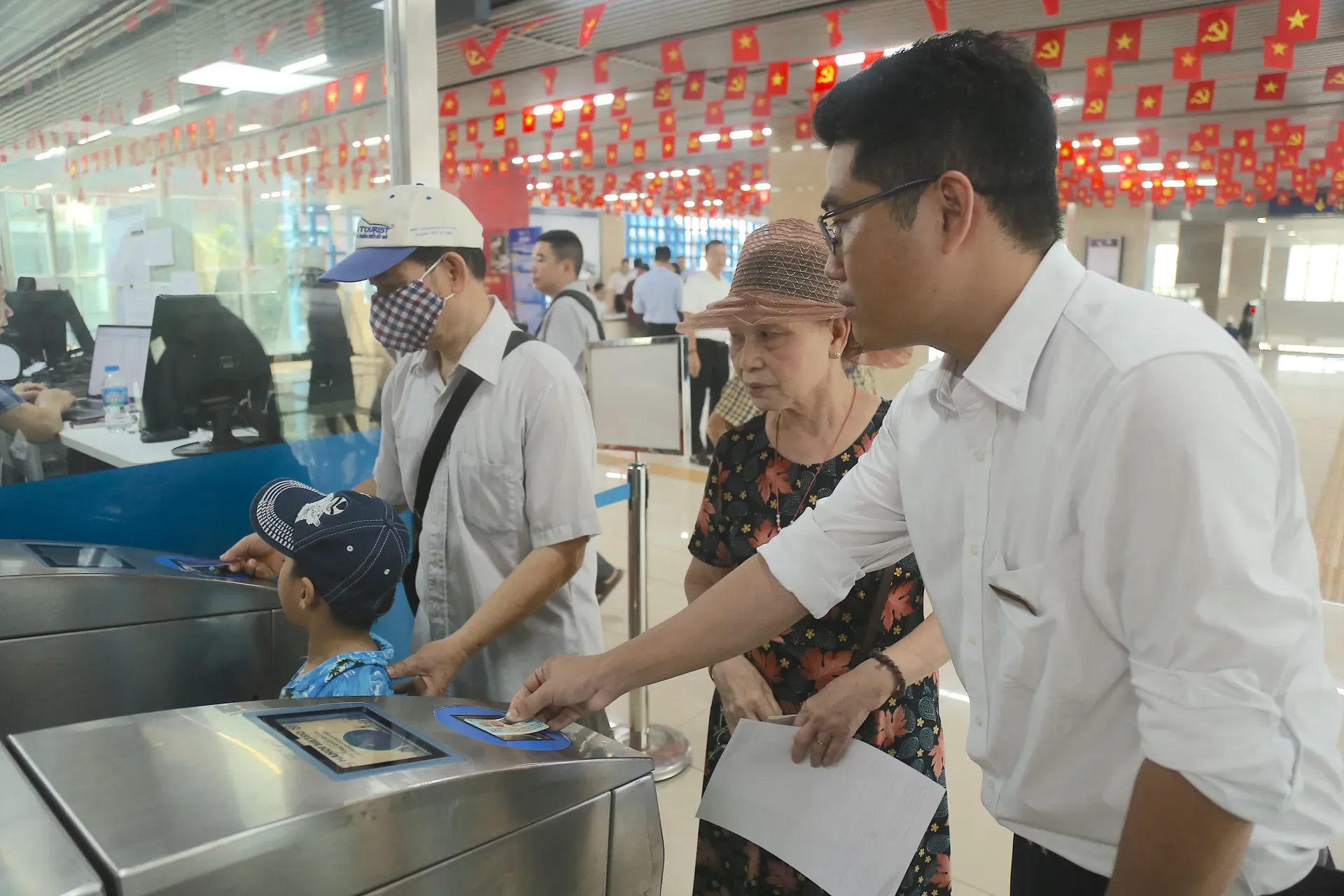
Commuters use ID cards to scan through the biometric ticketing system at Cat Linh - Ha Dong metro line in Hanoi. Photo: Pham Cong/The Hanoi Times
The company aims to advance digital transformation, strengthen technological autonomy and localize products for the railway industry. Its approach aligns with Resolution 57-NQ/TW on the development of the Capital Region and the National Digital Transformation Plan to 2030.
Hanoi Metro is now applying these solutions on the Cat Linh – Ha Dong Line, giving passengers a new travel experience. The system identifies and verifies passengers using chip-based ID cards combined with biometric recognition at station gates.
The Hanoi Metro mobile application integrates an e-ticket system and multiple flexible payment methods, including EMV cards (Visa) and e-wallets, helping passengers make payments and manage their travel more easily.
According to the company, this system will replace paper tickets, shorten waiting times, reduce direct contact and improve safety and data security. It will lay the foundation for a smart public transport ecosystem that connects with the capital’s modern urban management platforms.
Hanoi Metro expects these digital solutions to position the company as a strategic partner in international cooperation, linking technology partners, suppliers and urban transport experts.
Through this process, the firm aims to promote technology transfer, expand domestic production and develop the supply chain for railway industry products. It also seeks to build stronger national capacity in technical and technological fields.
Vietnam railway development
The VRT & CONS 2025 runs until November 15 at the Vietnam Exposition Center in Dong Anh Commune, Hanoi. The four-day event brings together nearly 90 companies and organizations from Vietnam, Germany, China, South Korea, Japan, Austria, Thailand, Malaysia, Switzerland and the United Kingdom.
During the event, Vietnamese enterprises and international partners signed several memoranda of understanding on building the railway supply chain and transferring TBM (tunnel-boring machine) and MRO (maintenance, repair and operations) technologies.
Cooperation areas also include workforce training, digital transformation and the development of industrial zones and service areas supporting railway infrastructure.
At the roundtable discussion on November 12, a representative from DB Engineering & Consulting GmbH (Germany) introduced the “Shadow Operator” model, which helps project owners prepare operational plans, maintenance strategies and cost optimization from early project stages.
The model aims to ensure synchronized infrastructure and equipment operations throughout the project’s lifecycle.
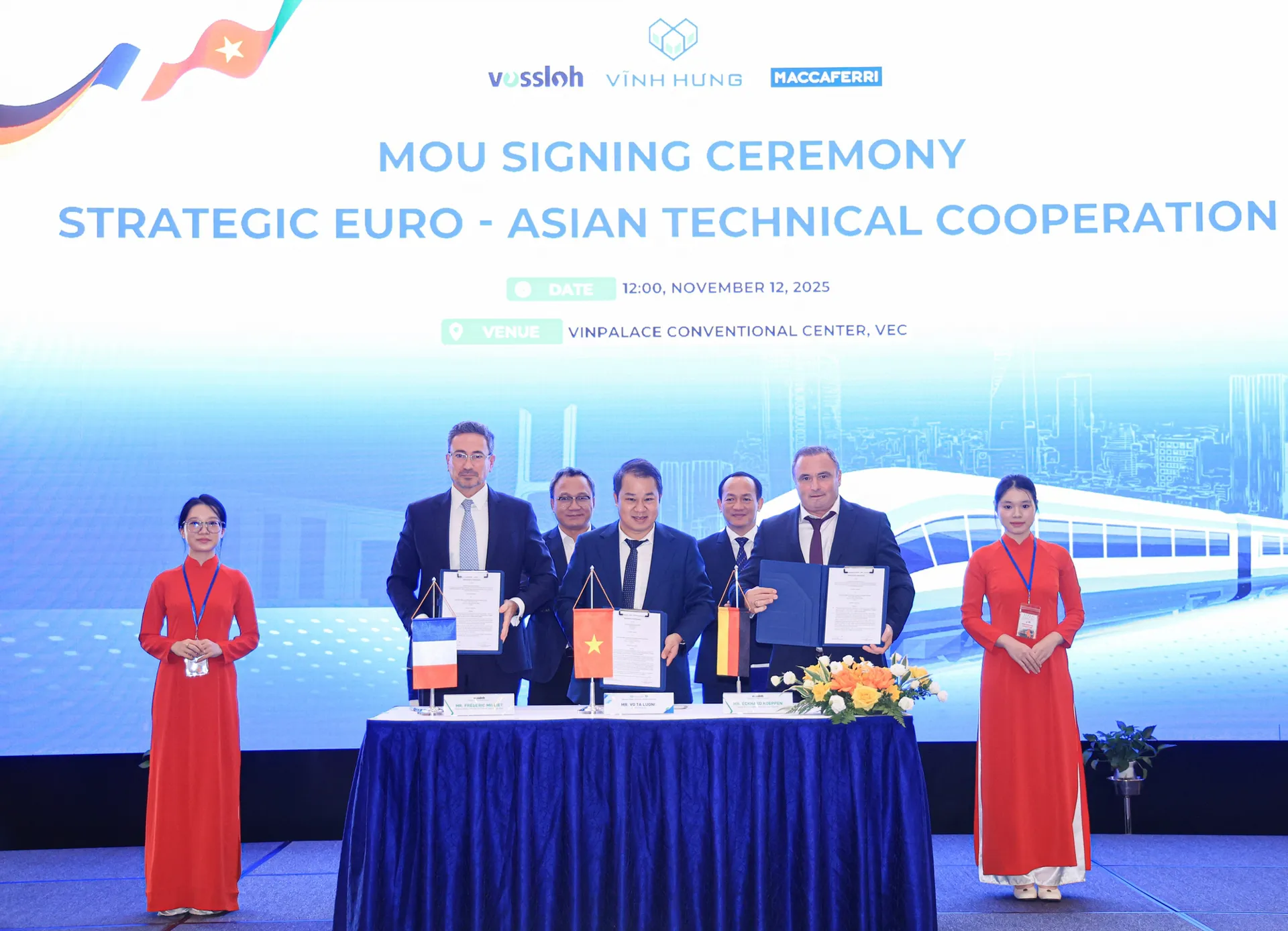
Vietnamese enterprises and international partners signed multiple memoranda of understanding (MOUs) at the International Exhibition & Conference on Modern Railway Technology and Infrastructure Supply Chain 2025. Photo: VGP
Yang Donglin, General Director of CRSC International (China), presented the “Smart Rail” concept and suggested that Vietnam establish national data-connectivity standards, build a centralized data platform and develop data-sharing mechanisms to support digital transformation in the railway sector.
Vo Ta Luong, General Director of Vinh Hung JSC, said the market has strong potential, but investment remains risky due to high capital needs and limited scale.
He called for standardized technical regulations and clear incentives for private investment to create a stable market and promote the localization of railway equipment.
Deputy Minister of Construction Nguyen Danh Huy said that developing modern, synchronized and sustainable transport infrastructure is one of Vietnam’s three strategic breakthroughs, and railways form the backbone of the national transport system.
He said Vietnam must expand high-speed and urban railways to drive economic restructuring, reduce logistics costs, cut greenhouse gas emissions and strengthen regional connectivity.
The deputy minister added that Vietnam needs to link the railway sector with urban planning, construction industries and transport technologies, improve design and construction capacity, upgrade human resources and strengthen supporting industries and supply chains as well as promoting technology transfer.
He said Vietnam should apply flexible public–private partnership (PPP) models, transit-oriented development (TOD), land-value capture and clear risk-sharing mechanisms between the State, investors and residents to attract more domestic and foreign resources.
The national railway network plan to 2050 sets the North–South high-speed railway as the key project, with total investment exceeding US$67 billion and a target to complete the entire route by 2035.
Hanoi plans to develop 10 metro lines with over 500 kilometers of track, while Ho Chi Minh City will build eight lines totaling more than 170 kilometers. Hanoi currently operates two metro lines and Ho Chi Minh City has one in service.







